
CHAPTER 9: THE SCRAP REMAINS
The extraction didn’t end with a battle; it ended with the slow, unglamorous friction of old iron being dragged through the dirt.
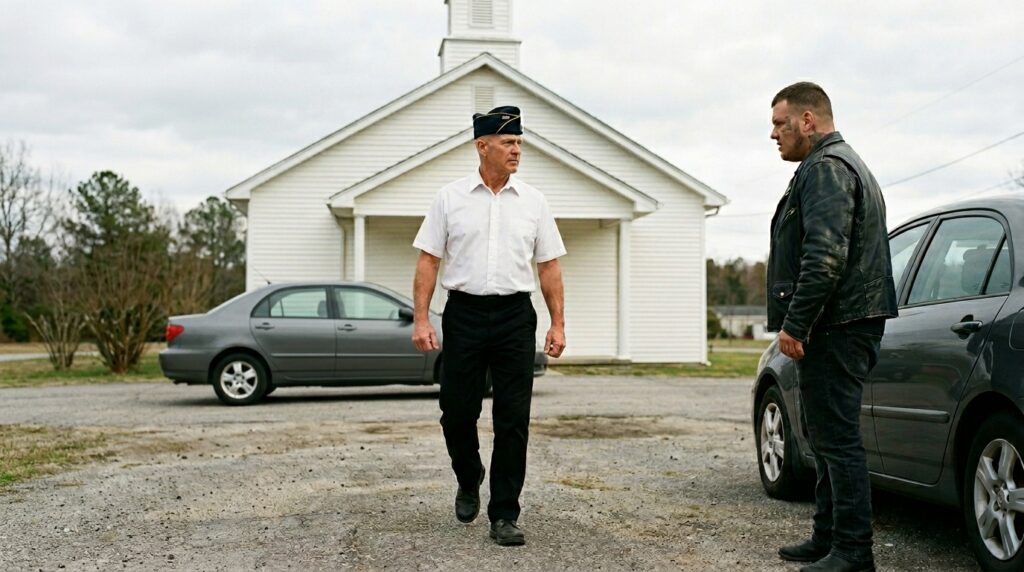
David stood at the threshold of the shattered gate, his hand resting on the fractured cedar post. The white paint came away in dry scales under his palm, dusting his knuckles like lime. Fifty yards down the road, the lead five-ton flatbed was hooked to the back of the command sedan by a pair of heavy-duty logging chains. The links were bright with fresh, silver scoring where they strained against the dead weight of the snapped steering linkage.
Vance’s men didn’t look back. They moved with the silent, sullen discipline of a supply unit that had miscalculated its fuel reserves.
The heavy diesel engines chugged black, greasy smoke into the clean morning air, the exhaust settling over the scrub oak flats like soot on a sheet of tin. As the caravan cleared the parish line, the broken front tires of the lead truck ploughed two deep, parallel gouges into the soft asphalt of the county road, leaving raw black tracks that would fill with sand before the week was out.
“They’re gone, David.”
Deacon Thomas stepped out from the shadow of the parish hall. He looked smaller in the full glare of the sun, his oversized wool cardigan hanging loose from his thinning shoulder blades. He held an old burlap sack containing the green ledger books and the green filing box from the shed, his fingers hooked into the twine tie like a man holding a bucket of wet ashes.
“They won’t stay past the river,” David said, his voice flat, drained of anything but the hard grit of routine. “Vance isn’t an enforcer. He’s an auditor. Once the cost of reclaiming the asset exceeds the salvage value on the sheet, he crosses out the line item.”
“The state board is still going to look at the books,” Thomas said, his voice trembling as he looked down at the deep ruts in the churchyard gravel. “The water debt doesn’t leave with the trucks.”
“The books are in the well, Thomas,” David said.
The deacon looked up, his jaw dropping slightly. David didn’t look back at him. He turned toward the well-pump apron, where the rusty water had already dried into a dull orange stain on the concrete. Beneath that concrete lay six hundred feet of unlined limestone shaft, feeding from a prehistoric aquifer that smelled of sulfur and dead stone. The ledger, the vouchers, and the green military stencils were three hundred feet down by now, turning to gray mush in the dark.
“You can’t just bury a debt, David,” Thomas whispered.
“In this basin, you can bury anything if you put enough gravel over it,” David replied. He reached into his trousers pocket, his fingers settling on the old iron tractor bolt. The metal was warm now, heated by his own body through the coarse canvas of his trousers. “Go inside. Clean the wax off the pews. The wind is going to bring the lime dust in through the broken gate all afternoon.”
David walked away from the road, his boots making a dry, crunching sound in the shale. He didn’t check the perimeter fence lines today. He didn’t need to. The tactical zip-ties were gone, replaced by the raw, jagged ends of rusted barbed wire that he would have to splice with his own hands before the winter cattle drifted down from the northern ridges. He had saved the walls, but the boundary was gone, and the town would be looking toward the white church doors by sunrise to see who was standing in the gap.








