
CHAPTER 12: THE BALANCE RUN
“The nib is dry, Mr. Vance.”
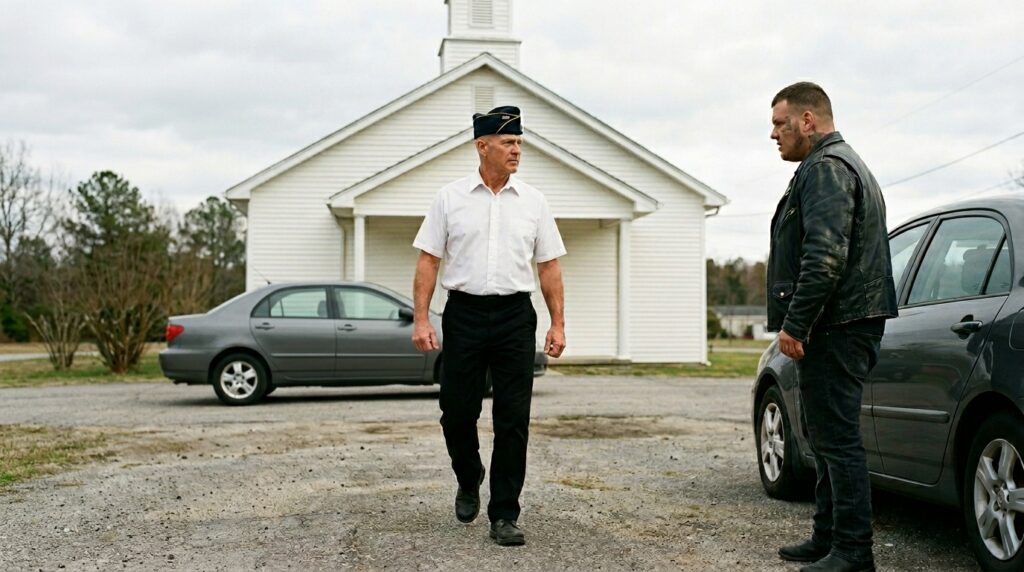
Investigator Miller didn’t shift her boots on the shale grit. She watched David’s hand—thick, raw-knuckled, and gray around the fingernails with old iron scale—as he held the heavy silver pen above the yellowed margin of the ’95 manifest. The paper was so thin from decades of damp storage that the glare of the noon sun shone right through it, revealing the ghosted lines of logistics numbers on the reverse side like veins under old skin.
David didn’t press down. He could feel the small iron tractor bolt through the canvas of his trousers, its blunt edge a cold reminder of the alignment he’d chosen when he dropped the enforcer by the road.
“The ink isn’t dry,” David said, his voice dropping into the flat, hollow space between the well-frame and the gray sedan. “It’s just heavy.”
He brought the silver point down. The line he drew wasn’t a signature; it was a single, deep strike through the section titled Sub-surface Infrastructure Release. The paper tore slightly under the sharp steel tip, exposing the rough, unpainted pine of the well-cover beneath.
Miller’s jaw tightened, the dry skin around her temples twitching once before she pulled the manila file back toward her jacket. “That’s an obstruction on a federal asset sheet. It carries a mandatory quarantine on the district easement.”
“The asset sheet was settled when the unit turned in its guidon,” David said. He laid the pen down on the concrete apron, its polished silver surface catching the glare of the white church wall until it looked like a shard of broken mirror. “The 4th Logistics didn’t leave a fuel bunker under this limestone, Miller. They left an empty cistern. I know. I’m the one who ran the wash-out crew before the cement was poured.”
A sharp, metallic click echoed from the interior of the gray car. The radio dispatch was looping—a low, rhythmic sequence of automated numbers from the county seat, checking the status of the regional grid monitors.
Miller looked at the torn ledger page, then at the church doors where the shadow of Deacon Thomas remained frozen against the white pine planks. Her demeanor didn’t shift into anger; she remained an auditor facing an irregular entry that refused to balance.
“The regional utility board isn’t going to look at the historical logs, David,” she said, using his name for the first time with the quiet, transactional weight of a collection agent. “They see three hundred thousand dollars in arrears on a non-rated parish line. If I don’t log this signature into the terminal by three o’clock, the digital disconnect order goes through automatically. The software doesn’t care about your unit history.”
“The software runs on the copper line that follows the rail spur,” David said, his hand sliding back into his pocket, his fingers settling on the warm iron bolt. “The same line Vance’s trucks are tracking across the creek.”
He turned away from her, his boots crunching heavily through the loose lime dust as he headed toward the side of the parish house where the old iron water main emerged from the limestone. He had spent thirty years maintaining a sanctuary by keeping his mouth shut and his lines straight, but the ledger was out in the open now, and the only way to protect the boundary was to take the machinery apart before the state could claim the salvage.








