
CHAPTER 11: THE AUDIT HORIZON
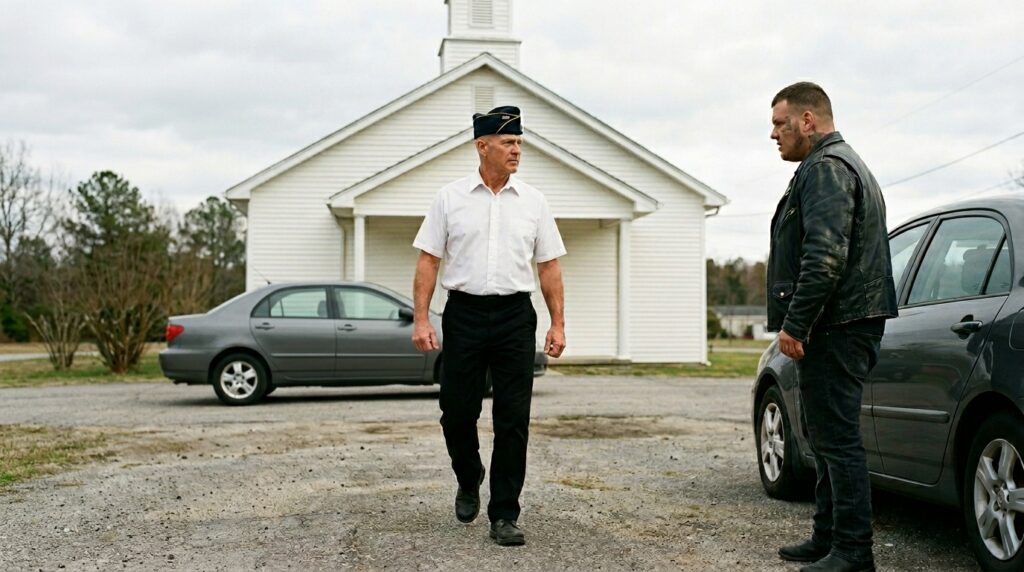
The high-idle gasoline engine didn’t rumble like Vance’s flatbeds; it hummed with the thin, synthetic whine of a late-model state fleet vehicle. The sedan was a desaturated, generic gray, its lower panels caked with the fine white dust of the basin road until the door handles looked as if they had been dipped in dry mortar. It came to a stop inches from the shattered remains of the iron perimeter gate, its radiator fan continuing to pull the hot, dry air through the grill with a sharp, mechanical hiss.
David stood his ground on the cracked concrete apron. The sun had cleared the ridge now, cooking the lime courtyard until the heat rose in visible, shifting bands against the white siding of the sanctuary. His white dress shirt was heavy with old salt, the left cuff slightly frayed where it had scraped the rusty interlock armature beneath the floorboards.
A single woman climbed out of the gray car. She wore a sharp, dark gray linen suit that looked completely unsuited for the gravel flats, though her leather oxfords were old, the soles thick and worn flat at the heels. She didn’t carry a clipboard or a tactical vest. She held a single, faded manila accordion file secured by a thick, perished rubber band that left a brown stain across the cardstock.
She walked directly to the well-pump, her eyes tracking the orange rust scales on the handle before settling on the bruise across David’s knuckles.
“You’re a difficult man to locate on a map, Mr. Vance,” she said. Her voice had the flat, dry cadence of a federal record repository. She reached into her jacket, her fingers coming away with a heavy brass identification badge that she clipped to her pocket line with a precise, metallic snap. “Department of Federal Asset Reclamation. My name is Miller, but not the one your neighbors are complaining about.”
David didn’t look at the badge. He looked at the clip holding it—the steel spring was stamped with an old, obscure ink logo from the 4th Logistics Dispatch Branch, identical to the stencils rotting down in the well shaft.
“The asset was scrubbed from the ledger thirty years ago,” David said, his fingers tightening in his pocket around the warm iron tractor bolt. “The property belongs to the parish.”
“The parish owns the surface timber and the top six inches of topsoil,” she said, tapping the manila file against her thigh. The sound was thin, like a dry shingle snapping. “The underlying concrete structure—the reinforced fuel repository designation 40-B—remains the property of the defense liquidation authority. I have the original ’95 manifest here. It’s missing a final verification signature from the logistics sergeant on duty.”
She opened the file. The paper inside was yellowed, the edges brittle and smell of old cellar damp. At the bottom of the ledger sheet was a single empty line beneath the name Sergeant David Vance.
“Colonel Vance came through here two days ago,” David said, his voice dropping into the cold, level register of an asset audit. “He brought four flatbeds to clear the inventory.”
“Colonel Vance is a private citizen running a scrap metal liquidation company,” she replied, her eyes unblinking, tracking a low lizard that darted across the dry limestone apron. “His company has been targeting deactivated depots from the ’90s across three states. He has the vouchers, but he doesn’t have the authority to release a sealed federal bunker without a verified signature from the custodian of record.”
She pulled a heavy, tarnished silver ink pen from her pocket and laid it flat on the wooden top of the church well-frame, right next to the dry rust stains where the ledger books had been dragged.
“If you sign the release, the state board pays off the utility debt for this parish within forty-eight hours,” she said, her voice remaining perfectly regular, a transactional machine working in the middle of the desert. “The trucks come back, they pump out the old storage lines beneath the nave, and this valley stays on the regional water grid for another twenty years. If you don’t sign, the property is designated an unverified military hazard zone by noon tomorrow. The gates get chain-locked, and the county cuts the road easement at the bridge.”
David stood under the burning glare of the church roof, the desaturated gray sedan idling behind her like an open valve. The cycle had completed its turn. Vance’s physical siege had failed, but the corporate infrastructure was right behind him, using the exact same ledger lines to squeeze the sanctuary into submission. The choice wasn’t between peace and violence anymore; it was between two different ways of being erased from the map.
He reached out, his calloused thumb sliding over the cold, heavy silver of the pen, his eyes looking past her toward the white doors where twenty-eight people were still waiting inside the dark nave to see if they still had a place to pray.








