
CHAPTER 9: THE BERLIN TERMINAL
The heavy iron door of the sub-bunker didn’t swing; it unsealed.
The emergency release handle was cold, coated in a thick, industrial grease that smelled faintly of old lard and cosmoline. As Shane pulled it downward, the internal counterweights gave a low, hollow groan that vibrated straight through the concrete floor plates into the heels of his boots. Inside, the air was static, holding the dry, paper-thin chill of a space that hadn’t seen a ventilation draft since the Clinton administration.
General Albright entered first. He didn’t use a flashlight. He walked by the grey sheen of a single, low-voltage fluorescent tube that flickered over the central inspection table every four seconds with a sharp, plastic snap. On the zinc tabletop lay the retrieved command terminal—the manual unit from the eastern checkpoint, its casing scratched down to the bare aluminum where Vance had tried to pry the battery plate loose with a bayonet.
“The Fort Meade logistics team doesn’t have these logs on their master server, Shane,” Albright said. He stood with his hands tucked behind the small of his back, his four stars catching the green tint of the fluorescent tube. “When the sector was redrawn in ninety-nine, the entire data loop was routed through a blind relay in the old intelligence annex behind the Tempelhof airfield. It was supposed to be a dead drop.”
Shane stepped up to the table, his cap brim casting a long, clean shadow across the zinc surface. He reached into his pocket and pulled out the hardware override key he had taken from Vance’s carrier. The black plastic casing felt brittle in the cold basement air. He slid it into the side port of the terminal.
The screen didn’t boot with a logo. It produced four lines of raw, amber text that blinked three times before settling into a steady, flat glare.
REG-INDEX: 00-98-ALPHA
RELAY-PATH: T-HOF // BRLN-03
STATUS: ACTIVE // UNRESOLVED
Shane’s thumb traced the edge of the aluminum frame. His eyes skipped past the system metrics, zeroing in on the bottom of the log’s third page where a small, green-inked border stamp had been digitized into the file margin. The stamp was irregular—a double-bordered rectangle containing a five-digit numeric code: 40-20-NINE.
“That’s not a supply code, General,” Shane said. His voice was flat, hitting the concrete walls without an echo. “That’s the rail-head identifier for the old sector three storage yard outside of Magdeburg. The one the Germans closed down during the unification transition.”
Albright didn’t shift his posture. But the white scar along his left cheekbone tightened, the skin pulling toward his ear until his profile looked like it had been carved from grey slate. “The Magdeburg yard was cleared by the British in ninety-seven, Shane. The inventory was listed as surplus scrap.”
“A surplus scrap list doesn’t maintain a live carrier wave across the transatlantic cable,” Shane said. He tapped the terminal’s manual return key with his calloused index finger. Click. The amber text cleared, replaced by a columns-and-rows manifest that listed three names under the SF-EX-09 detachment marker.
The names weren’t grayed out. They didn’t have the standard KIA or DISCHARGED brackets next to their serials. They were listed under a green, high-priority operational code: STATIONARY // WAIT.
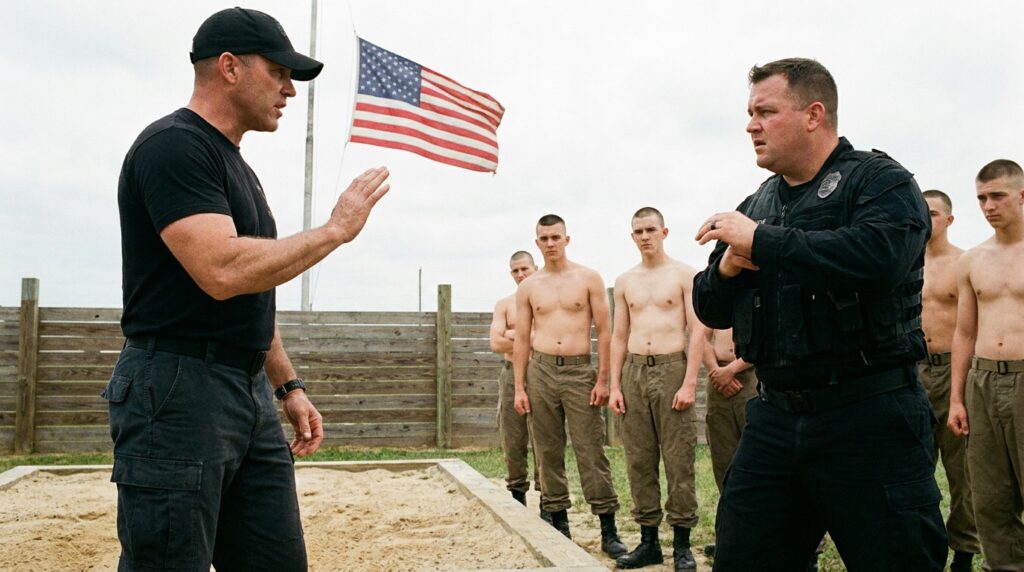
Behind them, the iron door rattled once as Miller stepped into the entry well. The recruit’s ankles were still wrapped in grey utility tape, his shoulders slick with the condensation that dripped from the bunker’s overhead water pipes. He held the concrete-weighted rifle at his hip, his bare chest showing a dark smear of graphite grease from the door lever.
“Sir,” Miller said, his eyes darting to the amber glow on the table. “The lieutenant’s staff vehicle is at the main gate. They’re trying to pull the facility’s fuel logs from the administrative box. The sergeant said the regional pool froze our allocation at noon.”
Shane didn’t look up from the names. “Tell Cross to hand-pump forty gallons from the emergency trailer into the diesel trucks. If the lieutenant asks for a receipt, give him a manual training slip with the ninety-eight serial.”
“They won’t accept a manual slip, sir,” Miller said. “The staff driver said they have a digital stop-order from the Department liaison.”
“The liaison is five hundred miles away behind a desk, Miller,” Shane said softly, his finger hovering over the third name on the screen—a name that had been scribbled out of his own deployment log with a black grease pencil twenty-eight years ago. “The trucks are here. In the mud. Move the fuel.”
Miller paused, his boots gripping the wet concrete of the threshold for two seconds before he struck his heel against the frame and disappeared back into the dark corridor.
Albright reached down, his heavy thumb pressing the terminal’s power toggle until the amber light died, leaving the zinc table in the flat, green shade of the flickering fluorescent tube. “If those three men are still inside the Magdeburg ledger, Shane, the Fort Meade team isn’t here to audit your sand pit. They’re here to ensure nobody digs deep enough to find the cable.”
Shane slid the black plastic key back into his pocket, his fingers finding the smooth, warm casing of his stopwatch. “The cable is already out of the ground, General. Vance just forgot to check who was holding the other end.”








