
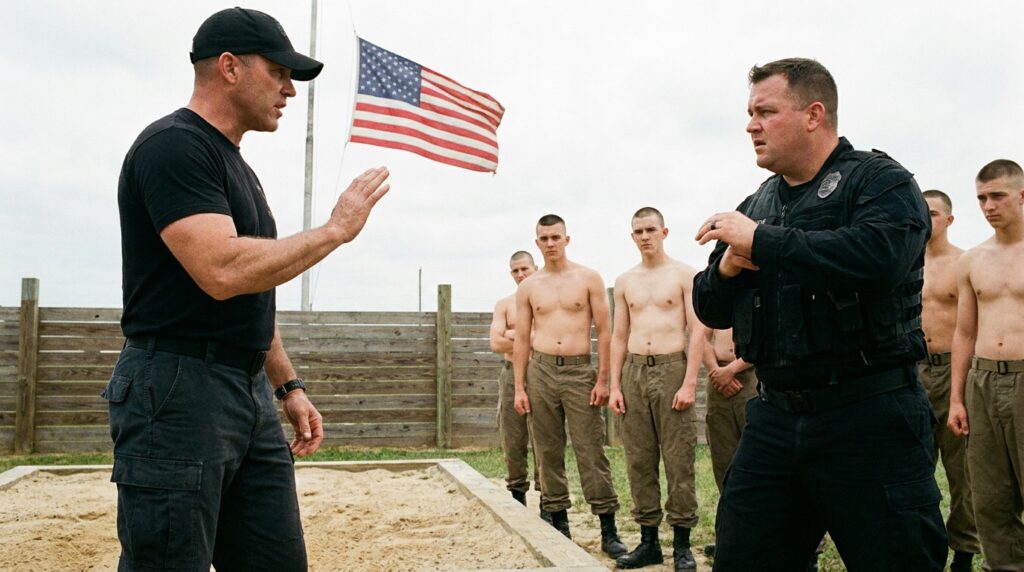
CHAPTER 6: THE DECOY DEPLOYMENT
The cooling block of the utility carrier’s engine gave off a sharp, metallic ping every eleven seconds. It sounded exactly like the trip-wire springs Shane had disarmed along the Drina River basin when Vance was still writing tactical reviews for West Point quarterlies.
Shane didn’t use his hands to clear the sand from the aluminum clipboard. He used the stiff, plastic edge of his broken lead pencil, scraping the grey granules away from the spring-clip until the black ink of the document was fully exposed to the cold, blue light filtering through the pine canopy. The paper was dry, the wood-pulp composition smelling faintly of chemical bleach and damp warehouse storage.
Vance had left the truck cab open. The key remained in the ignition barrel, its heavy brass teeth slightly worn from years of rattling against standard-issue key rings. But it wasn’t the ignition that held Shane’s gaze. It was the command tablet left flat on the passenger seat, its glass screen dark, but a small, rectangular block of black plastic protruding from its secondary data port—a hardware encryption override key used exclusively by non-networked logistics detachments.
“Miller,” Shane said without turning around. His voice stayed level with the metal edge of the truck’s bed.
The recruit stepped up to the cab door, his boots making a dry, crunching rasp on the stone path. His bare chest had dried completely, the grey mud turning into a white, cracked porcelain pattern that flaked away whenever he drew a breath. “Sir.”
“Take the team to the south gate,” Shane said, his eyes tracing the thin, copper wire embedded inside the plastic block of the encryption key. “The transport driver is still sitting on his clutch. Tell him the evaluation is suspended under section four protocol. He’s to dump his iron posts outside the fence line and log a structural delay.”
Miller looked at the dark tablet screen. “The Colonel didn’t give that order, sir.”
“The Colonel doesn’t have an active register on his terminal, Miller,” Shane said softly. He reached into the cab, his thumb and index finger pulling the black plastic key out of the data port with a dry, plastic click. The brass pins inside the key were pristine, completely free of the carbon dust that standard network assets accumulated. “He’s running a manual circuit. He doesn’t want the network to see where these files are going.”
Shane sat on the running board of the truck, the cold steel of the chassis pressing through his cargo trousers. He laid the aluminum folder across his knees, matching the hand-stamped numbers on the paper to the serial number etched into the side of the plastic key. They matched perfectly: 00-98-ALPHA.
The document wasn’t an eviction order from regional command. It was a fast-tracked administrative seizure request, signed by a mid-level bureaucrat named Vance Senior—the Colonel’s own father, who had spent his career managing the paper trails for discontinued training areas. The signature was legal, but the authority was a ghost. It was an internal loop designed to transfer the custody of the facility’s historical sub-bunker to a private liquidation firm before the active-duty command structure updated their satellite surveys.
The real failure wasn’t Vance’s arrogance; it was the precision of the timing. They were moving three days before the seasonal rains, the exact window when the facility’s manual storage logs were scheduled for shredding under the standard ten-year retention cycle.
“Harris,” Shane said, looking up as the junior lieutenant moved slowly along the side of the truck bed, his fingers trailing against the dusty green paint. “Who gave your office the coordinate markers for the lower bunker?”
Harris stopped near the front tire, the aluminum stylus in his hand shaking slightly as he tapped it against his thumbnail. The green light from his own screen had died, leaving his face flat and pale in the shadow of the hood. “The log came from the regional annex, Instructor. It was an automated archival pull. We didn’t query the specific field file.”
“An automated pull doesn’t use purple carbon ink from ninety-eight, Lieutenant,” Shane said. He tilted the plastic key toward the sky, the sharp glare of the twilight catching a tiny, secondary serial number stamped into the bottom of the casing—SF-EX-09. “This key belonged to the third extraction detachment. The one that didn’t come back across the border when the logistics lines were redrawn.”
Harris took half a step backward, his boot heel catching on an exposed pine root. He looked at the tablet in Shane’s hand, his lower lip tightening until the pink skin turned gray. “I don’t know anything about the detachment, sir. My orders were purely administrative. We were told the facility was an unquantified line item.”
“Your orders are an illegal eviction,” Shane said. He stood up from the running board, his body casting a long, hard shadow that completely swallowed the lieutenant’s boots. “The Colonel isn’t reclaiming this property for the state, Harris. He’s burying the inventory before the audit team arrives from Fort Meade on Friday.”
Shane didn’t wait for the lieutenant to answer. He dropped the plastic key into his pocket, letting it rest beside the warm casing of his stopwatch. He walked toward the sand pit, his boots finding the exact line where Vance had broken the boundary. The sand was already shifting back into the center under the influence of the cold evening wind, the edges of the confrontation blurring into the red dirt as if the conflict had never happened.
But beneath the top three inches, the hard clay shelf remained locked in place, holding the weight of the old secrets that Vance had tried so desperately to pave over.








