
CHAPTER 8: THE HARBOR EDGE TIMELINE
The silence that followed the rasp of Vance’s voice didn’t belong to the city. It was the heavy, suffocating stillness of a flooded compartment, the low-frequency drone of the industrial canal pump eating the sound of the rain before it could bounce off the wagon’s hood. The administrative clerk didn’t lower his foot from the running board. He stayed suspended between the dry cab and the mud, his chrome clipboard tilted forward as the water pooled on the parchment, turning the clean black type into a blurred, illegible smudge.
Miller’s thumb moved. It didn’t settle back onto the retention clip of his leather holster; it dropped into the seam of his utility belt, his knuckles catching the glare of the high-intensity halogens until the skin looked like scrubbed iron. He knew the layout of the western ward. Every patrolman who had ever pulled a late-shift detail near the canal water knew that the old brick sluice gates were the only thing keeping the river from back-flowing into the basements of the city’s old south side.
“The fourth tier isn’t on the zoning registry,” the clerk said. The administrative click had gone flat, his teeth clicking together once with the dry, hollow sound of an empty register box. “The sixty-nine structural map shows nothing but bedrock below the foundation piles.”
“The company didn’t pay the drill crews to log the bedrock,” Vance said, his low, gravelly rasp rising straight from the wet limestone ruts. He didn’t drop the hand-filed key. He held it out before him, his fingers tracking the three square teeth that had been cut into the iron flank fifty summers ago. “They paid them to find the old quarry fissures where the water ran dark. We lowered thirty-two thousand drums of logistics residue into those slots before the army pulled the detachment out of Fort Meade. If you hit that floor with the pneumatic spikes, you won’t clear an insurance waiver. You’ll drop the whole turbine floor into the intake tunnel.”
He stepped forward. His leather soles didn’t scuff through the lime paste; they came down with the heavy, unhurried precision of an old piston finding its seat. He reached the side panel of the marked utility wagon, his hand coming down onto the cold, wet metal of the door frame an inch from Miller’s arm.
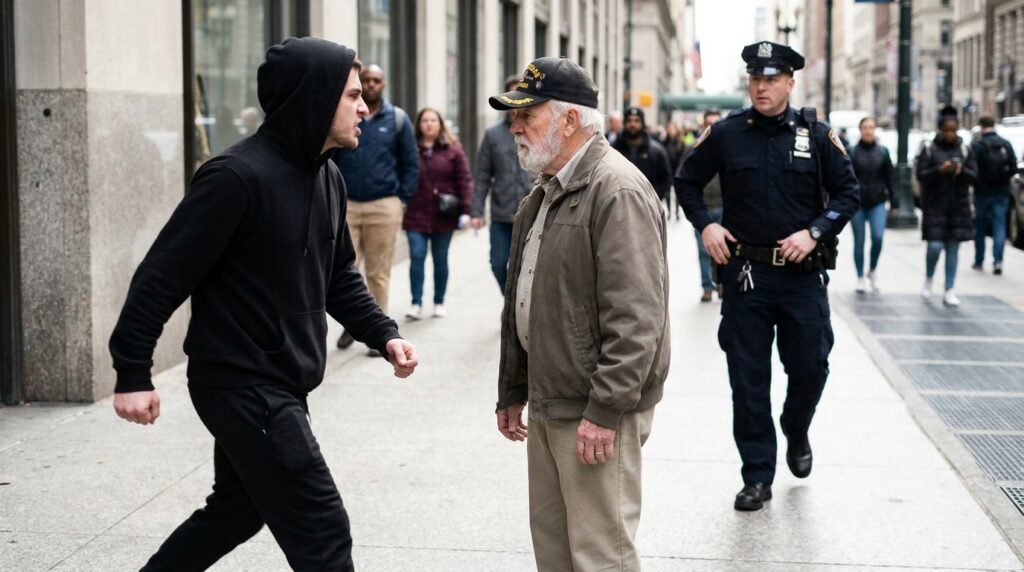
The patrol officer didn’t pull back. He looked down at the old man’s cap—at the gold thread that had lost its luster under forty years of coal smoke and harbor fog. For five seconds, the only movement on the tracking road was the slow, rhythmic sweep of the wagon’s wipers clearing a greasy grey film of silt from the glass.
“The warrants are already logged in the system, Vance,” Miller said softly, his voice barely vibrating through the stiff fabric of his winter jacket. “The desk sergeant can’t un-ring the bell. If the crews don’t start the drills by sunrise, the development board flags the precinct for non-compliance on a commercial clearance project.”
“Then tell them the foundation failed the core inspection,” Vance said. He took his left hand out of the canvas pouch, exposing the sixteen steel discs for the first time to the stark glare of the halogens. The copper wire loop swung twice, the non-regulation tracking tags chiming together with a dull, heavy clink that carried the weight of everything buried beneath the concrete. “Give them the tags from the third tier. Tell them the limestone’s already soft from the chemical wash. They can’t pave over a vault that’s already dropping into the river baseline.”
The administrative clerk looked down from the running board, his eyes fixing on the deep cross-hatching stamped into the rim of the steel discs. He didn’t need a ledger to read the markings; the U.S.A.T.C. imprint was clear under the white wash of the lights, a permanent physical receipt that no city registry could absorb without bringing down the whole regulatory archive.
He reached out his thin, dry hand, his fingers taking the loop of wire from Vance’s palm with a cautious, trembling grip that avoided the rusted edges of the metal. He didn’t look at Miller. He didn’t look back at the dark silhouette of the machine shop. He simply pulled his foot back into the cab and slammed the heavy utility door, the latch catching with a solid, definitive thud that cut off the blue rectangular glow of his phone.
“Get in, Miller,” the clerk’s voice came muffled through the reinforced glass. “The survey needs to be re-indexed before the morning shift hits the desk.”
The patrol officer stayed on the aggregate for two more seconds. He looked at the old man, his right hand rising to the brim of his own visor in a short, unhurried movement that wasn’t an official protocol salute, but the heavy, quiet recognition of one man who had stood watch over a border for another who had never left his post.
“The clinic lane stays open, sir,” Miller said, his boots clicking hard through the mud as he rounded the front fender of the wagon.
The utility wagon didn’t turn around in the narrow road. It backed out through the broken gate gap, its transmission whining in the dark as its high-intensity halogens swept across the corrugated iron walls of the pump house, leaving Vance standing alone at the absolute margin of the industrial canal.
The old man didn’t watch the white vapor trail dissolve into the river fog. He turned his face toward the harbor crosswalk, his spine remaining perfectly straight under the weight of his cap as the rain continued to run off the gold lettering, washing the salt from the iron and leaving the gray concrete clean beneath his heels.








