
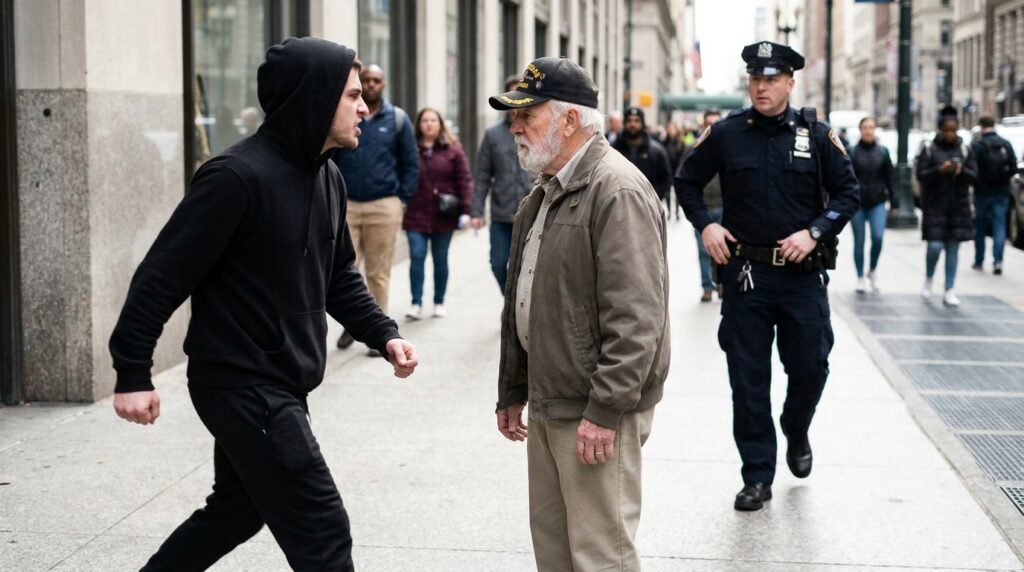
CHAPTER 1: THE FAULT LINES OF INDIFFERENCE
The wool of the cap was coarse, smelling faintly of the mothballs and cedar chips where it spent twenty-nine days of every month. It sat low on his brow, the stitched gold lettering—faded to the color of wet straw—catching the harsh, unwashed glare of the afternoon sun bouncing off the plate-glass windows of the electronics repair shop. He didn’t look at the displays of refurbished screens or the flickering security monitors. He looked at the seam where the concrete met the brickwork of the city clinic, noticing how the salt from three winters ago had eaten a jagged white trench along the foundation line.
A man learns to watch the margins when the center becomes too loud. The city didn’t move in sequences anymore; it moved in a thick, greasy smear of exhaust, wet asphalt, and the collective, hurried weight of five thousand people who wouldn’t look up if the sky turned to iron. He kept his hands deep inside the pockets of his charcoal casual jacket, his right thumb tracing the rough, pitted edge of a heavy zinc washer he’d carried since the shipyard shut its slipways down in eighty-four. It was balanced. It was real.
Behind him, the pneumatic door of the clinic hissed shut with a wet, rubbery sigh. The air out here was different—it tasted of sulfur, burnt brake pads, and the cold, flat dampness coming off the river two blocks east. He took three steps, his worn leather soles making a dry, rhythmic click against the aggregate pavement. A rhythmic step was an old habit, a cadence that stayed in the marrow long after the knees started to fill with fluid every time the barometer dropped below thirty.
Then the cadence behind him broke.
It wasn’t a commuter’s stride. Commuters moved with a loose, swinging momentum, their heels striking first, their minds already three blocks ahead inside some fluorescent office cubicle. This sound was light, flat-footed, and fast—the distinct scuff of cheap rubber soles dragging along the concrete to mask the speed of an approach. The shadow came first, stretching long and distorted across the grease-stained curb, a dark silhouette with an oversized hood that swallowed the neck and shoulders.
The old man didn’t turn his head. He didn’t quicken his pace toward the safety of the crosswalk where a dozen people stood clustered like grey sheep under the yellow signal box. He simply shifted his center of gravity three inches to the left, planting his heels firmly into the deepest part of the trench where the concrete had fractured. He let his shoulders drop, his shoulder blades locking against the small of his back until his spine was a straight, unyielding line of old oak.
The hooded challenger didn’t pass. He pivoted, his hip catching the edge of an old woman’s shopping cart with a sharp metallic clatter that no one turned to acknowledge, and stepped directly into the veteran’s path. He was close enough for the old man to smell him—stale tobacco, cheap synthetic polyester, and the sharp, sour tang of adrenaline that always comes with an unearned rush of blood. The hood was pulled down past the bridge of a crooked, broken nose, leaving nothing visible but a pair of restless, wet eyes and a mouth pulled back into a thin, tight sneer.
The young man didn’t look at the old face or the white beard that looked like salt dried on a rock. His eyes fixed instantly on the gold lettering of the cap, his chest heaving twice as he closed the remaining gap until their jackets almost brushed.
“You think anyone here is going to stop me today?”
The words were spat out low, a small pocket of hot air meant to force a flinch, to make the old chin drop toward the chest. The crowd surged around them like water hitting a dead stump in a creek bed, widening the circle just enough to avoid the spray but keeping their eyes locked firmly on the grey concrete beneath their own feet.
The veteran didn’t look for a cop. He didn’t look at the crowd. He looked directly into the dark space beneath the hood, his pupils dilated and still, his face as flat and expressionless as a slate shingle on an old barn. The wind caught the edge of his jacket, revealing the silver buckle of his belt, dull and scratched from decades of utility. He felt the cold iron of the city through his shoes, and for three seconds, the sidewalk was entirely silent.
“Back off now,” the old man said, his voice a low, gravelly rasp that sounded like a shovel blade striking flint. “You’re finished causing trouble here.”
Before the young man’s jaw could snap shut on a reply, a heavy, black-gloved hand dropped onto the nylon shoulder of the hoodie, the crisp, unmistakable snap of a leather duty holster echoing against the brick wall.








