
CHAPTER 7: THE ARCHIVAL LINE AND THE SHADOW CONFLICT
The pulp of the manila envelope didn’t hold its shape when Vance’s fingers closed around it. The water had dissolved the seams, leaving the hand-filed iron key bare against his palm, its three square teeth slick with a dark layer of old machine grease that smelled of cold storage and wet sulfur. He didn’t slip it back into his pocket. He held it down along his thigh, his leather soles shifting across the muddy limestone ruts left by the utility truck’s retreat.
From the western approach road, the low, mechanical whine of a steering pump cut through the steady drumming of the river rain. It wasn’t the private contractor’s sedan this time. The vehicle coming through the broken gate gap was a standard marked precinct utility wagon, its high-clearance tires crunching through the aggregate with a heavy, professional cadence that didn’t hide its approach.
The vehicle stopped twenty feet from the pump house, its high-intensity halogen headlights remaining on, pinning Vance in a stark, white cross-fire of illumination that turned the rain into thousands of falling silver needles. The driver’s side door didn’t swing wide immediately; the pneumatic seals groaned twice as the pressure equalized inside the cab.
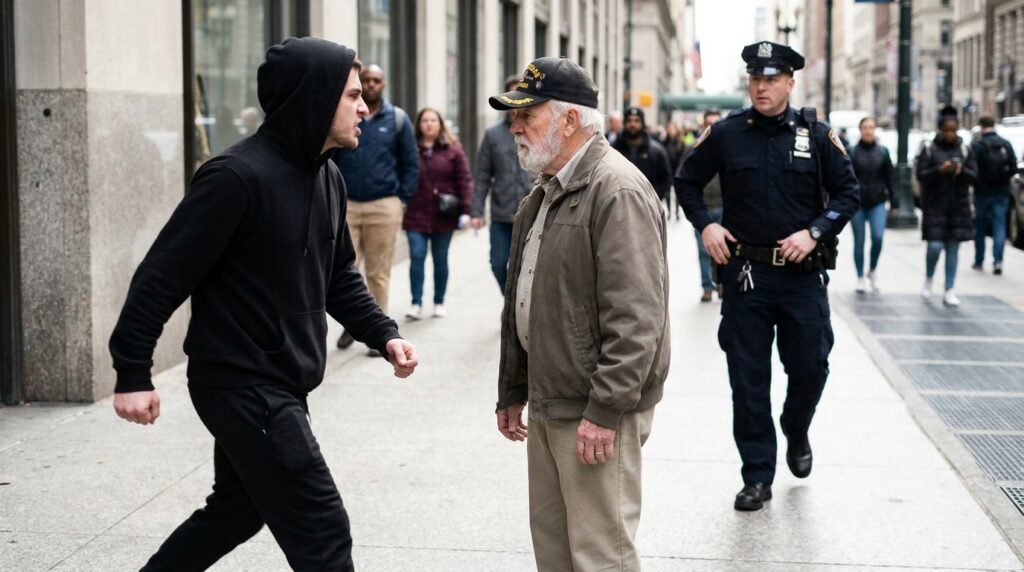
Miller stepped out first, his yellow slicker gone, replaced by the dark wool winter patrol jacket that had the heavy iron precinct badge pinned four inches above the seam of the utility pocket. He didn’t look at the splintered wood of the locker row behind Vance. He kept his hands tucked into his wide leather belt, his right thumb hooked over the primary retention clip of his holster—not a threat posture, but the stiff, defensive carriage of an officer who had already spent three hours answering internal logistics queries at the central desk.
“You’re outside the clinic line, sir,” Miller said, his voice carrying that flat, administrative rasp that Vance had heard thirty years ago from the camp inspectors down by the cantonment. “The desk sergeant didn’t file the morning custody report. He marked the incident at Eleventh Street as an unspecified street clearance, and the zoning commissioner just signed the emergency unsealing order for the turbine vaults.”
The old man didn’t shield his eyes from the glare. He kept his feet planted twenty inches apart, the loop of copper wire with its sixteen steel tokens hidden entirely within the thick canvas pouch in his left hand.
“The unsealing requires an official representative from the defense logistics bureau,” Vance said, his low, gravelly voice cutting through the steady tick of the wagon’s exhaust pipe. “The sixty-nine compact state covenants are clear on the third tier. No city entry without the original manifest validation.”
A second figure moved behind the steering wheel of the wagon, the shadow obscuring the dashboard lights before the passenger side door clicked open. It wasn’t the man with the broken jaw from the sedan. This man was smaller, older, wearing a sharp, dark wool administrative coat that didn’t have a speck of river silt on the cuffs. He carried a heavy, chrome-plated clipboard under his left arm, his thin fingers holding a white sheet of dry parchment that looked completely out of place against the wet iron background of the canal.
“The compact covenants were canceled under the ninety-two omnibus restructuring, Mr. Vance,” the administrative officer said, his cadence carrying the precise, unhurried click of a court stenographer. He didn’t step into the mud; he stood on the running board of the wagon, using the door frame to keep the rain off his white hair. “The third transport detachment was a temporary administrative unit with no surviving post-service archives. The city development board doesn’t recognize a signature from an unrecorded logistics clerk on an obsolete asset registry.”
He flipped the top page of the clipboard, the white paper crinkling with a sound like dry leaves under an iron boot.
“We have the duplicate manifest from seventy-three,” the clerk continued, his eyes fixing on the faded gold thread of Vance’s service cap. “The stamps match the regional rail yard’s tracking books, but the vault numbers are blanked out in the master copy. We know you have the primary index tags, Vance. The kid in the hoodie didn’t pull them from your jacket because you’d already moved them to the shipyard lockboxes. But the precinct has a full operational tracking warrant for the recovery of all non-regulation logistics markers from this sector.”
He looked at Miller. The patrol officer didn’t shift his thumb off the retention clip, but his jawline went rigid, his eyes tracking the dark line where the river water was beginning to pool around Vance’s leather shoes.
“Give him the pouch, Vance,” Miller said softly, the words barely clearing the rumble of the utility wagon’s engine. “The desk sergeant has the property log unsealed. If the tags are on the clipboard before the morning detail arrives, the clinic lane stays open for your monthly benefits counter appointments. If they have to break the floor of the machine shop with the pneumatic drills to find the vaults, the precinct marks the entire sector as an unmapped biohazard zone. They’ll quarantine the whole block, including the veteran’s lodging house on Tenth.”
The old man felt the sixteen steel discs shift inside the pouch, their hand-filed edges scratching through the coarse canvas against his palm. The trap wasn’t an administrative error; it was a total institutional leverage loop. They didn’t just want the tracking tags to clear the insurance waivers; they wanted to erase the physical proof of the U.S.A.T.C. transport run before the federal surveyors could log the chemical residue in the limestone vaults, and they were willing to crush the remaining margins of his life to get the iron out of his hand.
Vance looked at the white-haired clerk on the running board, then down at the hand-filed iron key in his right palm. The three square teeth were still greasy, still holding the exact shape of the lock that had been set into the concrete floor of the turbine room thirty winters ago.
“The manifest in your blue folder is a dummy copy,” Vance said, his voice dropping into a rasp so low it seemed to come from the concrete itself. “The seventy-three transport didn’t go into the third tier. It went into the fourth—the one that sits six feet below the river baseline, where the tide pools when the sluice gates are open. If you open the third tier with the drills, you won’t find old drums. You’ll hit the main high-pressure drain line for the entire western ward.”
The clerk’s fingers froze on the edge of the chrome clipboard, the white paper fluttering once as a stray drop of rain caught the top margin, turning the precinct’s blue ink stamp into a blurry, indigo smear.








