
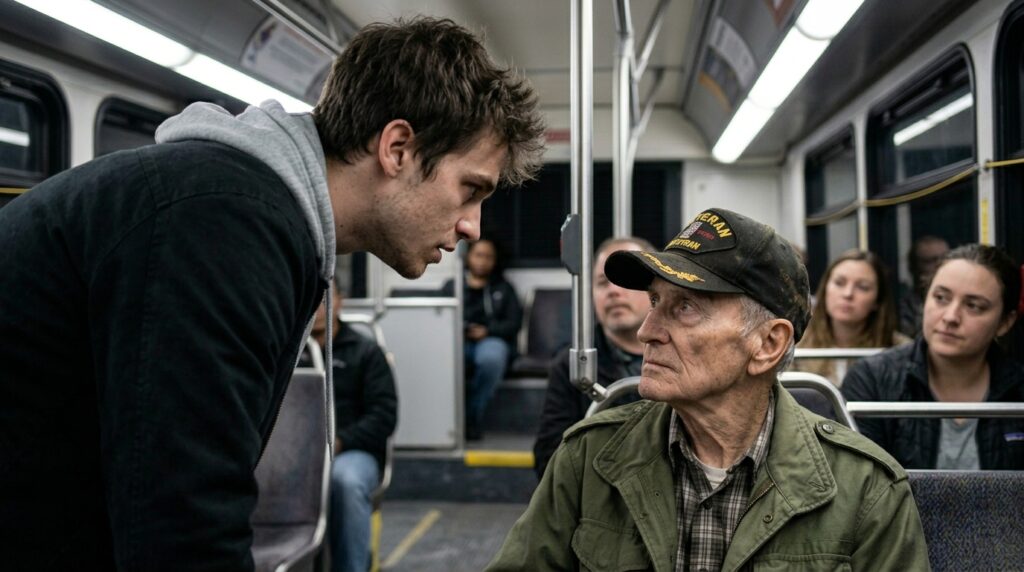
CHAPTER 7: THE REVERBERATION ON THE SEAMS
The north-bound local train emptied Arthur into the vast, echoing cavern of the central hub depot, a subterranean junction where the city’s old brick foundations met modern structural steel. The atmosphere down here was colder, heavy with the smell of wet gravel, ozone, and old grease trapped behind the station panels. Arthur didn’t follow the thinning crowd toward the escalator. He kept his arm pressed firmly against the yellowed manila folder beneath his jacket, his hand checking the lower pocket to confirm the heavy, notched brass key was still cradled in his palm.
He moved along the maintenance corridor behind track four, the steady tip-tap of his walking cane muffled by the damp film of soot coating the concrete floor. The light fixtures were sparser here, caged bulbs casting long, trembling shadows across the masonry. At the end of the maintenance lane, an industrial chain-link gate leading down into the deeper utility levels sat unlatched. Arthur stopped, using the brass-collared tip of his cane to nudge the heavy mesh. It swung inward with a dry, ungreased groan, revealing a heavy iron padlock hanging completely open from the latch. The metal loop was scratched, showing bright silver scoring where the boy had forced the mechanism with the district archive pass-key.
Arthur stepped into the dark stairwell, his leather-soled boots finding the wet stone treads. Groundwater dripped somewhere in the vertical depth, a slow, rhythmic ticking that sounded like an old field watch winding down in a quiet tent. He descended into the reclamation vault corridor, his joints aching against the raw humidity of the lower system.
“You shouldn’t have followed me down here, old man,” a voice called out from the dark, forty feet down the passage.
The boy was standing before a heavy, olive-drab iron locker built directly into the foundational masonry. A single grimy bulb dangled between them on a frayed cloth cord, illuminating the black nylon surface of his jacket and the tattered vinyl voucher clutched in his trembling fingers. He had the card holder wedged into the lock cylinder of the iron cabinet, but the pins wouldn’t turn; the pass-key could clear the gate, but the specific locker required Arthur’s notched brass key.
Arthur slowed his pace, the tip of his ash cane finding a dry patch of concrete to steady his weight. He didn’t lift his hands from the handle, letting his posture settle into the familiar composure of a commander who had negotiated with desperate men in far worse terrain. “Your grandfather didn’t want these doors opened, son. If he wanted this box on a courtroom table, he wouldn’t have spent thirty years keeping his mouth shut in that state facility.”
“He was protecting himself because he was scared!” the boy shouted, his voice cracking as it slammed into the wet masonry walls. He spun around, his back to the locker, his fingers digging into the rusted handles. “The VA said he didn’t qualify for the medical extension because there was no record of his platoon being exposed in the valley. They treated his sickness like an ordinary breakdown. If I pull the original log out of this box, the registry proves his unit was active on those coordinates for three straight weeks before the withdrawal.”
The devastating failure of the boy’s pursuit lay entirely exposed between them, a false flag that was about to shatter under its own weight. He believed he was an active driver of justice, a grandson mending a broken family legacy with legal paperwork. He didn’t know that Arthur carried the true, unredacted field copy within the faded cardstock folder on his lap. He didn’t know that the original platoon log inside that iron cabinet didn’t contain an administrative error; it contained a direct, signed order from Sergeant Miller himself, authorizing the falsification of the unit’s coordinates to shield three orphaned children they had smuggled across the border from an incoming tactical strike.
“If you turn that cylinder, you don’t get a pension, son,” Arthur said softly, his voice a gravelly, resonant anchor in the damp space. “You get an official investigation into an unauthorized transport of foreign nationals under false military manifests. You turn that lock, and the state doesn’t give you a check—they take the one thing your grandfather died keeping clean. His name.”
The boy froze, his fingers losing their grip on the vinyl pouch. He stared at Arthur’s frayed veteran cap, then down at the yellowing edges of the manila file peeking from the old man’s jacket. The psychological blow hit his frame like a physical shock, his shoulders collapsing as the structural reality of his grandfather’s sacrifice finally broke through the armor of his anger. The shared burden wasn’t a systemic mistake to be fixed; it was a profound, intentional silence paid for in blood and discipline.
“Then why did he leave the key?” the boy whispered, his voice shrinking into the hollow rumble of a train passing overhead. “Why keep the voucher if it was all a lie?”
Arthur reached into his lower pocket, his thumb brushing the cool, square teeth of the brass key as he prepared to offer the final paradigm shift of the valley.








