Chapter 7: The Wall They Refused to Lose
The news spread through Magnolia Pines by Sunday afternoon.
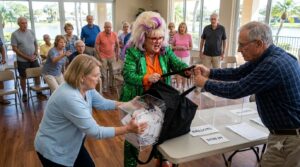
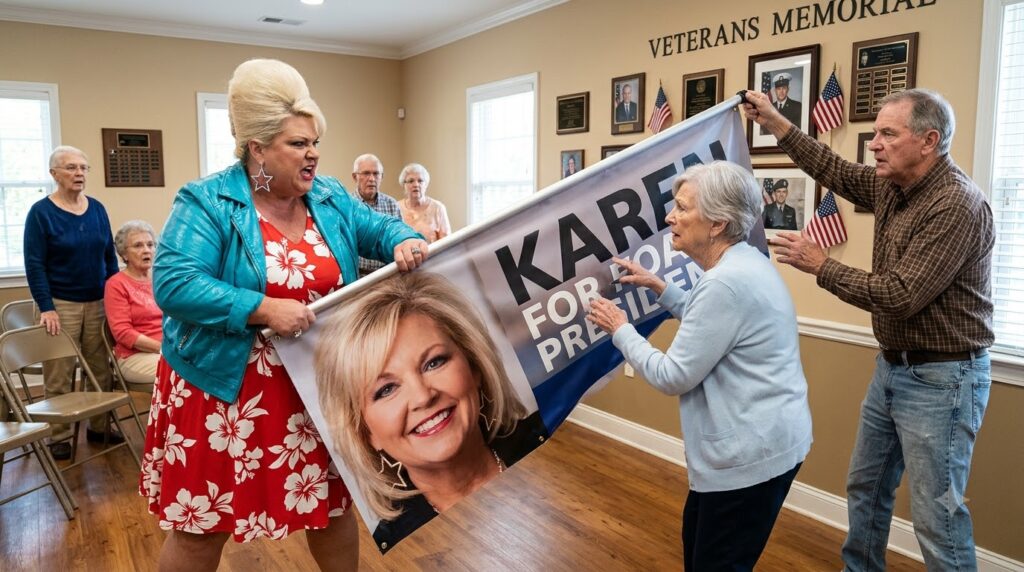
Karen planned to replace the veterans memorial with a leadership display.
For many residents, that crossed a line no fine or threatening letter could erase.
Dorothy Miller arrived at Margaret’s house carrying a worn photograph of her older brother, James.
He had been nineteen when he left for military service.
He never came home.
Dorothy had spent most of her adult life keeping his memory alive.
Her brother’s name was one of the plaques removed from the memorial.
“I don’t have many things left that belonged to Jimmy,” she told Margaret. “That plaque matters to me.”
Margaret embraced her.
Then she made a decision.
They would not wait for Karen to determine what happened to the memorial.
They would organize a community preservation effort.
Not by removing HOA property or violating clubhouse rules.
But by documenting the memorial’s history, identifying the families represented, and requesting formal protection through the association’s governing process.
Frank began contacting veterans and their relatives.
Harold assembled records showing when the memorial had been established and how its original funding had been approved.
Rebecca helped draft a proposal requiring membership approval before the memorial could be permanently altered or removed.
Margaret gathered photographs.
She found pictures of Robert measuring the wall.
Pictures of the dedication ceremony.
Pictures of veterans standing proudly beside their families.
One showed Karen herself, years earlier, attending the dedication as an ordinary homeowner.
She stood in the background, smiling politely.
Margaret studied the photograph.
She wondered when Karen had begun believing that holding an office made her more important than the people she represented.
The preservation effort brought an unexpected visitor.
A local newspaper reporter named Daniel Mercer contacted Margaret after hearing about the dispute from a resident.
Daniel was forty-six and covered community affairs for a regional newspaper.
He had seen arguments over HOA landscaping rules, parking restrictions, and neighborhood assessments.
But he had never encountered a dispute involving a veterans memorial and a president’s campaign banner.
Margaret agreed to speak with him.
Rebecca suggested that she stick to facts and provide documents wherever possible.
The interview took place in Margaret’s living room.
Daniel asked about Robert.
Margaret told him about her husband’s military service, his devotion to family, and his work helping fellow veterans.
She showed Daniel the photograph of the memorial before the banner was installed.
Then she showed him Frank’s photographs from the confrontation.
Daniel examined them carefully.
“Did Mrs. Caldwell explain why she covered the memorial?”
Margaret paused.
“She said her face belonged on that wall.”
Daniel looked up.
“Those were her words?”
“Yes.”
Margaret did not exaggerate.
She did not describe Karen as a criminal.
She explained the fine, the records requests, and the petition.
She also made clear that residents were seeking answers about association spending, not claiming to have proven financial misconduct.
Daniel contacted Karen for comment.
She declined an interview.
Instead, she issued a written statement accusing a small group of disgruntled homeowners of conducting a personal campaign against her.
She maintained that the banner was part of an authorized community improvement initiative.
The newspaper published the story on Wednesday.
The headline focused on the memorial dispute.
The accompanying photograph showed Karen’s giant smiling portrait hanging above the veterans wall.
By lunchtime, the story had circulated throughout the county.
Former Magnolia Pines residents contacted their old neighbors.
Relatives of veterans called the clubhouse.
A local veterans organization offered assistance with restoring the missing plaques.
Karen was furious.
She sent an email to homeowners condemning what she called negative publicity.
She insisted the HOA was being unfairly portrayed.
She also announced that the clubhouse redesign would be postponed pending further review.
For Margaret, that was an important development.
The memorial was safe for the moment.
But the larger conflict remained unresolved.
The petition had been submitted.
The financial questions remained unanswered.
Linda was still out of work.
And Karen continued to hold the presidency.
Then Elaine Foster called Margaret.
The HOA secretary had been reviewing the petition and the board’s procedural obligations.
She confirmed that enough signatures appeared valid to require a special membership meeting, subject to the association’s verification process.
Elaine also disclosed that she had asked the board to preserve financial records and consider an independent accounting review.
Thomas supported her.
Karen opposed both measures.
But Karen no longer controlled every vote.
The special meeting was scheduled for three weeks later.
Not everyone celebrated.
Some residents worried that removing Karen would create chaos.
Others feared legal expenses or higher dues.
A few genuinely believed Karen had improved the neighborhood’s appearance and efficiency.
Margaret understood their concerns.
She did not want a divided community.
She wanted a functioning one.
At the next neighborhood gathering, she addressed the room.
“We don’t have to agree about everything. But we should all be able to ask where our money goes and expect an answer.”
Nobody shouted.
Nobody demanded revenge.
Instead, residents began discussing practical reforms.
Open financial reporting.
Fair enforcement procedures.
Independent review of conflicts of interest.
Clear rules for protecting the memorial.
Margaret listened.
For the first time, the conversation was no longer only about Karen.
It was about what Magnolia Pines could become after her.
And that possibility frightened Karen more than any newspaper headline.