CHAPTER 10: THE BIT IN THE CORE
The scream of the diamond-tipped core drill didn’t start with a roar; it began with a high, metal-on-stone shriek that set the teeth of every dog on the avenue on edge before the sun had cleared the tree line.
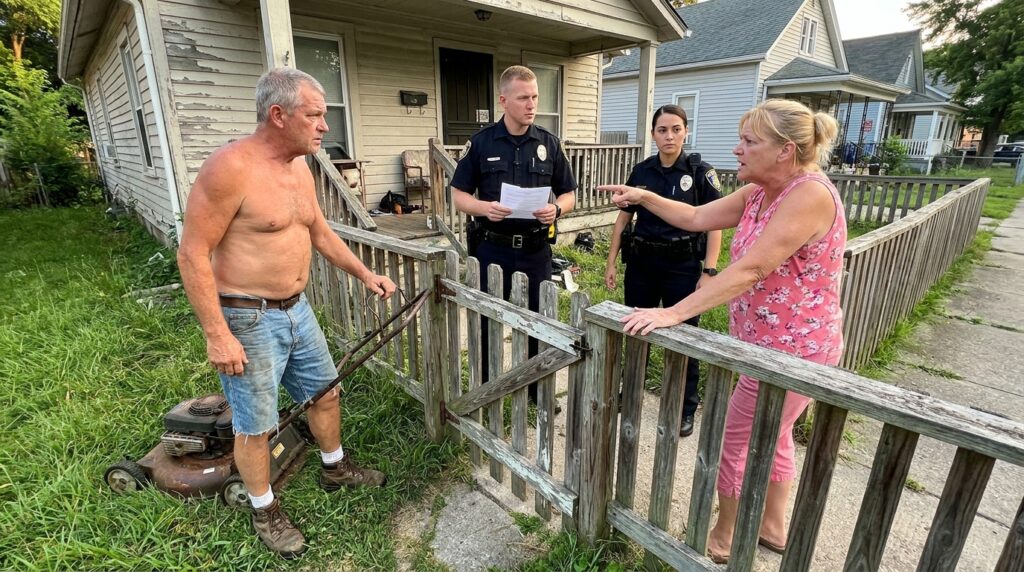
Miller sat on his top porch step, an old porcelain mug of black coffee held between his calloused palms. He hadn’t put a shirt on yet. The morning air was cold, scrubbed clean by the midnight storm, but the dampness stayed in the wood of his porch, rising up through his denim cutoffs like a chill from an old cellar. Thirty feet away, parked squarely across the yellow quarantine ribbon, a white municipal flatbed truck shuddered under the torque of its hydraulic mast.
A state structural marshal in a safety-orange slicker stood by the levers, his boots caked in the gray slime of wet lime and concrete slurry. He didn’t look like a bureaucrat; he had the thick, short neck of an ironworker and eyes that stayed fixed on the water-line feeding the rotating bore matrix. As the bit sank three inches into the rough concrete lip of Brenda’s garage footer, a thick, milky paste began to bubble out of the hole, spilling over into Miller’s uncut dandelions.
“Keep it steady at four hundred RPMs, Cory!” the marshal shouted over the mechanical rattle of the auxiliary diesel engine.
Miller took a slow sip of the coffee, his throat tight against the bitter, lukewarm liquid. The noise was an environmental disruption that made his kitchen windows rattle in their zinc tracks, but he didn’t move to stop them. He couldn’t. The yellow tape was still there, now accompanied by steel stakes driven eighteen inches into his turf, marking the boundary of the state’s quarantine zone. He was an observer on his own deed, watching three weeks of flat-rate shipyard wages evaporate while the state spent five hundred dollars an hour to measure a dead man’s lie.
Across the line, Brenda’s house was dark, but the white curtains on her kitchen window were pulled back six inches. Her face wasn’t visible, just the pale silhouette of her tight blonde knot against the interior shadow. She hadn’t come out to greet the crew. Her aluminum clipboard was gone, likely rotting in the county dump, replaced by the four-part structural summons the marshal had stapled to her garage door at six-thirty AM.
The drill note changed suddenly, dropping from a high-pitched whistle to a low, structural grunt that shook the hard clay beneath Miller’s boots. The flatbed truck tipped two inches to the left as the bore bit struck something harder than aggregate—something unyielding and metallic buried deep within the core of the concrete.
“Hold it!” the marshal yelled, throwing his weight against the primary hydraulic valve. The rotating steel pipe stopped instantly, a cloud of black diesel smoke puffing from the truck’s stack as the engine idled down into a low, rhythmic thudding.
The marshal reached into the bore hole with a long pair of steel tongs, his wet orange sleeve glistening with gray grease. When he pulled the tongs back, he didn’t have a clean cylinder of concrete. Caught in the iron teeth of the tool was a jagged, three-inch chunk of rusted steel cable—a thick, braided line that had been severed by the diamond matrix. It wasn’t standard reinforcing rebar. The wire strands were coarse, heavy, and carried the distinct, flat-ribbed texture of industrial high-line cable used in the sorting yards before the timber mill went under.
“Miller,” the marshal called out, turning his muddy boots toward the porch steps. He held the severed steel piece up between his fingers like a bone from a ditch. “You said her husband used old shipyard scrap for backfill?”
“He used whatever he could drag behind his tractor after the ninety-two liquidation,” Miller said, his voice a low rasp that didn’t carry past the drainage ditch. He stood up, setting the coffee mug on the rotted pine railing. He walked down to the edge of the yellow tape, his boots stopping an inch from the plastic ribbon. “That’s high-line rope. It runs through the whole foundation slab, doesn’t it?”
“It’s not just running through it,” the marshal said, his thumb wiping away a layer of wet gray powder to reveal a hand-stamped serial number notched into the core anchor bracket beneath the concrete lip. “It’s under tension. If your father didn’t sign the clearance for these tie-backs, Miller, this isn’t just an encroachment. This whole hill is being held up by a illegal deadman system anchored right under your kitchen floor.”
Miller looked past the marshal’s shoulder to the dark window next door. The white curtain clicked shut, the shadow behind the mesh disappearing into the cold, silent interior of the house. He felt the weight of the dirt shift again, a low, tightening friction that meant the true foundation of the block was buried much deeper than Brenda’s old notes.