CHAPTER 1: THE WEIGHT OF THE LEANTO
The grease on Miller’s knuckles was old, cooked into the creases of his skin by three straight shifts at the diesel yard. His shoulders carried the low, vibrating ache that comes from leaning over a flatbed chassis for twelve hours under high-bay lights. When he reached the latch of the corrugated metal lean-to behind his single-story house, the rusted iron resisted, scraping with a high, dry shriek that made the neighborhood dogs shift on their chains three lots down.
Inside, the air smelled of stale gasoline, rot-resistant cedar, and the damp earth creeping through the floorboards. The red push mower sat under a rotting canvas tarp. It wasn’t a modern machine; the steel deck was pitted with gray oxidation, and the wheels were caked with the dried, black mulch of three summers ago. He pulled the tarp back, the coarse fabric scratching against his calloused palms.
He didn’t want to look at the yard. He didn’t want to look at the southern line where the sun-bleached cedar fence split his lot from the manicured, green grid next door. But the heat was rising, thick and heavy with the promise of a late-afternoon thunderstorm, and the knee-high weeds along the boundary were already throwing seed into Brenda’s immaculate rye grass. Every hour those stalks stayed upright was an hour he spent waiting for the state to knock on his door.
He wheeled the machine out, the iron axle groaning. The yard was a desaturated expanse of dusty gray earth and overgrown dandelions that had survived the July drought. Across the line, Brenda’s lawn looked like a green carpet, wet from an automatic sprinkler system that ticked like a watch every morning at five.
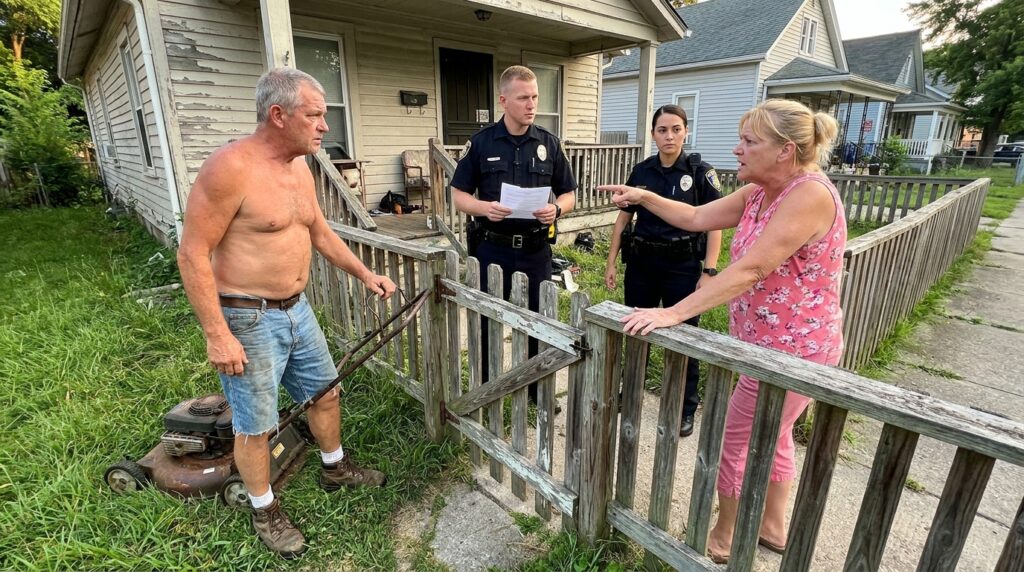
Miller stopped at the edge of his porch, his work boots heavy in the weeds. He didn’t have his shirt on; the midday sun beat directly against his stocky, weathered torso, highlighting the pale, jagged scar across his ribs from an old shop accident. He reached down and checked the fuel tank. Bone dry. He leaned his weight against the mower’s rubberized handle, staring at the gray boundary fence. Two feet inside his father’s old stakes. He knew the iron pins were down there, swallowed by the soil, waiting for someone to dig them up.
He grabbed the red plastic jerrycan from the porch step. The gas inside sloshed with a heavy, chemical gurgle. As he unscrewed the cap, the smell of unleaded fuel cut through the humid scent of damp earth and coming rain. He poured it slow, watching the dark liquid fill the tank, his eyes never leaving the white-painted porch next door.
The screen door over there didn’t slam. It clicked. A sharp, deliberate sound that meant Brenda had been standing behind the mesh, waiting for the first sign of movement. She stepped onto her top mat, her blonde hair pulled back into a tight, severe knot, her bright pink floral top standing out against the white trim of her siding like a signal flare. In her left hand, she held a clipboard.
Miller didn’t look up, but he felt the shift in the air—the friction that had been building between their properties for six months. He tightened the gas cap until the plastic clicked twice, his forearms tensing as he gripped the black rubber pull-cord. He knew what was coming before her white capri pants even cleared the bottom step of her porch.