
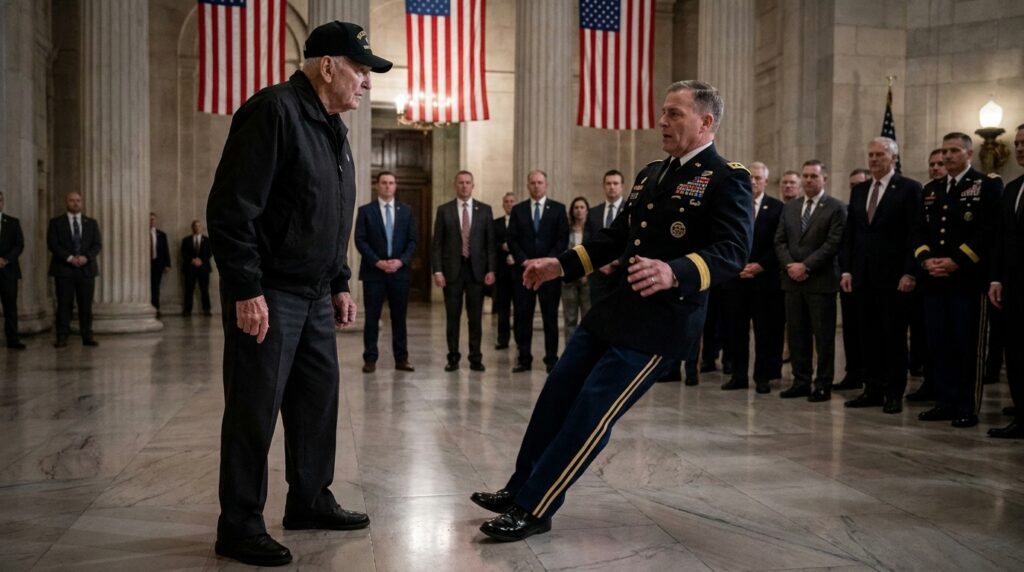
CHAPTER 9: THE GREY HORIZON
The gravel lane gave way to the oily, black asphalt of the secondary industrial access road with a single, wet crunch of his rubber soles. The rain didn’t slow. It came down in heavy, diagonal sheets that rattled against the rusty corrugated metal of the perimeter warehouses, turning the grease on his jacket into a slick, reflective skin under the low-hanging grey sky. Behind him, the high municipal silhouette of the ceremonial hall was already fading into the mist, its white marble pillars looking like old teeth sinking into the fog.
He didn’t check the rearview lane. His stride stayed level, his boots holding the centerline of the asphalt where the water didn’t pool. His left arm kept the hard, canvas-bound logbook locked flat against his ribs, the wet paper smelling of moldering lime and ancient ink. It was an institutional weight, a thirty-ounce block of dead history that the captains upstairs were currently tracking through their digital log screens. Let them hunt the paper.
His right hand remained deep inside his pocket, his knuckles resting against the cold, iron handle of his folding knife. Inside the knife’s brass liner, the hand-punched coordinate card sat tight—a three-hole grid matrix that didn’t exist in the modern command files.
He reached the end of the warehouse fencing where a rusted sixty-eight utility truck sat idling in the weeds. Its dark green lacquer had long ago given way to a rough coat of red primer, the exhaust pipe coughing out a thick, grey plume of diesel smoke that smelled of sulfur and unburnt oil. The driver’s door didn’t have a modern electronic lock; its handle was a solid piece of pitted chrome that had grown cold under the rain.
Vance opened the cab. The interior smelled of old horsehair, damp wool, and the faint, sweet scent of gun oil from the steering column shroud. He slid onto the cracked vinyl seat, the canvas of his jacket groaning against the springs as he pulled the door shut with a heavy, unlatched thud that rattled the glass in its frame.
He reached into his pocket, drew out the brass utility key, and jammed the notched blade into the ignition slot. The tumbler was loose, worn down by forty winters of mechanical friction until it accepted the metal with a dry, internal click. He didn’t turn it instantly. He sat for three seconds, his eyes tracking the small white shaving nick on his own reflection in the cracked rearview mirror. The face looking back at him wasn’t the face of the old man the clerk had ordered behind the blue tape; it was the face of the third platoon supervisor from sector 4-1-2.
He turned the key. The old starter motor didn’t click or hesitate with a computer diagnostic delay; it engaged with a low, heavy growl that shook the entire dashboard, the inline-six engine catching the fuel line with a sudden, mechanical roar that blew a spray of soot out into the wet weeds.
Through the vibrating floorboards, Vance felt the old frequency. It wasn’t the clean, silent digital signal that the modern security detail used to track perimeters. This was the raw, unshielded rumble of functional iron—the kind of engineering that didn’t leave a data trail on an administrative network. He dropped the column shifter into first gear, the transmission teeth grinding once before locking into the slot with a firm, metal-on-metal thud.
The truck pulled out onto the grey state highway, its manual wipers scraping two narrow semi-circles through the grime on the glass. The road ahead was long, running flat toward the western salt flats where the sky met the sagebrush in a single, desaturated line of grey. They had wiped his name from the ledger to save a budget line, but they had left the wires in the dirt, and Vance was about to turn the power back on.








