
CHAPTER 3: THE SEAM OF THE PERIMETER
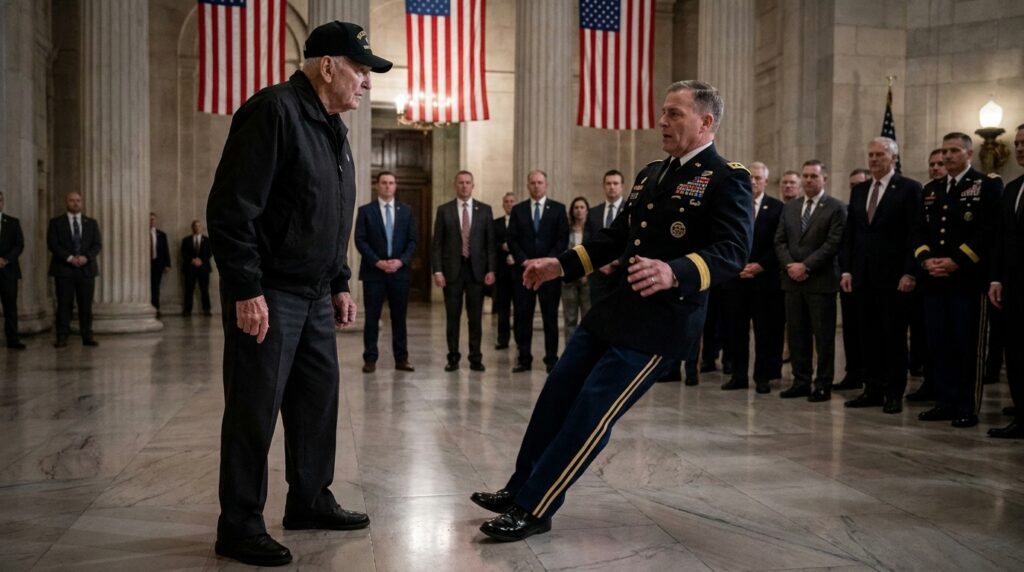
The friction of the security lane disappeared behind him as his boots took the cold, unyielding weight of the inner threshold. The transition had to be quick, an unpunctuated drift through the institutional line before the perimeter guards could translate the captain’s staggered stance into an active alarm. Behind him, the low click-clack of the clerk’s keyboard remained dead, a brief structural silence hung in the air like dust over an open trench.
He did not look back to measure the captain’s recovery. A top-heavy man required exactly four seconds to find his center on waxed stone when his pride had been uncoupled from his leverage. Instead, the veteran turned his black cap toward the restricted exhibition tier, his eyes scanning the high vertical columns for the specific gaps in the modern security grid.
The hall widened here, the scent of zinc and stale floor wax giving way to the heavier, older smell of preserved oil and historical iron. Along the north wall, behind heavy glass cases and thick braided barriers, sat the modern reproductions of tactical communication systems. To the public eye, the pristine silver housings and digital displays represented the clean, absolute edge of contemporary state defense. But to a man who had pulled grease from the gearboxes of old tracking relays, the metal looked thin, lacking the density of real ordnance.
He approached the center display, his right hand still resting deep inside his jacket pocket. His thumb traced the small notches of the brass ignition key, using the rhythmic metal-on-skin friction to steady his pulse against the low-frequency hum of the air conditioning. The key was the only honest piece of iron in the room.
He stopped three inches from the primary console housing. The surface was finished in matte-black powder coat, textured to resemble field-grade equipment, but the edge joints were held together by small Allen screws rather than industrial rivets. It was a cosmetic shell.
His eyes drifted down to the base plate where the cable harnesses routed into the concrete floor. There, tucked just beneath the edge of a modern fiberglass shield, was a small, stamped metal bracket. It was pitted with old rust, its surface coated in a hasty layer of gray spray paint that hadn’t completely filled the deep microscopic grooves left by a heavy manufacturing lathe. Stamped into the corner of the bracket was a three-digit prefix: 4-1-2.
The number sat in his mind like an unexploded shell. It wasn’t a modern part number; it was an old regional designator for the communications node at the edge of the Nevada salt flats—a sector that the official records claimed had been dismantled and bulldozed into the sand forty years ago. The modern military didn’t build new things from scratch; they built them over the bones of the old lines, hiding the old foundations beneath a veneer of silver paint and glass screens.
“You’re not supposed to be near the hardware without a staff badge, elder,” a voice said from behind his right shoulder.
It wasn’t the captain. This voice was lighter, younger, lacking the starched institutional authority of the command track. The veteran didn’t turn his head instantly; he waited for the sound of the footsteps to register against the marble. Two distinct clicks of leather heels, followed by a soft, irregular drag—the mark of a junior specialist who had spent too much time sitting at a radar desk and not enough time running the perimeter.
“This bracket didn’t come from a new contract,” the old man said, his finger pointing toward the rusty seam under the shield. He didn’t drop his pitch; his voice carried the dry, mechanical rasp of an old diesel engine ticking over in the cold.
The young technician stepped beside him, his gaze dropping to the hidden bracket with a brief flash of professional confusion. His identification tag clinked against his zipper—a small piece of cheap aluminum that lacked the weight of a real dog tag. “That’s just surplus structural anchoring. Everything in this display is tier-one modern routing.”
“Surplus from where?” the veteran asked, his thumb locking against the ignition key inside his pocket.
The technician didn’t answer. His eyes shifted toward the main entrance lane where the captain was finally resetting his dress blue coat, his face the color of burnt brick as his hands checked his silver medals for damage. The social architecture of the room was beginning to warp under the pressure of the unrecorded incident, and the young man could feel the weight of his supervisor’s rage moving down the floor.
The veteran took one slow step backward, his boots holding the stone with absolute balance. He had found the seam he was looking for. The modern exhibition wasn’t just a ceremony for donors; it was a lid screwed down tight over a live transmission line that had never been officially turned off.








