CHAPTER 7: THE STRIDENCY OF THE CHARTER
The brass T-junction didn’t just leak—it split.
The wet, metallic snap echoed from the depths of the trench as the pressurized line back-fed from the underground reservoir, sending an instantaneous column of gray silt and gravel twenty feet straight up into the air. The water hit the vinyl siding of the house with a heavy, rhythmic wallop, tearing three panels of gray plastic clean off their mounting tracks and exposing the rotting plywood sheathing beneath.
“Arthur! Jump!” Miller’s voice was lost beneath the immediate roar of the breach.
Arthur threw his weight backward, his work boots slipping on the slick, waterlogged asphalt. He scrambled up the incline of the driveway as the trench walls sloughed inward, the massive rear tires of the seven-ton dump truck tilting three inches to the left as the concrete pad beneath them cracked completely in half. The heavy steel chassis groaned under the uneven shifting of the gravel load, the hydraulic fluid lines straining until they whistled.
He didn’t look at the truck. He lunged across the buckling sod toward the plastic patio chair. The force of the geyser had blown the old clipboard to the grass, its pages plastered down by a film of dirty water. Arthur knelt in the weeds, his calloused thumbs sliding under the wire clip, peeling back the wet, translucent layers of paper until he reached the final sheet.
The ink was running, but the red state seal was unmistakable. The legal existence of the subdivision’s homeowners’ association hadn’t just lapsed—it had been terminated five years ago by the state department of corporations for non-compliance and systemic tax evasion. Every violation notice she had issued, every weight limit fine she had threatened, and every dollar of infrastructure assessments she had collected from the families on this cul-de-sac had been a total fiction.
“Miller!” Arthur yelled, his voice cutting through the thrum of the diesel and the roar of the water. He held up the wet document, the ink bleeding down his wrist like charcoal water. “There is no HOA. The charter was dissolved in twenty-one. She’s been running a ghost board.”
Miller looked up from his ruggedized tablet, his face completely pale under the amber flashers of his utility truck. He ran a hand across his mouth, his fingers coming away wet with the overspray. Behind him, the murmuring crowd of neighbors went dead silent. The man in the aviation cap stepped closer, his boots pressing into the ruined turf.
“What do you mean, dissolved?” George asked, his voice dropping into a dangerous, flat register. He looked from Arthur to the woman standing by the exposed garage wall. “She collected three hundred dollars from every house on the lane last Tuesday for the culvert cleaning. Where did that money go if there isn’t an account?”
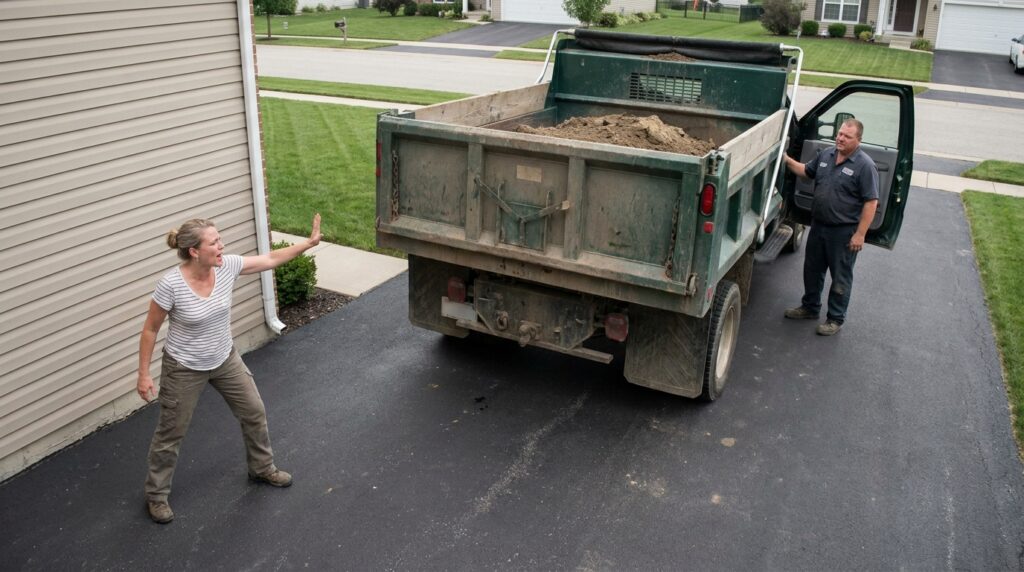
The woman didn’t move away from the house. Her work pants were soaked through to the hip with gray silt from the geyser, and her sunglasses were speckled with fine sand, hiding her eyes completely. She looked at her neighbors, her lips pulling into a thin, tight grimace that showed the edges of her teeth.
“It went into the valve maintenance,” she said, her voice rising above the sound of the rushing water, hard and defensive as iron plate. “It went to the operators who keep the county inspectors from looking at the grid maps. If I didn’t pay them, the district would have come in with back-taxes and infrastructure liens that would have taken every house on this ridge. I didn’t steal your money—I kept the county off your backs.”
“You forged the notices,” Arthur said, standing up and stepping toward her. He pointed the iron utility wrench at the clipboard lying on the wet grass. “You kept the neighborhood locked behind an imaginary rulebook so nobody would ever look at the survey stakes. You didn’t want the city workers out here because you knew the minute a real crew dug into this driveway, we’d find the main line bypass your husband left behind.”
She didn’t retreat. She stood her ground on the remaining strip of uncracked concrete, her hand reaching down to catch the brass key ring in her pocket, her knuckles white with tension. She was a sovereign protector of a broken empire, fighting for a legacy that had turned into a criminal extraction ring beneath her feet.
“You think these people want the truth, Arthur?” she whispered, her voice dropping into a sharp,Transactional hiss that only he could hear over the roar of the geyser. “They wanted the cheap water. They wanted to pretend the county didn’t own the dirt. They looked the other way for fifteen years because it suited their margins. I just provided the paper line they needed to sleep at night.”
Arthur looked past her to the neighbor layer. George and the others weren’t moving forward anymore; they had frozen on the curb, their faces catching the cold, desaturated light of the noon sun. They weren’t looking at her with anger now—they were looking down at the ground beneath their own driveways, realizing for the first time that the entire cul-de-sac was tied into the same illicit loop, and that every single house on the ridge was legally compromised.
Before Miller could call for the emergency isolation crew, the ground beneath the dump truck’s front axle gave a massive, structural heave. The old asphalt broke into jagged, charcoal-colored blocks as a second, larger fissure ripped open along the exact survey line, the high-pressure water from the high ridge main finding a new path through the foundation stone.