
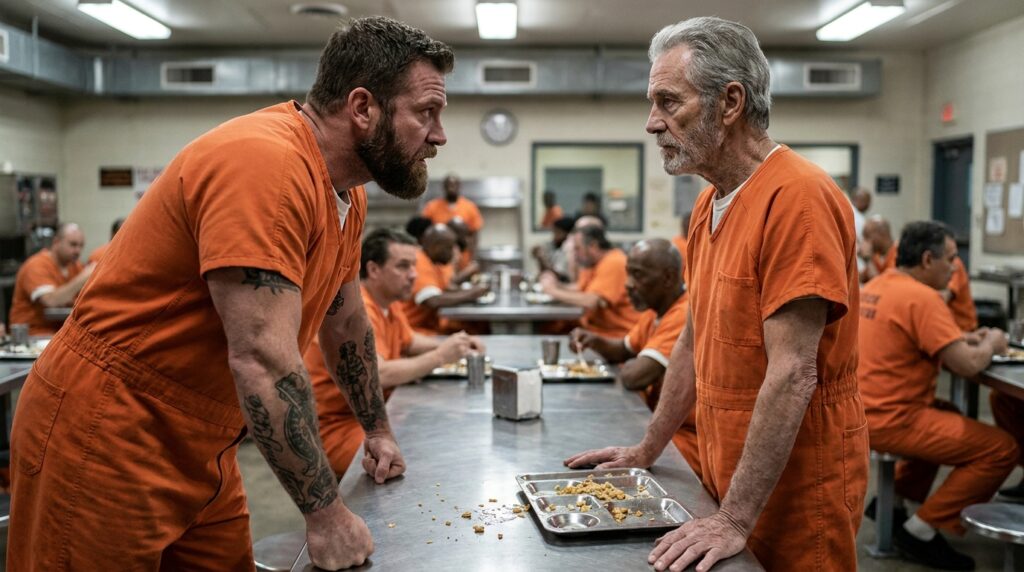
CHAPTER 3: THE LAUNDRY SORTING FACILITY
The administrative transfer order came down at dawn, signed by a shift lieutenant Silas had never seen. It wasn’t an exoneration; it was a reassignment to the basement laundry lines, where the ambient temperature stayed at ninety-eight degrees and the humidity came from giant, vibrating copper boilers that ran on high-pressure steam. For Silas, the heat was a heavy weight against his fractured rib, each breath a sharp reminder of the cafeteria floor, but the change of venue was exactly what he had calculated for when he sat in the dark of Cell 4.
The laundry sorting facility was a labyrinth of gray institutional linen, wet canvas carts, and the choking stench of industrial lye. Because of the constant steam, the guards preferred to stay behind the reinforced glass of the upper observation deck, leaving the floor to the trusted lifers who managed the sorting tables.
Silas hauled a wet canvas cart toward the furthest row of industrial dryers, his boots sliding through the slick water that pooled along the cracked floor drainage tiles. His heart gave a rhythmic, double-beat skip—a warning sign that his lack of beta-blockers was starting to strain his arterial walls. He needed the logs, and he needed them before the afternoon tier count.
A lean man with a missing thumb and skin yellowed by three decades of basement grease stood by the linen press. This was Henderson, a lifer who had spent twenty years handling the intake manifests for the prison medical wing’s laundry bags. As Silas approached, Henderson didn’t look up from his press, his movements remaining perfectly rhythmic as he fed gray sheets into the hot iron rollers.
“Miller brought down three bags of medical rags last night,” Henderson said, his voice barely audible beneath the high-volume drone of the exhaust fans. “He didn’t leave them with the intake crew. He took them straight to the industrial incinerator chute behind the boiler room.”
Silas leaned his weight against the frame of his laundry cart, allowing his diaphragm to rest against the cold iron rim. “Did he clear the pockets?”
“He thought he did,” Henderson muttered, his foot tapping the steam valve pedal with a sharp hiss. “He dropped a bundle of burned carbon paper into the waste bin before he locked the chute. It was mostly ash by the time the shift turned over, but some pieces caught on the lip of the grease trap.”
Henderson didn’t look back as his hand slid into the inner lining of a freshly ironed pillowcase on the folding table. With a swift, practiced gesture born of institutional survival, he transferred a small, folded scrap of paper into Silas’s palm. The paper was rough, stiff with dried bleach, and smelled faintly of chemical residue.
Silas tucked the scrap beneath his orange waistband, his fingers immediately feeling the faint, raised indentation of carbon ink through the fabric. He turned his cart back toward the shadow of the storage bins, out of the direct line of sight of the upper glass booth. His pulse was thudding in his ears, a thin, rapid vibration that made his vision blur slightly around the edges.
Standing in the narrow gap between two stacks of institutional mattresses, Silas unfolded the scrap. It was a single, bleach-stained sheet torn from the pharmacy cage’s primary intake register. The handwriting belonged to Officer Miller, but the signatures alongside each entry were forged with a heavy, uneven pressure that didn’t match the medical officer’s clinical script.
The page documented three months of systematic medical non-compliance attributed to Silas’s name. According to the ink, Silas had allegedly refused twelve consecutive doses of heart medication, each refusal marked with a code that classified him as actively suicidal and a hazard to the tier staff. But the true detail—the physical secret that broke the surface of the lie—lay at the bottom of the column. Every forged refusal had been stamped with an authorization code that didn’t originate from the medical clinic. The stamp belonged to the Special Investigations Unit, the internal division controlled directly by the Warden’s administrative circle.
The decoy secret was clear. Miller wasn’t acting out of a personal grievance or simple tier cruelty; he was the functional instrument of an administrative execution designed to terminate Silas’s medical parole before his file reached the state review board next month. They were building a paper trail that would justify finding him dead in his bunk from natural causes, a clean bureaucratic deletion.
Silas refolded the carbon sheet, his thumb pressing against the rough edges of the paper until the crease cut into his skin. The revelation confirmed the trap, but it raised a deeper, colder question that Miller’s black notebook couldn’t answer. Silas was an old lifer, a quiet trustee who kept his mouth shut and his head down. A forged medical log was a high-risk administrative forgery, the kind of paper that could ruin a guard’s pension if an outside inspector ever verified the signatures. The administration wouldn’t risk that level of exposure just to keep a seventy-eight-year-old thief from dying at home.
He felt the copper washer inside his mouth, its metallic taste stronger now against his parched throat. They weren’t trying to punish him for the cafeteria fight. They were trying to silence him because they believed his impending release would take something out of these walls that was never supposed to see the sun.
The heavy iron door at the back of the laundry tier groaned open, the sound cutting cleanly through the steam. Two tier guards Silas hadn’t seen on the laundry rotation stepped through the mist, their hands unhooking the leather retaining straps on their heavy wooden batons. They didn’t look at Henderson or the other lifers. They walked directly down the center lane toward Silas’s cart, their eyes fixed on his gray beard.
“Silas,” the lead guard called out, his voice sharp against the hiss of the copper boilers. “Warden wants you in the recreation yard. Now. Leave the cart where it sits.”








