
CHAPTER 11: THE SOOT ON THE WIND
The white steam didn’t rise; it expanded with a high-pressure roar that flattened the remaining smoke against the zinc ceiling plates. Silas crawled backward through the burning tube, his right hand hooking into the raw linen binding of the five-pound ledger while his split leather boots kicked blindly into the dark toward the elevator pit. Below the grate, the carbine fire was a series of muffled, concussive thuds, the bullets puncturing the steel floor framing but failing to penetrate the horizontal thickness of the foundation stone.
He tumbled out of the air intake conduit back into the standing water of the shaft base, his body hitting the sludge with a heavy, deadened splash that cooled the blistering heat in his shirt. Above him, the administrative lift car was completely stationary, its safety counterweights locked in place by the pneumatic shutdown. The air down here was thick with the smell of vaporized machine oil and old limestone dust.
Silas sat in the mud, his back braced against the concrete pillar that anchored the main lift track. The uneven, three-beat gallop in his chest had finally gone quiet, replaced by a wide, heavy coldness that made his fingers clumsy as he opened the canvas-covered ledger across his wet knees. The fluorescent light leaking down from the cracked service door was barely enough to illuminate the columns, but Silas didn’t need to read the numbers. He knew the names by heart.
He reached into the inner sleeve of the binding, his fingers sliding behind the glued linen reinforcement until they touched a hard, metallic circle. It wasn’t another copper washer. It was a silver federal transit token from 1996—the unique identification marker issued to the independent treasury inspectors who had vanished from the state roster during the first prison construction audit thirty years ago.
The ultimate reality sat flat in his palm. The Warden hadn’t built this infrastructure to launder simple administrative bribes or kickbacks from the welfare fund. The prison itself was the asset; a closed financial circuit where every cell block was a shell company designed to absorb federal infrastructure bonds for an offshore trust that had been operational since the day the first iron gate was bolted into the stone. Silas hadn’t been chosen to re-index the archive because he was a trusted lifer; he had been left there because they believed an old man with a failing heart would simply die before the maturity date on the bonds cleared the regional bank.
The service elevator door at the end of the lower corridor blew outward with a sharp, pneumatic pop, and the white mist from the boiler room began to spill across the linoleum tiles like river silt.
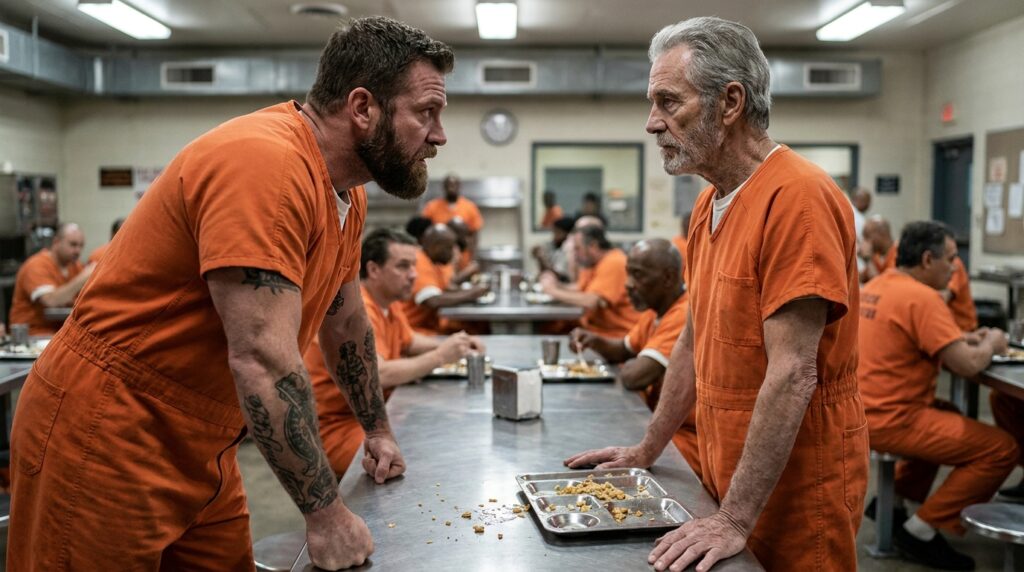
“Silas!” the Warden’s voice came through the vapor, closer now, accompanied by the wet, rhythmic dragging of a leather boot-heel through the water. He was moving without his security detail, his hand scraping along the rusted wall conduits to maintain his balance in the blindness of the steam. “The trucks are at the outer wire, Silas. The marshals aren’t here to read the ledger. They’re here to secure the physical property for the state receiver. A piece of paper doesn’t change the custody order.”
Silas stood up, his right hand lifting the canvas volume by its broken spine, his left arm still hanging uselessly against his cracked ribs. He pushed the heavy service door wide, stepping out of the dark of the elevator pit directly into the path of the advancing silhouette.
The Warden stopped five paces back, his white shirt completely blackened by the boiler blowback, his fingers twitching near the pocket where his private keys were kept. He looked at the thick canvas book in Silas’s hand, then down at the small silver transit token sitting on the top page.
“It’s thirty years too late for a trial, Silas,” the Warden whispered, his breath coming in shallow, ragged wheezes that matched the old man’s cadence. “The men who signed those transfers are either dead or running the committee upstairs. You take that book across the gate, and all you’re doing is giving them a reason to rename the facility.”
“I’m not taking it to the gate,” Silas said, his gravelly voice dropping into the lowest register of the room’s industrial rumble.
He didn’t swing at the Warden. He didn’t move toward the main administration lift. Silas stepped sideways to the wide, vertical iron shaft of the primary powerhouse flue—the massive, unlined exhaust trunk that fed the soot from the lower furnaces straight up through the center of the housing tiers toward the roof line. The iron access hatch was hot to the touch, its edges weeping with thick, black creosote that had accumulated over half a century of continuous burning.
With his right hand, Silas unlatched the heavy lever, the internal draft of the chimney drawing the white steam from the corridor into the dark throat of the brickwork with a fierce, whistling intake of air. He held the canvas ledger over the open void for a single, static second, letting the hot air from the backed-up boilers catch the edges of the linen pages.
“Silas, don’t,” the Warden said, taking a step forward, his hand extending toward the book with a sudden, frantic desperation that stripped the last remnants of executive authority from his face. “That’s the only record left.”
“I know,” Silas said.
He released his grip. The five-pound book didn’t fall down into the flames; the immense, pneumatic upward draft of the exhaust line caught the heavy canvas volume, tearing the pages from the spine in a fraction of a second. The thirty-year accounting ledger vanished upward through the dark center of the prison architecture, its columns of ink and forged signatures dissolving into a column of white-hot ash and gray sparks that flew out into the cold rain above the cell blocks.
The Warden dropped to his knees before the open hatch, his hands reaching blindly into the hot soot to catch the charred fragments of the linen binding, but the draft had already cleared the chamber.
Silas stepped back into the shadow of the elevator frame, his hand moving to his mouth to retrieve the thin copper washer from beneath his tongue. He dropped the small piece of metal into the stagnant water of the floor drain, watching it sink beneath the gray oil slick before the first heavy thuds of the federal marshal’s entry axes began to splinter the upper administrative doors. The air from the chimney was clean now, smelling only of wood-ash and the wet earth outside the walls, and the old man simply sat down against the iron rail to wait for the change of shift.








