
CHAPTER 9: THE RUSTED HORIZON
The door of the F-150 didn’t slam; it met the frame with a wet, heavy click that was instantly swallowed by the downpour. The rain was coming off the courthouse roof in solid gray sheets, cascading over the cold stone steps and churning the limestone dust along the curb into a gritty, milky paste.
I didn’t use the stairs this time. I walked up the side ramp meant for the coal deliveries, my hand sliding along the cold, rusted iron railing to keep the tremor in my right knee from buckling my frame. Inside my jacket, the folded tax map was wet against my ribs, the ink from the purple corporate seal starting to bleed through the lining of the canvas.
The basement hallway of the courthouse was narrow, low-ceilinged, and smelled of eighty years of damp boiler pipes and sour floor wax. At the far end, behind a set of double oak doors with wired-glass panels, the yellow lights of the hearing room were burning.
There were no onlookers in the corridor. The town had already gone home to turn their taps on, completely blind to the gray sludge currently working its way down through the limestone fissures toward their kitchens.
I pushed the oak doors open.
The seven members of the county zoning board were seated behind a curved pine table that had been stained to look like mahogany, though the cheap veneer was peeling away in long, pale curls near the leg joints. At the center of the table sat the final ledger—the master plat book for District 4, its leather spine reinforced with strips of heavy gray duct tape.
Old man Miller had been right about the saw. The board chairman, a man named Henderson whose family had owned the local lumber yard before the syndicate bought his notes, had his gold pen poised two inches above the signature block.
“The public comment period concluded at the Friday morning session, Silas,” Henderson said, his voice echoing flatly off the bare plaster walls. He didn’t look at my face; his eyes locked on the dark grease smudges and wet clay on the sleeves of my tan jacket. “The vote on the industrial corridor infrastructure package is an administrative matter now. We’re on a schedule.”
“The schedule’s dirty, Miller,” I said, my boots leaving a track of wet grit as I walked straight to the railing that separated the benches from the table. I reached into my pocket and pulled out the split, folded tax map, throwing it flat across his clean legal blotter. “The survey lines you’re certifying don’t exist. You’re registering a dead aquifer to clear the liability for the battery plant.”
The other six board members didn’t move. They sat stiff, their faces pale under the flickering fluorescent tubes, looking anywhere but at the paper. They were onlookers—the generation that had watched the factories close, the generation that had signed the municipal waivers because they were too tired to fight the banks and too scared to look at what was coming out of the ground.
“Jesse Miller signed the estate release,” Henderson said, his knuckles turning white as he gripped the gold pen. “The county road office verified the title chain at noon. The development core has a legal right to seal the auxiliary wells for the construction lane.”
“Jesse signed a fraud,” I said. I leaned over the wooden rail, my fingers hooking into the molded pine cap until I felt the ancient varnish crack beneath my nails. “And he signed it with ink that belonged to Vanguard Trust. The deep wells aren’t auxiliary cores, Henderson. They’re the town’s main reservoir feeder on the lower shelf. If you sign that ledger, you’re locking the cement over the only clean well within twenty miles.”
The heavy double doors behind me creaked open.
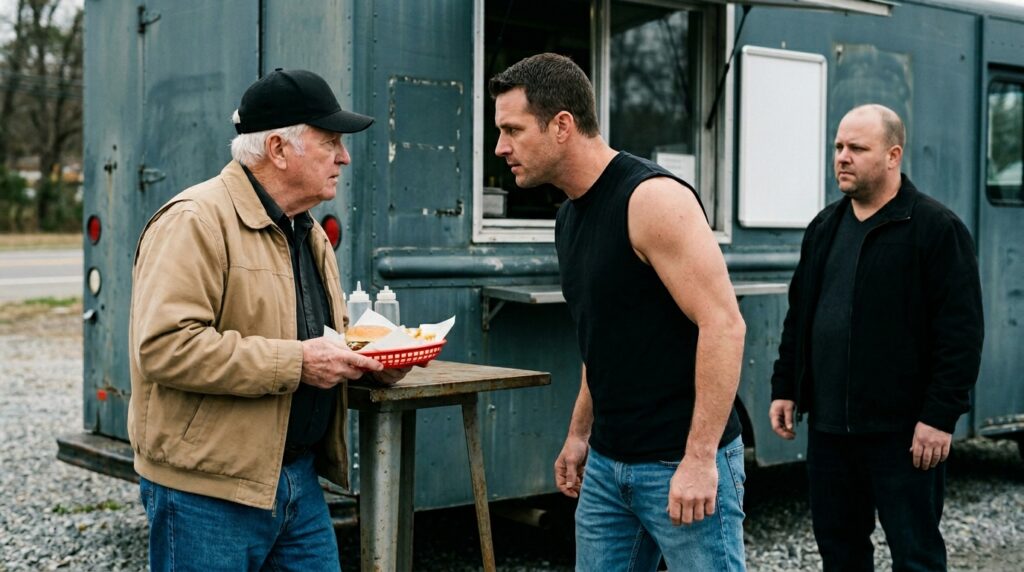
Caleb stood in the threshold, his sleeveless shirt soaked through by the rain, his thick neck muscles twitching as he looked from my back to the ledger on the table. Behind him, the bald man remained in the shadow of the corridor, his arms crossed over his nylon jacket, his dead-eyed gaze fixed on the floorboards.
“The vote’s already been called, Silas,” Caleb said, his rasp carrying through the small room like a file scraping across a rusted pipe. “The board don’t take evidence from the field. Henderson, sign the book. The trucks are waiting at the crossroads.”
Henderson looked down at the gold pen in his hand, then at the altered map where the scratched-out word POTABLE was still visible beneath the purple ink of the corporate seal. His jaw worked for three seconds, a slow, rhythmic hidden twitch that showed exactly how much his vote had cost the town’s future.
“The vote is certified,” Henderson whispered, his hand dropping to the paper. He didn’t look at me as the gold point traced his name across the signature block, the ink drying dark and official under the yellow light.
The system was locked. The paper had won, just like it always did when the iron was old and the young men were hungry enough to sell the dirt from under their own boots.
I didn’t yell. I didn’t reach for the fencing tool in my pocket. I turned around slowly, my knees making that dry, clicking sound in the silence of the hearing room, and walked past Caleb toward the double doors. He didn’t try to stop me now. He had his signature. He had his road.
As I stepped out onto the courthouse ramp, the rain had stopped, leaving the square in a cold, desaturated gray light that turned the puddles along the limestone curb into mirrors of dull lead. The state inspector’s transport was gone from the highway turn-off, its white strobe lights completely swallowed by the northern fog.
I climbed into the cab of the F-150, my hands shaking so hard I could barely guide the brass key into the ignition switch. The engine caught with that same ragged, eight-cylinder roar, the vibration humming through the floorboards and settling deep into the ache of my lower back.
I drove back toward the ridge, the transmission whining its low, familiar complaint against the silence of the valley. When I pulled down my lane, the concrete pump-house was still there, its iron door swinging loose in the morning draft, the slate-grey sludge still dripping slowly from the split filter cap onto the concrete floor.
They had the ledger signed, and the yellow dozers would be at the gate by seven tomorrow morning. But the well was still mine, and the iron tool was still in my pocket. An aging man cannot stop the county wind from blowing, but he can stay on his feet until the timber splits, and he can make them pay for every inch of the line they try to plow under.
I turned the headlights off, leaving the truck to idle in the dark gray weeds behind the house, and picked up the fencing hammer from the seat.








