
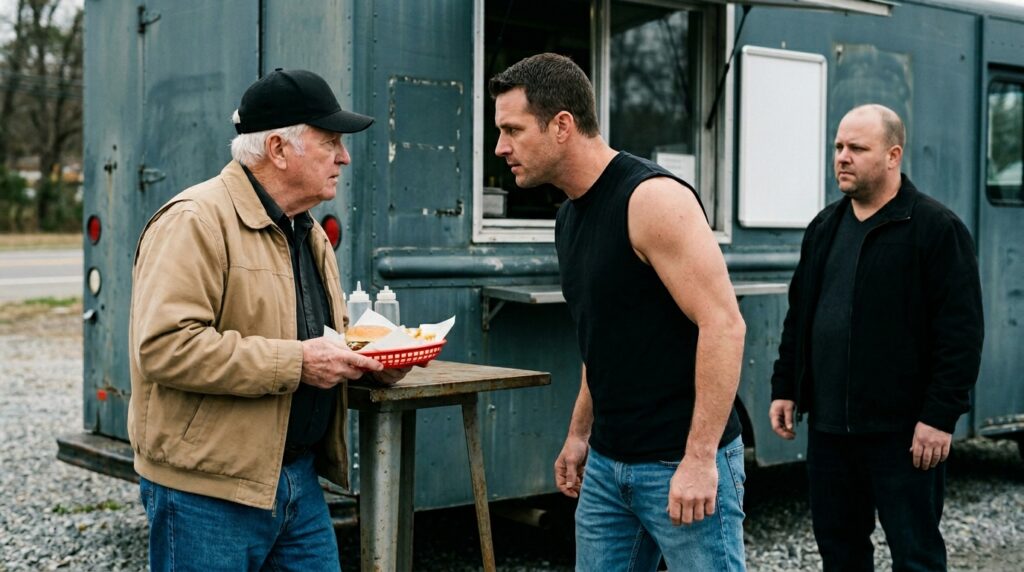
CHAPTER 6: THE MIDNIGHT FILTER
The orange running lights of the dually chopped through the willow branches like dull meat cleavers. I didn’t drop the iron fence tool. I stayed on my knees in the dark of the pump-house, my ears tuned to the wet, heavy slap of mud against the truck’s undercarriage as it cleared the creek bed.
They were coming fast, not caring about the noise anymore. The state inspector’s Tuesday deadline was seventy-two hours away, but seventy-two hours is an eternity to men who carry the county pocketbook in their hip pocket.
I reached out with my bleeding hand and jammed the chisel head of the fence tool into the housing of the main filter cap. The cast iron was slick with the slate-grey sulfur sludge that had welled up from the limestone shelf, and my palm slipped once, the rough metal teeth of the tool tearing another layer of skin off my thumb. I didn’t feel it. The cold, leaden numbness of the midnight air had taken the sting out of the bone, leaving nothing but the hard, rhythmic clicking of the engine getting closer.
With a heavy, grinding grunt, I threw my seventy-eight years of weight against the handle.
The pressure cap split. A sour, pressurized spray of grey water hit me square in the face, burning my eyes with the sharp stink of rotten copper and old battery acid. It tasted like pennies left in a rain bucket. I wiped my chin with the sleeve of my tan jacket, my fingers digging blindly into the wet housing until they caught on something solid.
It wasn’t scale. It was a notched steel shear-pin, three inches long, jammed deliberately into the intake impeller to keep the fresh water from clearing the line before the cement trucks arrived. It had the initials J.M. stamped into the hexagonal head—Jesse’s tool set, the one his father had left him before the drink took his liver.
The diesel engine outside died with a wet, gurgling cough forty yards down the lane.
“Caleb,” a voice called out through the fog—the bald man, his voice flat and deadened by the heavy humidity. “The old man’s truck is still by the well. The hood’s warm.”
“He’s inside,” Caleb’s rasp came back, followed by the heavy, metallic click of a truck tailgate dropping down. “Get the mix bags off the bed. We aren’t waiting for the morning shift. If he’s in the blockhouse, lock the door from the outside and let the lime set.”
I stood up slowly, my back joints popping like dry pine kindling as I straightened my spine against the concrete wall. The flashlight beam was dying, the blue lens flickering twice before fading into a dull, orange wire glow that barely reached the floorboards. I slipped the notched shear-pin into my vest pocket, right next to the laboratory analysis report I’d taken from Jesse’s table.
The gravel outside didn’t crunch. The fog had turned the limestone dust into a thick, paste-like clay that swallowed the sound of their work boots, leaving nothing but the wet, heavy breathing of three men hauling eighty-pound bags of quick-set mortar across the ditch line.
I moved to the iron door frame. The brass padlock I’d kept there for twenty years was gone, but the heavy steel hasp was still intact, hanging loose like a broken finger. Through the narrow vertical gap between the door and the jamb, I could see the reflection of their flashlights moving through the white willow mist.
They had two wheelbarrows and four bags of commercial grade plugging grout—the kind they use to seal abandoned oil wells before the EPA maps the section. Caleb was in the lead, a flat-headed spade held across his chest like an iron bar, his sleeveless undershirt gray with the river dampness.
“Silas,” he called out, stopping ten feet from the door. The beam of his five-cell light hit the rusted iron of the panel, the glare bouncing off the metal and filling my narrow space with a harsh, white fog. “Jesse’s down at the pit. He said you took the papers. Those papers belong to the regional road commission. They don’t belong on your shelf.”
I didn’t open the door. I leaned my shoulder against the inside steel plate, feeling the cold vibration of his voice through the iron.
“The papers are in my coat, Caleb,” I said, my voice staying flat, carrying the cold, unyielding weight of the well bottom. “And the state inspector’s already got the digital routing log from the drainage board. You can pour your lime down the casing, but you can’t cement the record office.”
A long silence followed, the only sound the low, bubbling hiss of the wet quick-set mortar as the bald man dropped the first bag into the wheelbarrow behind him. Caleb didn’t move. I could see the shadow of his spade drop three inches, his thick neck muscles tightening as he calculated the thickness of the iron door between us.
“The state inspector don’t live in this valley,” Caleb said softly, his voice dropping into that transactional tone he used when he was looking for the weak spot in the wood. “He lives in a brick house three hours north. He don’t drink out of this dirt, Silas. And he don’t care who owns the water as long as the manufacturing voucher is signed by the county clerk on Wednesday morning.”
“The clerk won’t sign a contaminated zone,” I said.
“The clerk’s already got his nephew on the clearing crew,” Caleb said, his boot taking one slow, wet step into the clay near the step. “The valley’s already sold, old man. You’re just the last fence post holding up a line that’s already been plowed under.”
Behind him, the bald man stopped his shovel mid-mix. He looked down the lane toward the crossroads, his hand rising to touch his hairless temple. A thin, distant whine was coming from the state highway—the high, rhythmic drone of a multi-axle diesel running without a load.
The state inspector wasn’t waiting until Tuesday.
Caleb heard it too. He didn’t look back at the truck, but his shoulders squared, the iron spade rising until the edge was level with the brass hinges of my door. “Get the chain,” he told the bald man behind him, his voice losing its patience, turning into the hard, sharp edge of a tool being driven into stone. “We’re sealing it now.”
I didn’t wait for the hasp to drop. I jammed the forged chisel head of my fence tool into the gap between the lock plate and the frame, using every ounce of my remaining strength to throw the heavy iron door outward into his chest.








