
CHAPTER 5: THE COLD BOTTOM
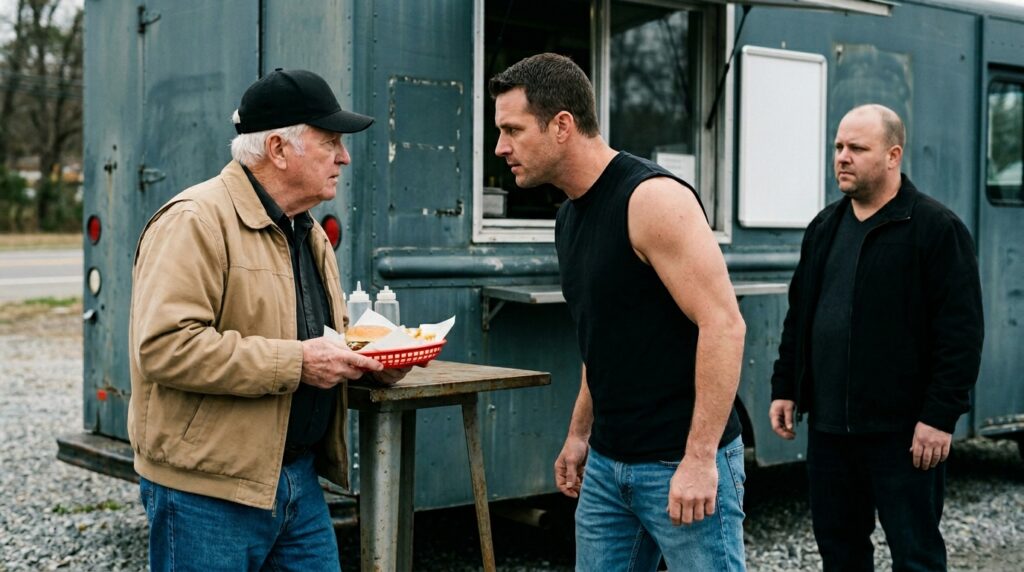
The headlights of the F-150 caught the edge of the gravel pit, cutting through a thick wall of river fog that smelled of wet iron and rot. Jesse’s trailer was an old thirty-foot Spartan, its corrugated aluminum skin dented and discolored to a dark, zinc gray by decades of woodsmoke and dampness under the willow trees.
I didn’t knock. My boot hit the wooden block he used for a doorstep, and I threw my weight against the door frame. The cheap latch didn’t split; it just tore clean through the rotten pine jamb with a sharp, splintering crack.
Jesse was sitting at a formica table covered in grease rings, a half-empty bottle of generic whiskey between his elbows. He didn’t jump. He looked up with the watery, loose-jawed stare of a man who had been expecting the hammer to fall but hoped it would wait until morning.
In the center of the table, sitting on top of a greasy commercial folder, was the manila envelope Caleb had mentioned. The corporate seal of the regional contracting syndicate was stamped in dark purple ink across the flap.
“Uncle Silas,” he stammered, his hand twitching toward the glass. “They said… they said it was just a surface easement. For the line clearing. They gave me twenty-four hundred on a county voucher.”
I didn’t waste the breath to curse him. I reached out, my fingers rough as dry leather as they wrapped around the back of his collar, and dragged him up from the chair. His weight was nothing—he was soft, hollowed out by years of small-time thievery and county beer—but the effort brought the sharp, white heat back into my lower lumbar, making my jaw click with the strain.
“The paper, Jesse,” I rasped, pressing him back against the thin paneling of the trailer wall until the aluminum exterior groaned. “Read the second rider on the plat map.”
He couldn’t see it through his tears, so I tore the envelope open myself. The sheets inside weren’t standard road waivers. They were corporate release forms from the regional water authority, dated three months back. Attached to the back was a certified laboratory analysis report with a bright orange header: MUNICIPAL WELL DISTRICT 4 – CONTAMINATION ZONE.
I held the paper six inches from his nose. “They didn’t buy the timber rights, you fool. They bought the liability waiver for the deep shelf. Look at the numbers on the chemical index.”
Jesse’s eyes drifted over the columns of data, his mouth opening like a landed carp. “I don’t… I don’t know what that means, Silas. They just said if I signed for the estate, they’d clear the back taxes on the family lot.”
The realization didn’t come with a flash of light; it came with the greasy smell of the sulfur that had been staying on my palms all day. The syndicate hadn’t sent Caleb to clear a path for a road. They had sent him to fence off the last clean injection point into the valley’s limestone aquifer. The municipal wells in town were already dead—fouled by the illegal battery-vault runoff from the industrial corridor up-ridge—and my independent well was the only clean sample left within twenty miles. If they controlled my pump-house, they could bury the test results, sign the corporate buyout for the new manufacturing zone, and leave the entire township drinking poison out of the tap.
“They’re bypassing the county board,” I said, my voice dropping until it was as cold as the iron tools in my truck. “They needed the fence line down so they could seal the well head before the state inspector arrives on Tuesday.”
“Silas… Caleb’s got four men with him,” Jesse whispered, his hands shaking against my sleeves. “They’re already setting the posts by the creek bed. They told me to stay clear of the ridge tonight.”
I let go of his collar. He dropped back into the formica chair like a sack of damp corn, his face the color of wood ash. I picked up the folder, stuffing the laboratory report into the deep pocket of my tan jacket next to the forged iron fencing tool.
“Stay here,” I told him without looking back. “Drink your whiskey. You’ve earned every drop of it.”
I walked back out into the river fog, the mist settling on the rusted hood of my truck like fine grey grease. When I reached the homestead, the dually wasn’t in the turn-around, but the low, hollow thumping from the concrete pump-house had changed. It wasn’t an overloaded valve anymore. It was the dry, scraping screech of an unlubricated impeller spinning against dry stone.
I walked down the lane with the heavy flashlight in my left hand, the beam cutting a dim, yellow tunnel through the weeds. When I reached the small square structure, the padlock on the iron door was gone, sheared off by a bolt cutter. Inside, the small glass sediment bowl attached to the main intake pipe was completely filled with a thick, slate-grey sludge that smelled of rotten eggs and boiled copper.
They hadn’t just sabotaged the perimeter wire. They had already dropped the tracing dye down the casing to check the flow rate to the lower development boundary.
I knelt on the cold concrete floor, my knees grinding against the loose sand and iron scale that had collected near the base of the pump. My hands were shaking now—not from fear, but from the bone-deep exhaustion of a man who had spent forty years maintaining things that other people were always trying to tear down. I reached out and took hold of the heavy brass bypass valve, the metal cold and slimy with the grey deposit.
The metal was seized, locked tight by years of hard mineral scale. I leaned into it, my shoulder pressing against the cold concrete wall, my boots slipping in the sulfur mud on the floorboards. Friction against friction. My knuckles scraped the raw iron casing, peeling back the skin until the dark blood started to mingle with the grey sludge on the threads.
With a loud, metallic crack that vibrated through my teeth, the valve gave an inch.
Outside, down by the dead creek bed, a pair of headlights flickered through the willow trees—the orange running lights of Caleb’s truck returning to the section line. The morning was still five hours away, but the yellow iron was already moving in the dark, and the ground beneath my feet was humming with a truth that the town wasn’t ready to swallow.
I stood up, wiping my bloody palm on the thigh of my tan jacket, and picked up the iron fence tool from the floor. The line was marked. It wasn’t about the dirt anymore; it was about the water down in the dark, and I had enough staples left in the bucket to hold the post until the sun came up.








