
CHAPTER 2: THE SPLINTER IN THE WEAVE
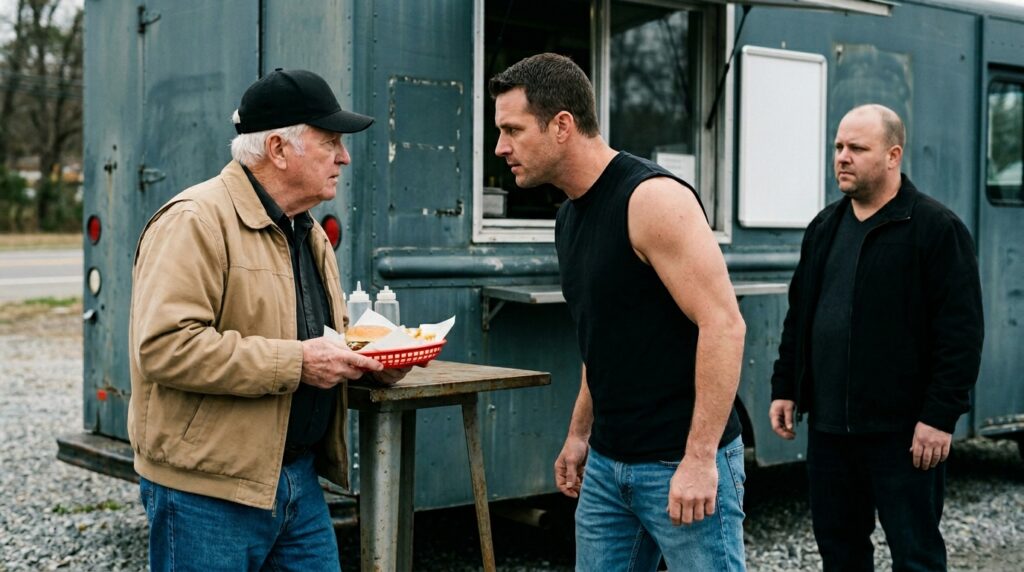
The high-pitched hum of Caleb’s diesel truck died out a mile down the county line, leaving nothing but the dry, rhythmic clicking of cicadas in the roadside ditches. My fingers stayed hooked into the wicker of the food basket until the plastic handles bit deep into my skin. I didn’t look back at Martha’s food truck. I didn’t want to see her looking through the grease-stained plexiglass, deciding whether to pity the old man or fear the trouble he was bringing into the lot.
When I reached the truck, the door handle of my old F-150 felt rough, the chrome plating long since pitted by winter salt until it resembled the coarse gray hide of an old elephant. It didn’t open smooth; it required a hard, upward jerk that jarred my shoulder, a stiff pop of ungreased iron meeting iron. I placed the food basket on the passenger vinyl, my eyes fixed on the three-inch sliver of pine jammed into the reed.
It wasn’t a windfall twig. The edge was clean, sheared off by a sharp blade—a surveyor’s stake, the kind they drive into the clay with a five-pound mallet to mark a line that wasn’t there yesterday. It was fresh enough that a drop of sticky, fragrant resin was still welling out of the grain, catching the yellow light of the dashboard.
I didn’t pull it out. I left it there, a small white tooth biting into the dark wicker, and shoved the transmission into reverse. The gearbox wailed its familiar, low-register complaint as I backed out into the dust.
The drive back to the homestead was three miles of washboard gravel that vibrated through the floorboards, rattling the loose bolts in the steering column and sending a dull, repetitive ache from my tailbone up to the base of my neck. Every fence line I passed looked tired. The cedar posts were silvered and leaning at forty-five-degree angles, held up more by the rusty weave of old barbed wire than the dry earth beneath them. This corner of the county was drying out, the topsoil turning to powder while the young men spent their afternoons sitting on the tailgates of expensive trucks they couldn’t afford, watching the horizons for a sign of change that wasn’t coming from the sky.
When I turned down my own lane, the iron gate didn’t look right.
I stopped the truck twenty feet back, leaving the engine to idle with a heavy, rhythmic thud that shook the rusted quarter-panels. The sun was dropping behind the ridge, casting long, desaturated shadows that turned the yellow weeds into a dull, iron gray.
The heavy log chain I kept looped around the main post was hanging loose. The padlock—a solid brass Master Lock covered in years of brown road grit—was still snapped shut, but the heavy steel eyebolt it latched into had been worked over. Someone had taken a pipe wrench to the threaded shank, twisting the metal until the dry grain of the oak post had split open, leaving a white, raw scar in the wood. They hadn’t cut the chain; they had just checked the tolerance of the timber to see how much force it would take to tear the whole assembly out of the ground.
I got out of the cab, my boots sinking into the fine gray dust of the driveway. The air smelled of iron and dried cedar. I walked to the post and ran my thumb over the split oak. The wood fibers were dry, but there were tiny flakes of bright orange paint embedded in the bark—the exact shade of the commercial machinery Caleb’s crew parked behind the old county maintenance shed.
“Still standing,” I muttered to the empty lane, my voice flat, swallowed by the wide, dry silence of the acres behind me.
I unlooped the chain, letting the heavy links clink against each other with a leaden, metallic clatter that felt entirely too loud for the evening. My palms were dry, the skin rough as sandpaper from forty years of manual labor, and the cold iron of the chain left a gray, greasy smudge across my lifeline.
Instead of driving up to the house, I walked the inside perimeter of the ditch line, following the three-strand wire toward the eastern boundary where the old creek bed had gone to gravel five years ago. My knees made a dry, cracking sound with every third step, a reminder that the frame was wearing out even if the mind wasn’t ready to yield.
Every twenty yards, I checked the tension of the wire. It was slack. Not from age—someone had taken a pair of fencing pliers to the staples on the backside of the posts, backing them out just enough so the wire would sag into the weeds. It was a professional bit of work. It didn’t look like vandalism; it looked like a preparation. A way to clear a path without making enough noise to wake an old man who slept with a twelve-gauge across the foot of his bed.
I reached the corner post where my land abutted the old rail easement. A surveyor’s ribbon—a strips of neon pink plastic—was tied to a low branch of a dead scrub oak. It fluttered in the evening draft with a thin, plastic hiss.
Below it, the dirt had been turned. A single, deep boot heel impression was pressed into the dry clay near the base of the wood. It was large, the tread pattern consisting of heavy, blocky chevrons—the same heavy-duty work boots Caleb had been wearing at the counter of the food truck.
I reached down, took a handful of the dry earth, and let it sift through my fingers. It felt cold a few inches down, but it was dead. Nothing was growing in that corner but horse nettle and cocklebur. Yet they were circling it like vultures over a down heifer.
I stood there until the last of the red light died behind the silos on the northern ridge, leaving the valley in a dark, bruised violet. The physical fatigue was a heavy vest around my shoulders, but beneath it, the old blue-collar stubbornness was setting hard. They wanted me to see the broken wood. They wanted me to spend the night staring out the window, counting the miles between my porch and the nearest neighbor.
I turned back toward the house, my shadow completely gone now, leaving me an anonymous shape moving through the dark gray weeds. I had twelve fence posts to restaple before the sun came up tomorrow, and my hands didn’t work as fast as they used to. But the hammer was still in the shed, and the iron was still heavy.








