
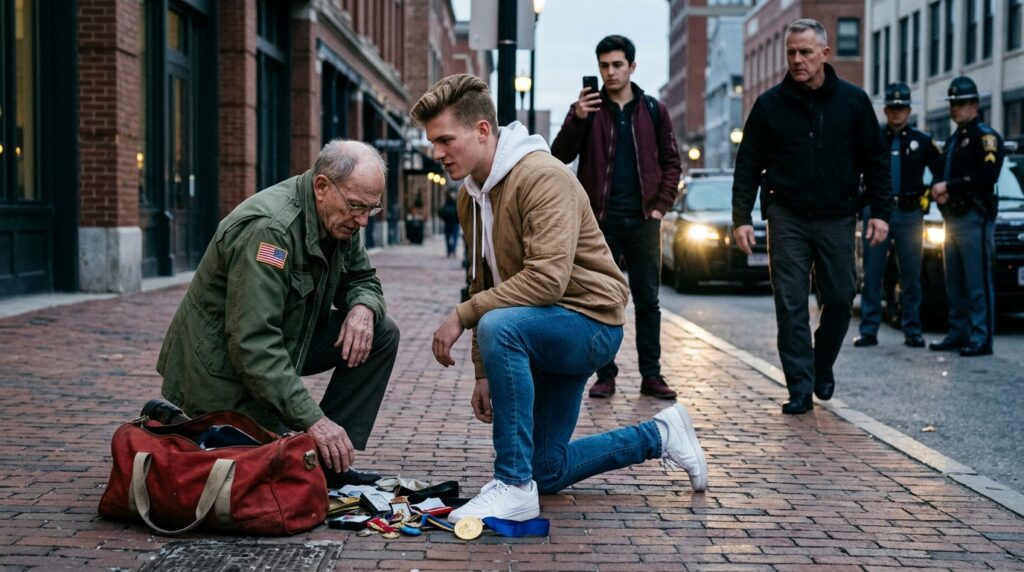
CHAPTER 7: THE COLD SILT GATE
The water at the tunnel mouth didn’t flow; it oozed. It was a thick, black slurry of river silt and ancient coal dust that coated Arthur’s boots up to the laces, making every step sound like wet leather tearing away from cardboard. The air out here by the flats was wider, but it wasn’t cleaner. The smell of rotting marsh grass mixed with the sharp, acidic burn of diesel exhaust from the switching yard half a mile down the spur line.
Arthur braced his shoulder against the slimy brick of the conduit arch, the heavy red duffel bag hanging from his arm like a waterlogged anchor. His fingers were numb, the skin split across the knuckles where the coarse canvas had been sawing into his grip for two miles. Through the dark, horizontal reeds of the riverbank, the dawn was coming up the color of a wet slate shingle.
There was no one waiting by the rusted switching locker.
The man who was supposed to meet him—old Thomas, who had run the boiler maintenance detail at the yard since the locomotives went diesel—wasn’t there. Instead, twenty yards down the weed-choked gravel berm, a low, gray utility sedan sat with its nose pointed toward the water. Its headlights were turned off, but the exhaust was pluming in the freezing morning air, a steady, white cloud that rose and vanished into the gray willow branches above.
Arthur stopped, his boot sinking an inch deeper into the cold mud. The mechanism of the dusty gray had taught him forty years ago that an unmapped engine didn’t park in a dead yard without a purpose. He slid his hand into his field jacket, his fingers searching for the heavy iron wrench he’d tucked into his waistband.
The driver’s side door of the gray sedan clicked open. The sound was crisp, clean, the latch well-greased—not the rusted rattle of a rail worker’s truck.
A man stepped out into the frost-bitten weeds. He didn’t wear a uniform, and he didn’t wear the heavy wool of a city lawyer. He wore a dark, oil-resistant canvas field coat with an orange logistical tracking tag clipped to the zipper. His face was thin, his eyes covered by clear, industrial safety lenses that caught the faint, gray light of the river.
“The Sergeant didn’t come out of the front gate,” the man said. He didn’t look at Arthur’s face; his eyes went straight to the shape of the red duffel. “The site foreman said you were buried under the brick on Fourth Street.”
“The site foreman doesn’t know how the sewers drain,” Arthur said, his voice cracking against the salt air. “Where’s Thomas?”
“Thomas took an early retirement package at midnight,” the man replied. He took two steps forward, his boots crunching methodically on the wet slag of the ballast. He didn’t reach into his pockets, but his hands stayed loose at his sides, his fingers slightly curled. “The Vanguard Trust took over the rail spur registry when the city council signed the emergency safety order. This isn’t public ground anymore, sir. It’s an active asset containment zone.”
The consequence loop had moved faster than the water in the tunnel. The developers hadn’t just used Julian Vance to freeze the troopers; they had already lined up the logistics on the escape route. They knew where the pipes went because they owned the maps that had been filed with the demolition permits.
“I’ve got nothing in the sack but old clothes, son,” Arthur said, his thumb tightening against the iron handle of the wrench under his coat.
“The logbook from the maintenance yard isn’t clothes,” the man said, his voice flat, devoid of anger or personal interest. He was just a clerk checking an inventory sheet at the end of a shift. “The trust needs the purple stamps, Arthur. If those stamps aren’t in the incinerator by eight hundred hours, the administrative injunction doesn’t hold. The captain’s review board will look at the registry numbers.”
He took another step, his white safety lenses reflecting the cold, pale line of the river. “Give me the bag, and you can catch the morning freight out of the southern junction. Nobody looks for an old soldier once the building is down.”
Arthur looked past the man’s shoulder at the gray sedan. Through the tinted rear glass, he could see the silhouette of a heavy mobile computer terminal mounted to the dashboard, its green screen pulsing with the same digital sync line he had seen on Julian Vance’s smartphone in the precinct garage. They weren’t fighting for land or history; they were fighting to keep the machine from spitting out a single unvouched name.
“I spent three years in the mud waiting for a freight car that never came,” Arthur said, his boots shifting in the silt as he turned his shoulder toward the willow line. “I’m not starting today.”
From the switching yard behind them, the long, metallic shriek of a coupling iron cutting through the frost shattered the silence of the flats. Arthur didn’t run; his knees wouldn’t allow it. He simply dropped his weight into the low brush, the red duffel dragging behind him like a wounded dog as the first stone from the ballast kicked up against the sedan’s bumper.








