
CHAPTER 5: THE ANCHOR IN THE DIRT
Inspector Miller cleared away the remaining clump of matted crabgrass with his leather-gloved fingers, revealing the full cast-iron rim resting flush with the soil.
“You see this ring?” Miller asked without turning around. He tapped the rusted rim with the steel tip of his screwdriver. A dull, heavy clink sounded against the ground. “This isn’t a private line. This is a parish overflow junction installed back in the seventy-four expansion. And if there’s a parish junction here, the six-foot statutory drainage easement centered on it is fully active, regardless of whether Arthur Vance signed a paper or not.”
Sandra’s breath hitched behind her gate. She took half a step back, her fingers clutching the unrecorded document so tightly the yellowed paper buckled down the center. “My father dug that connection to save the foundations! He paid three hundred dollars out of pocket!”
“And he dug it inside a county drainage corridor, ma’am,” Miller said calmly, reaching into his canvas bag for a long, thin steel probe rod. “Which means neither of you owns the three feet on either side of this iron. The parish holds the utility rights.”
I felt a sudden, sharp coldness settle in the pit of my stomach. My phone was still recording, capturing the yellow tape measure Miller pulled from his belt, but the easy vindication I’d felt seconds ago dissolved instantly. If the six-foot easement centered on that valve, three feet extended onto Sandra’s parcel—but the other three feet swept directly across my gravel driveway, straight under the concrete footing of my utility shed.
“Hold on,” I said, stepping closer, my boots sinking into the dry, pulverized dust along the fence line. “My shed footing sits eighteen inches from that valve. If the parish easement extends three feet—”
“Then your concrete pad is encroaching eighteen inches into an active municipal utility corridor, Mr. Miller,” Inspector Miller said, driving the steel rod into the soft earth right beside the cast-iron rim.
The rod slid down through four inches of topsoil before striking something solid with a bright, ringing ping.
Miller paused. He didn’t look surprised, but his posture went rigid. He worked the probe around the metal obstruction, clearing a small circle of heavy red clay with his gloved trowel. Six inches down, embedded directly beneath the lip of the parish valve, sat a heavily oxidized steel surveyor’s pin—its square head notched with three distinct chisel grooves.
Dan Kowalski let out a low whistle from the edge of the lawn. “That ain’t a parish marker. That’s a ninety-four property stake.”
Miller looked up at me, then turned his gaze toward Sandra, who stood frozen behind her chain-link gate, her face as pale and gray as dry concrete.
“Mr. Miller,” Inspector Miller said softly, his fingers brushing the wet clay from the chiseled head of the steel pin. “Your shed isn’t the problem. The survey marker for parcel 4B isn’t under the driveway. It’s right here, eighteen inches inside Mrs. Vance-Giles’s fence.”
The quiet that followed was absolute.
Across the street, Mr. Henderson had stopped watering his petunias entirely, his plastic can dripping onto his porch steps. The only sound in the narrow alley was the rhythmic, panting breath of Sandra’s shepherd mix and the distant rumble of a freight train three miles west.
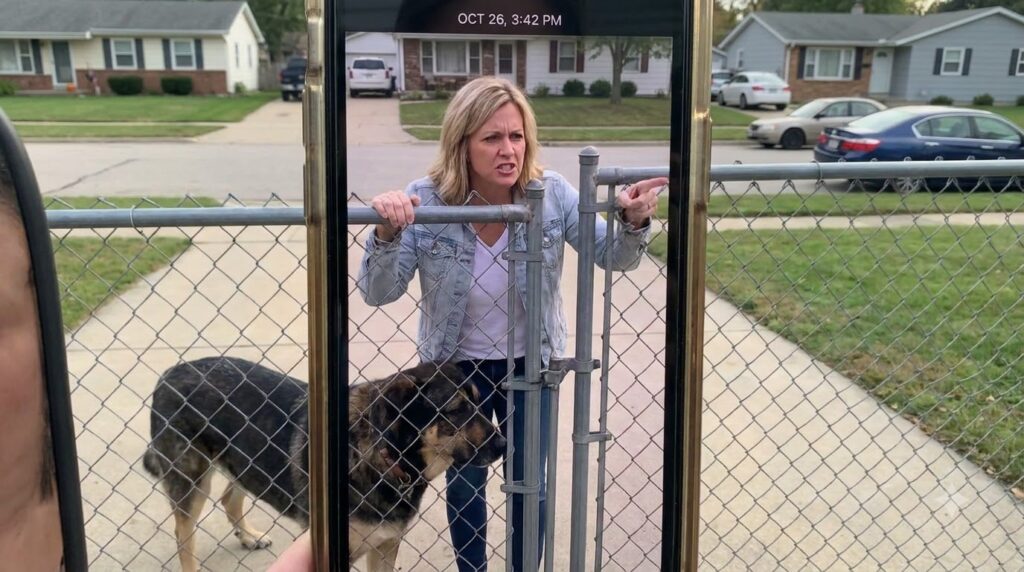
I stepped up to the chain-link wire, bringing the phone camera right against the galvanized mesh. “Sandra… your fence isn’t on the property line. Your father set this chain-link two feet over the actual survey pin when he dug that drain in ninety-four.”
“No,” she whispered, her voice barely audible over the hum of the transformer on the power pole overhead. She shook her head, a slow, unnatural motion. “No. My father set the fence where Arthur told him to. My father wouldn’t… he wouldn’t take land.”
“He didn’t take it to steal it, ma’am,” Inspector Miller said, standing up and pulling a pair of yellow survey flags from his back pocket. He plunged the first steel wire flag into the earth right beside the exposed pin, its bright plastic fluttering in the hot afternoon air. “He built the fence along the edge of his hand-dug ditch to keep people from falling into the open trench while the clay settled. But when he closed the ditch, he never moved the fence back to the true boundary line.”
Sandra stared at the yellow flag vibrating in the dust. Her grip on the gate rail loosened, her hands sliding down the galvanized iron until her arms hung limp at her sides.
“Which means,” Inspector Miller continued, turning to look directly into my phone camera lens to ensure the statement was captured on official record, “this entire chain-link gate, thirty feet of fencing, and two feet of the lawn behind it sit illegally on Mr. Miller’s recorded deeded property.”
The victory had flipped, but it carried no sweetness. The decoy secret of Arthur’s unrecorded paper had vanished, replaced by a much darker, heavier reality: thirty years of neighborly resentment had been built on a physical lie that her father had left in the dirt.
Sandra looked at me through the wire diamonds, her eyes hollow, her lips trembling slightly as she held the folded paper against her chest like a shield that had finally shattered.
“You’re going to make me tear down my father’s fence,” she said, her voice dropping into a fragile, broken thread.
Before I could answer, Inspector Miller reached into his binder and pulled out a bright orange, carbon-copied official citation pad. “Mr. Miller doesn’t have to make you do anything, ma’am. The parish is issuing a formal notice of encroachment on a public right-of-way. You have fourteen days to clear the obstruction, or county crews will remove it at your expense.”








