
CHAPTER 1: THE WEIGHT OF GRAVEL
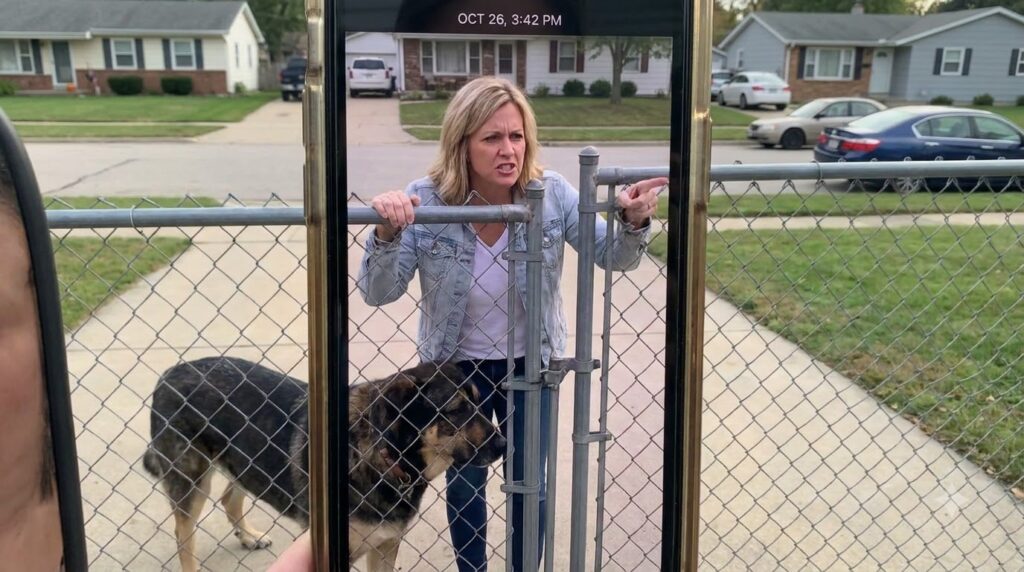
“You cannot just pull into my spot, this is my space! Please move it right now!”
Her fingers were locked around the top rail of the chain-link gate, white-knuckled and unyielding, while the sun reflected off the hood of my idling diesel.
I didn’t turn off the engine. The broad-stroke rumble of the Ford’s seven-point-three filled the narrow gap between our houses, vibrating through the steering wheel and into the heavy leather soles of my boots. Sandra stood behind the zinc-coated diamonds of the wire mesh, her light denim jacket stiff against the dry heat of late July, her shoulder-length blonde hair slightly wind-frayed. Beside her, pressed against her thigh like a shadow, sat the large dark-and-tan shepherd mix, its dark eyes fixed on my front bumper.
I shifted the column into park, the transmission clunking with the familiar weight of five hundred pounds of cedar posts and steel brackets resting in the bed behind me.
“Sandra,” I said, leaning my elbow on the open window frame, the sun-warmed metal burning through the sleeve of my canvas shirt. “It’s four o’clock. I’ve got three hundred pounds of hardware to set before dusk.”
“I don’t care if you have a house to frame,” she said. Her voice didn’t rise into a scream; it stayed flat, sharp, and razor-honed, the voice of someone who spent her evenings reading city code ordinances by the glow of a desk lamp. She pointed a long, pale forefinger directly at the tire resting in the shallow rut of crushed limestone. “You are over the line. You’ve been over the line since November, and I am not letting you dump your construction trash on my family’s parcel.”
I looked down at the gravel. The driveway was barely nine feet wide, squeezed between the damp foundation of my two-story craft house and the long, sagging line of her chain-link fence. The limestone dust lay pale and powdery in the summer drought, holding every tire tread like setting concrete. My driver-side radial sat three inches to the left of the sun-bleached wooden stake I’d driven into the ground six months ago—the one she had pulled up and thrown into my yard three separate times.
Behind her, near the back porch where the paint was peeling in thin gray curls, a porch light flickered once and died.
I reached down to my utility belt, my thumb brushing the brass clasp of my tape measure before settling on the cool glass screen of my phone. Across the street, old Mr. Henderson paused on his porch steps, a plastic watering can hovering over his petunias, his eyes shifting toward the sound of our idling engines.
“This is a recorded easement, Sandra,” I said, keeping my voice low enough that it barely carried over the whistle of the truck’s serpentine belt. “And I am standing on the public side of the marker.”
“There is no easement for a commercial rig,” she hissed, her grip tightening on the top rail until the rusted gate hinges squeaked in protest. The dog beside her let out a low, dry huff that didn’t quite reach a growl. “You think because you carry a tool bag you own the dirt under your boots? My father set those post holes in seventy-four.”
She reached down into her jacket pocket, her fingers pulling out a folded piece of yellowed paper—not a city notice, but a copy of a hand-drawn map with red ink bleeding through the creases.
“Look at it,” she demanded, thrusting the paper toward the wire grid. “Look at what your predecessor signed before you ever stepped foot in this county.”








