
When the Fences Creep Inward and the Quiet Ground Gives Way to Long-Buried Grief

CHAPTER 1: THE WEIGHT OF GRAVEL

“You cannot just pull into my spot, this is my space! Please move it right now!”

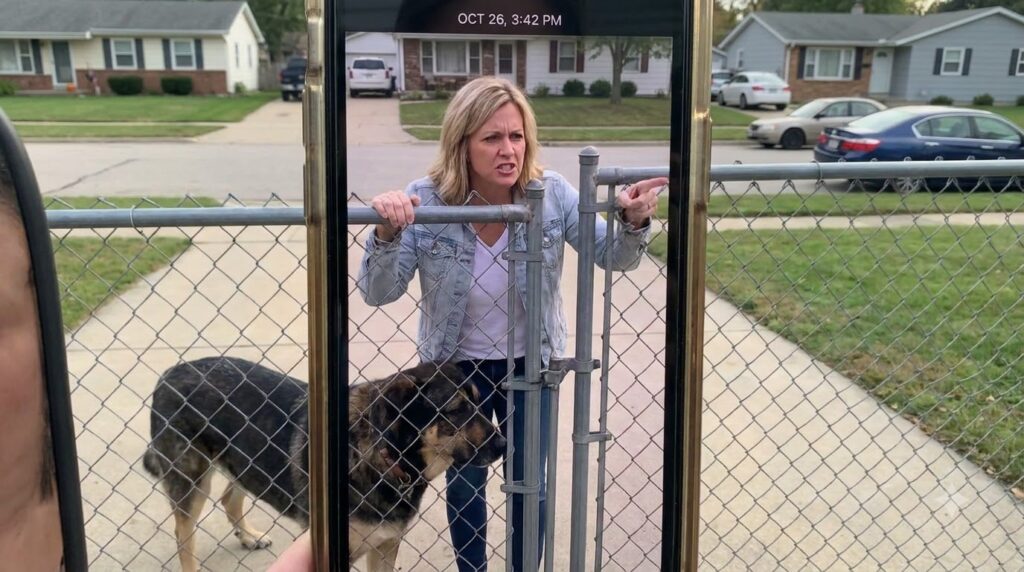
Her fingers were locked around the top rail of the chain-link gate, white-knuckled and unyielding, while the sun reflected off the hood of my idling diesel.

I didn’t turn off the engine. The broad-stroke rumble of the Ford’s seven-point-three filled the narrow gap between our houses, vibrating through the steering wheel and into the heavy leather soles of my boots. Sandra stood behind the zinc-coated diamonds of the wire mesh, her light denim jacket stiff against the dry heat of late July, her shoulder-length blonde hair slightly wind-frayed. Beside her, pressed against her thigh like a shadow, sat the large dark-and-tan shepherd mix, its dark eyes fixed on my front bumper.

I shifted the column into park, the transmission clunking with the familiar weight of five hundred pounds of cedar posts and steel brackets resting in the bed behind me.

“Sandra,” I said, leaning my elbow on the open window frame, the sun-warmed metal burning through the sleeve of my canvas shirt. “It’s four o’clock. I’ve got three hundred pounds of hardware to set before dusk.”

“I don’t care if you have a house to frame,” she said. Her voice didn’t rise into a scream; it stayed flat, sharp, and razor-honed, the voice of someone who spent her evenings reading city code ordinances by the glow of a desk lamp. She pointed a long, pale forefinger directly at the tire resting in the shallow rut of crushed limestone. “You are over the line. You’ve been over the line since November, and I am not letting you dump your construction trash on my family’s parcel.”

I looked down at the gravel. The driveway was barely nine feet wide, squeezed between the damp foundation of my two-story craft house and the long, sagging line of her chain-link fence. The limestone dust lay pale and powdery in the summer drought, holding every tire tread like setting concrete. My driver-side radial sat three inches to the left of the sun-bleached wooden stake I’d driven into the ground six months ago—the one she had pulled up and thrown into my yard three separate times.

Behind her, near the back porch where the paint was peeling in thin gray curls, a porch light flickered once and died.

I reached down to my utility belt, my thumb brushing the brass clasp of my tape measure before settling on the cool glass screen of my phone. Across the street, old Mr. Henderson paused on his porch steps, a plastic watering can hovering over his petunias, his eyes shifting toward the sound of our idling engines.

“This is a recorded easement, Sandra,” I said, keeping my voice low enough that it barely carried over the whistle of the truck’s serpentine belt. “And I am standing on the public side of the marker.”

“There is no easement for a commercial rig,” she hissed, her grip tightening on the top rail until the rusted gate hinges squeaked in protest. The dog beside her let out a low, dry huff that didn’t quite reach a growl. “You think because you carry a tool bag you own the dirt under your boots? My father set those post holes in seventy-four.”

She reached down into her jacket pocket, her fingers pulling out a folded piece of yellowed paper—not a city notice, but a copy of a hand-drawn map with red ink bleeding through the creases.

“Look at it,” she demanded, thrusting the paper toward the wire grid. “Look at what your predecessor signed before you ever stepped foot in this county.”


CHAPTER 2: THE PAPER BOUNDARY

“Look at it,” Sandra repeated, her voice dropping into a rasp that cut straight through the low thrum of my idling engine. “Look at what your predecessor signed before you ever stepped foot in this county.”

I didn’t reach through the chain-link grid to take the paper. I knew better than to break the plane of her fence, even by an inch. Instead, I cut the Ford’s ignition. The sudden silence settled over the driveway like wet wool, leaving only the metallic ticking of the cooling manifold and the distant, rhythmic snip of Mr. Henderson’s hedge shears across the street.

“Show it to the lens, Sandra,” I said, lifting my phone until the black glass of the camera lens aligned with the rusted wire diamonds. “If it’s a legal deed modification, it’s got a county clerk’s stamp on the margin. Let me see the seal.”

Her face tightened, the skin around her eyes crinkling into fine, sun-cured lines. She held the yellowed sheet against the fence, her thumb deliberately obscuring the bottom right corner where a notary’s crest ought to sit. The paper was fragile, the edges yellowed and frayed like dry corn husks, marked with a hand-drawn grid in faded black ink. A thick, bleeding streak of red ballpoint lined the gravel corridor, drawn with a heavy hand that had torn small, feathered splits into the grain of the paper.

In the upper margin, the handwriting was distinct—the tight, slanted cursive of Arthur Vance, the old carpenter who had built my house in sixty-eight and lived in it until his heart gave out on the back porch three winters ago.

Surrendered for drainage access, the annotation read, dated August 14th, 1994. Lane control reverts to parcel 4B upon completion of south ditching.

My thumb hovered over the screen, zooming the digital lens until the red ink filled the display. The line didn’t follow the current fence. It pulled three feet inward, slicing directly through the edge of my utility shed’s concrete footing.

“Arthur wrote that thirty years ago,” I said softly, the hum of the air conditioning fading as the cab rapidly warmed in the afternoon sun. “Sandra, Arthur was seventy-two in ninety-four. He didn’t have the legal authority to cede a county access easement with a ballpoint pen on a piece of scrap drafting paper.”

“He owned the dirt!” She slammed her free palm against the top rail, making the steel chain-link vibrate with a harsh, metallic clatter. The shepherd mix beside her didn’t bark; it simply shifted its weight, its claws clicking against the dry flagstones of her walkway. “He knew what was fair! My father dug the drainage ditch with his own tractor when the county refused to run culverts after the flood. Arthur gave him the lane because my father saved his foundation from caving in! You bought a foreclosed shell from a bank that didn’t care about the history, and now you think you can drive a six-ton work rig over my family’s sweat!”

The anger in her voice was thick, aged, and sour—not the flash-fire rage of a bad neighbor, but the deep, calcified grief of someone who felt every passing year had stolen another square foot of her childhood. Behind her, through the wire mesh, I could see the overgrown garden beds where her mother’s hydrangeas had dried into gray, papery skeletons.

“If it was a legal conveyance, it would be filed in the parish register,” I said, my voice steady, though I could feel the dull, familiar ache beginning at the base of my neck—the weight of three hundred pounds of cedar waiting in the bed, the sun dipping lower toward the treeline. “A private note in a desk drawer doesn’t rewrite a parcel plat.”

“It’s not a private note,” she whispered, leaning so close to the fence that her breath fogged a small circle on the cold galvanized wire. “It’s a promise. And around here, before people like you showed up with utility belts and city permits, a promise meant the ground stayed where it was put.”

She folded the paper along its ancient, tearing creases with meticulous, trembling care, tucking it back into the pocket of her denim jacket. As she pulled her hand away, her fingers brushed against a small, rusted iron key ring hanging from her belt loop—a ring holding three identical brass keys, none of which belonged to any lock on the chain-link gate.

Across the drive, the front door of the Miller house clicked open. Young Mrs. Miller stepped out onto her porch, holding a sleeping infant against her shoulder, her eyes darting nervously between my truck and Sandra’s gate before she quietly retreated behind her screen door.

“I’m not moving the truck, Sandra,” I said, setting my boots back on the gravel with a crunch that sounded loud in the quiet lane. “I’m unloading the cedar. If you want to call code enforcement, the number is on the county sign at the corner.”

She didn’t reach for her phone. Instead, she took half a step backward, her hand resting on the head of the dark-and-tan dog.

“I don’t need to call code enforcement,” she said, her voice dropping into a flat, terrifying calm. “I called the parish surveyor two weeks ago. He’s already on his way out here to mark the drain.”

She smiled then—a thin, colorless line that held no warmth at all.

“And when he looks at the south corner, he’s not going to be looking at your truck. He’s going to be looking at what you built over Arthur’s drain.”

CHAPTER 3: THE DRIFT OF WITNESSES

“The drain was cleared thirty years ago, Sandra,” I said, but the gate latch had already clicked shut.

She didn’t look back as she walked toward her rear porch, her light denim jacket stiff against her spine, the dark-and-tan shepherd mix pacing at her heel. Her white canvas shoes left faint, dusty ovals on the dry flagstones. The screen door slammed behind her with a tinny, double-rebound slap that echoed off the brick facing of my garage.

I stayed on the driver-side running board for three slow seconds, my fingers hooked into the top loop of my utility belt. The heat radiating off the gravel was dry and heavy, smelling of baked dust and old crankcase oil.

Across the street, old Mr. Henderson hadn’t gone back inside. He had set his plastic watering can down on the second step of his porch, his hands resting flat on his thighs as he watched me. A few houses down, near the corner where the street sign tilted slightly in the sandy soil, two more neighbors had drifted onto their front lawns—Dan Kowalski from 412, holding a half-empty mug of coffee, and young Mrs. Miller, who remained behind her screen door with her face pressed against the wire mesh.

They weren’t coming over. They were doing what people in this development had done for fifteen years: keeping their distance, measuring the dispute by the angle of the trucks parked in the alley and the frequency of the shouting.

I stepped down off the running board, the gravel grinding under my boots. Instead of unlatching the tailgate to get to the cedar posts, I walked slowly around the rear bumper, my eyes fixed on the narrow green strip between my concrete shed footing and her chain-link fence.

The space was barely eighteen inches wide. Crabgrass and wild clover grew thick and rank in the shade of the fence, choked with drifted oak leaves from two autumns ago. I knelt in the dirt, the canvas knees of my work pants soaking up the stale, trapped heat of the ground.

My fingers brushed through the dry grass, tracing the edge of the shed’s concrete pad. The slab had been poured six inches thick, reinforced with steel mesh—a sturdy, honest piece of work I’d finished my second month here. But right where the concrete met the chain-link barrier, buried under three inches of matted roots and yellowed pine needles, my knuckles struck something hard and metallic.

It wasn’t a rock. It was a round, cast-iron valve cover, five inches across, rusted to a deep, flakey orange.

I picked up a flathead screwdriver from my belt holster and scraped at the top of the iron disk. The letters came through slowly, filled with packed red clay: PARISH DRAINAGE – DO NOT COVER.

A cold, quiet knot tightened in my chest.

Arthur Vance hadn’t built the shed over a ditch; he had poured the concrete pad within three inches of a buried parish overflow line. If Sandra’s father had dug that culvert by hand in ninety-four, he hadn’t just helped Arthur save his foundation. He had run a private line right into a municipal storm drain—one that didn’t show up on any standard residential property plat I’d been handed at closing.

“She’s been keeping that paper in her kitchen drawer since May,” a voice called out from the street.

I turned my head without standing up. Dan Kowalski had walked across the asphalt, his work boots stopping at the edge of my gravel apron. He was wearing an old flannel shirt with the sleeves cut off, his forearms sunburned and scarred from forty years as a auto mechanic.

“Dan,” I said, wiping my dusty thumb on my thigh.

“She showed it to the postal driver last week,” Dan said, squinting through the heat shimmer at Sandra’s darkened kitchen window. “Told him if he tire-tracked her side of the driveway again, she was going to have his route reassigned. Man was just trying to deliver a certified letter.”

“She thinks Arthur gave her the easement,” I said, standing up and brushing the dry dirt from my knees.

Dan let out a short, dry sound that wasn’t quite a laugh. “Arthur was a good builder, but when his wife passed in ninety-two, he stopped paying attention to deeds and permits. He let her dad dig whatever he wanted back there just to keep the peace. But Sandra… Sandra doesn’t want peace, kid. She wants the street to look the way it did when her mother was still alive to tend those hydrangeas.”

He nodded toward the buried iron valve cover hiding under the crabgrass.

“If the county inspector comes out here with a rod and a metal locator, he’s not just going to look at the fence,” Dan added, his voice dropping an octave as he glanced toward Sandra’s house. “He’s going to ask why there’s a six-inch iron riser resting two inches from your foundation. You know what happens if they declare that an active drainage easement?”

“They pull the concrete,” I said softly.

“They pull the concrete,” Dan agreed. “And they bill the owner of the parcel for the excavation.”

Behind us, the low, mechanical whine of a heavy engine turned off the main avenue and entered the cul-de-sac. A white county pickup truck with an amber light bar on the roof slowed as it passed Mr. Henderson’s house, its tires crunching onto the loose gravel of the shared lane.

CHAPTER 4: THE LENS AND THE RECORD

I reached into my pocket before the truck’s driver-side door even opened.

My thumb swiped the glass screen awake, switching straight to video recording. I held the smartphone steady at chest height, framing the gravel corridor, Sandra’s chain-link gate, and the white Ford Ranger with the official county seal painted on its door panel.

Dan Kowalski took two steps back onto his own grass, folding his scarred forearms across his chest. He didn’t leave, but he gave the county truck a wide berth, his jaw working silently on a piece of tobacco. Across the street, old Mr. Henderson leaned over his porch railing, his eyes wide and fixed on the vehicle’s amber light bar.

The truck door creaked open, and a man in a crisp khaki short-sleeve shirt stepped down into the dust. He wore a heavy leather gear belt laden with a brass tape reel, a digital distance meter, and a thick canvas binder jammed with rolled blueprint sheets. He looked to be in his early fifties, his skin weathered to the color of dried cedar, a silver pen tucked behind his right ear.

“Afternoon,” he said, adjusting his cap. The stitched logo above the brim read PARISH CODE ENFORCEMENT & PUBLIC WORKS. “Either of you the property owner for 408?”

“I am,” I said, stepping forward but keeping my boots on my side of the gravel rut. “David Miller. And this is my shared access lane.”

“Name’s Miller,” he repeated, flipping open a clipboard and running a thumb down a printed daily log. “Got a dispute call logged two hours ago regarding an unpermitted obstruction and a blocked drainage easement. Called in by a Mrs. Sandra Vance-Giles.”

Before I could answer, the latch on the adjacent house rattled. Sandra came down her walkway with sharp, rhythmic strides, her light denim jacket open now, revealing the white shirt beneath. She held her folded yellow paper in her left hand, her knuckles tight. The dark-and-tan shepherd mix trotted behind her, stopping right at the chain-link gate line without a sound.

“I’m Sandra Vance-Giles,” she said, her voice carrying clear and hard across the gravel. “He’s had his commercial vehicle parked in the access corridor for forty-five minutes. He’s sitting right on top of my family’s drainage line, and he’s refusing to move.”

The officer—whose name tag read V. MILLER, no relation—didn’t rush. He looked at Sandra, looked at my Ford diesel idling twenty feet back, and then looked down at the gravel strip between our houses.

“Ma’am, is the truck currently blocking your personal vehicle from leaving?” Officer Miller asked, his tone flat, bureaucratic, and entirely void of drama.

“He’s on my land,” Sandra insisted, thrusting the folded paper toward the wire mesh. “He’s violating a written agreement signed by the original owner of that property. He has no right to park a work rig on this gravel.”

“I’m recording this, Sandra,” I said, keeping my voice level as I stepped closer, angling the phone camera so it captured both her face through the chain-link grid and the paper in her hand. “You’re claiming this entire lane is private property. State for the camera that you’re denying access to a recorded parish easement.”

“I am denying you permission to destroy my boundary!” she snapped, leaning over the gate rail. Her eyes flared, flashing toward my camera lens before snapping back to the inspector. “Look at the document, Officer! Look at Arthur Vance’s signature!”

Officer Miller sighed, a long, tired exhale that smelled faintly of stale gas-station coffee. He walked over to the fence, taking off his sunglasses and hanging them from his collar. “May I see the paper, ma’am?”

Sandra handed it over through the diamonds of the wire mesh with a triumphant glance in my direction.

I kept the phone recording, zooming in on Officer Miller’s weathered fingers as he unfolded the fragile, yellowed sheet. The late-afternoon sun hit the paper, illuminating the hand-drawn grid, the dark cursive of Arthur Vance, and the thick, torn streak of red ballpoint ink outlining the surrendered drainage corridor.

Officer Miller studied it for a long, silent minute. He turned the paper over.

On the reverse side, hidden in the bottom corner beneath thirty years of paper yellowing, was a faint blue-ink rubber stamp. It wasn’t a county clerk’s seal. It was a receipt stamp from a private surveying firm that had gone out of business in ninety-eight—a stamp that read: PRELIMINARY FIELD SKETCH – NOT RECORDED – SUBJECT TO FINAL PLAT APPROVAL.

The decoy secret hung there in the open air, clear and stark under the summer sun.

Arthur Vance hadn’t legally ceded the land to Sandra’s father. He had drawn up a preliminary proposal for a private drainage compromise during the August flood of ninety-four, paid for a field sketch, and then… nothing. The paper had never been filed at the courthouse. It had never been approved by the parish. It was an unexecuted draft, a historical ghost that Sandra had guarded for three decades believing it was the law of the land.

Officer Miller looked up from the paper, his eyes shifting from Sandra’s tense, expectant face to the chain-link fence beneath her hands.

“Ma’am,” Miller said softly, his thumb resting on the blue stamp. “This isn’t a recorded deed modification. This is a private field draft from thirty years ago. It has zero legal standing with the parish.”

Sandra’s face went completely pale, the color draining from her cheeks like water pulled down a dry pipe. “What are you talking about? It has his signature! He signed it!”

“He signed a sketch, ma’am,” Miller replied, handing the paper back through the wire grid. “He never recorded it. Which means the original 1968 parcel plat is the only legal document governing this property.”

He turned away from her, walking toward the rear of my utility truck with his measuring tape already unclipped from his belt.

“And according to the parish GIS database,” Miller added, his eyes scanning the overgrown crabgrass near my shed, “the 1968 plat shows something else entirely.”

Sandra stood frozen behind her gate, the yellow paper trembling in her hand, as Miller knelt right where I had been five minutes ago, pulling back the thick weeds to expose the rusted iron valve cover.

CHAPTER 5: THE ANCHOR IN THE DIRT

Inspector Miller cleared away the remaining clump of matted crabgrass with his leather-gloved fingers, revealing the full cast-iron rim resting flush with the soil.

“You see this ring?” Miller asked without turning around. He tapped the rusted rim with the steel tip of his screwdriver. A dull, heavy clink sounded against the ground. “This isn’t a private line. This is a parish overflow junction installed back in the seventy-four expansion. And if there’s a parish junction here, the six-foot statutory drainage easement centered on it is fully active, regardless of whether Arthur Vance signed a paper or not.”

Sandra’s breath hitched behind her gate. She took half a step back, her fingers clutching the unrecorded document so tightly the yellowed paper buckled down the center. “My father dug that connection to save the foundations! He paid three hundred dollars out of pocket!”

“And he dug it inside a county drainage corridor, ma’am,” Miller said calmly, reaching into his canvas bag for a long, thin steel probe rod. “Which means neither of you owns the three feet on either side of this iron. The parish holds the utility rights.”

I felt a sudden, sharp coldness settle in the pit of my stomach. My phone was still recording, capturing the yellow tape measure Miller pulled from his belt, but the easy vindication I’d felt seconds ago dissolved instantly. If the six-foot easement centered on that valve, three feet extended onto Sandra’s parcel—but the other three feet swept directly across my gravel driveway, straight under the concrete footing of my utility shed.

“Hold on,” I said, stepping closer, my boots sinking into the dry, pulverized dust along the fence line. “My shed footing sits eighteen inches from that valve. If the parish easement extends three feet—”

“Then your concrete pad is encroaching eighteen inches into an active municipal utility corridor, Mr. Miller,” Inspector Miller said, driving the steel rod into the soft earth right beside the cast-iron rim.

The rod slid down through four inches of topsoil before striking something solid with a bright, ringing ping.

Miller paused. He didn’t look surprised, but his posture went rigid. He worked the probe around the metal obstruction, clearing a small circle of heavy red clay with his gloved trowel. Six inches down, embedded directly beneath the lip of the parish valve, sat a heavily oxidized steel surveyor’s pin—its square head notched with three distinct chisel grooves.

Dan Kowalski let out a low whistle from the edge of the lawn. “That ain’t a parish marker. That’s a ninety-four property stake.”

Miller looked up at me, then turned his gaze toward Sandra, who stood frozen behind her chain-link gate, her face as pale and gray as dry concrete.

“Mr. Miller,” Inspector Miller said softly, his fingers brushing the wet clay from the chiseled head of the steel pin. “Your shed isn’t the problem. The survey marker for parcel 4B isn’t under the driveway. It’s right here, eighteen inches inside Mrs. Vance-Giles’s fence.”

The quiet that followed was absolute.

Across the street, Mr. Henderson had stopped watering his petunias entirely, his plastic can dripping onto his porch steps. The only sound in the narrow alley was the rhythmic, panting breath of Sandra’s shepherd mix and the distant rumble of a freight train three miles west.

I stepped up to the chain-link wire, bringing the phone camera right against the galvanized mesh. “Sandra… your fence isn’t on the property line. Your father set this chain-link two feet over the actual survey pin when he dug that drain in ninety-four.”

“No,” she whispered, her voice barely audible over the hum of the transformer on the power pole overhead. She shook her head, a slow, unnatural motion. “No. My father set the fence where Arthur told him to. My father wouldn’t… he wouldn’t take land.”

“He didn’t take it to steal it, ma’am,” Inspector Miller said, standing up and pulling a pair of yellow survey flags from his back pocket. He plunged the first steel wire flag into the earth right beside the exposed pin, its bright plastic fluttering in the hot afternoon air. “He built the fence along the edge of his hand-dug ditch to keep people from falling into the open trench while the clay settled. But when he closed the ditch, he never moved the fence back to the true boundary line.”

Sandra stared at the yellow flag vibrating in the dust. Her grip on the gate rail loosened, her hands sliding down the galvanized iron until her arms hung limp at her sides.

“Which means,” Inspector Miller continued, turning to look directly into my phone camera lens to ensure the statement was captured on official record, “this entire chain-link gate, thirty feet of fencing, and two feet of the lawn behind it sit illegally on Mr. Miller’s recorded deeded property.”

The victory had flipped, but it carried no sweetness. The decoy secret of Arthur’s unrecorded paper had vanished, replaced by a much darker, heavier reality: thirty years of neighborly resentment had been built on a physical lie that her father had left in the dirt.

Sandra looked at me through the wire diamonds, her eyes hollow, her lips trembling slightly as she held the folded paper against her chest like a shield that had finally shattered.

“You’re going to make me tear down my father’s fence,” she said, her voice dropping into a fragile, broken thread.

Before I could answer, Inspector Miller reached into his binder and pulled out a bright orange, carbon-copied official citation pad. “Mr. Miller doesn’t have to make you do anything, ma’am. The parish is issuing a formal notice of encroachment on a public right-of-way. You have fourteen days to clear the obstruction, or county crews will remove it at your expense.”

CHAPTER 6: THE MEASURING TAPE AND THE BINDER

The orange citation slip fluttered slightly in Inspector Miller’s fingers, the carbon paper underneath leaving a dark smudge along his thumb.

“Fourteen days, ma’am,” Miller repeated, his voice carrying no malice, only the hollow, unyielding weight of parish regulation. He stepped up to the chain-link gate and pressed the official notice through the wire diamonds, resting it on top of the latch handle.

Sandra didn’t take the paper. She stared at it as if it were a burning coal, her fingers curling tighter into the pockets of her light denim jacket. “You can’t just write a citation on a thirty-year-old fence. My father built this town’s first firehouse. He worked for the parish board!”

“And he left a non-conforming encroachment across a municipal utility corridor, Mrs. Vance-Giles,” Miller said. He snapped his leather binder shut with a dry, heavy thud that sounded like a door locking in an empty room. “I don’t have discretion over active storm lines. When the parish GIS flags an illegal barrier on an easement, the notice goes out automatically.”

I lowered my phone screen, my thumb finally stopping the video recording. The lens had captured it all—the rusted valve, the exposed steel surveyor pin, the bright yellow flag vibrating in the red clay, and the orange citation wedged into her gate. I had every piece of legal proof I’d spent six months wishing for. I had the county’s backing, the surveyor’s mark, and a recorded video that would crush any legal challenge she tried to bring to civil court.

Yet as I looked at Sandra standing behind that wire grid, her shoulders hunched against the late-afternoon sun, the victory felt heavy and jagged in my hands.

“Inspector,” I said, stepping closer to Miller’s shoulder. “What happens if she can’t get a contractor out here in fourteen days? It’s peak building season. No fence company is taking a thirty-foot reset job on a two-week notice.”

Miller turned his head, his gray eyes assessing me over the rims of his reading glasses. “If the fence isn’t relocated or removed by the deadline, parish Public Works sends a backhoe team to cut the posts at ground level. They clear the corridor, haul the scrap to the municipal yard, and place a lien on parcel 4B for the labor costs.”

A sharp gasp escaped Sandra’s throat. “Cut the posts? My father welded those corner anchors himself!”

“Then I suggest you hire a private crew before the fourteenth, ma’am,” Miller replied calmly. He turned back toward his canvas binder, unbuckling the brass strap to log his field notes.

As he flipped through the worn plastic sleeves of his binder, a yellowed, folded receipt slipped out from behind a blue parcel map, fluttering down onto the hood of my truck.

I reached down and caught the paper before the wind could blow it into the dust. It wasn’t a modern computer printout. It was an old three-part carbon form from the 1994 Parish Public Works department—the original field complaint filed by Arthur Vance thirty years ago, the day after Sandra’s father dug the ditch.

My eyes scanned the faded blue impact-typewriter text: COMPLAINT LOG #94-882. Complainant: Arthur Vance. Subject: Illegal boundary fence and forced drainage diversion.

Beneath the log entry, in Arthur’s tight, slanted handwriting, was a note that hadn’t appeared on Sandra’s field sketch: Neighbor set fence under threat of blocking south runoff. Signed sketch under duress to prevent flooding of my subfloor. Never ratified.

The final piece of the truth locked into place like a deadbolt falling into a iron strike plate.

Arthur Vance hadn’t given the land away out of neighborly generosity, nor had he forgotten to file the paper out of old age. Sandra’s father had used the threat of the August floodwaters to force the old man into signing a paper on his kitchen table, using the water as a lever to carve out two feet of Arthur’s yard. Arthur had filed a formal protest with the parish the very next morning, but the parish had shelved the file when the floodwaters receded, leaving the secret buried in a metal cabinet for thirty years.

I held the yellowed carbon receipt in my hand, feeling the dry, brittle texture of the paper against my calloused thumb.

Across the fence, Sandra was watching me. She didn’t know what was written on the carbon paper, but she saw the change in my face—she saw the moment I realized her family’s legacy wasn’t built on a peaceful promise, but on a silent, forced surrender.

“David,” Dan Kowalski called out from the edge of his lawn, his voice quiet. “Leave it be, kid. The county gave her the notice. You got your lane back.”

I looked at Dan, then down at the yellow flag in the clay, and finally at Sandra, whose pale hand had finally reached out to touch the orange citation resting on her gate handle.

“Inspector,” I said, my voice cutting through the quiet heat of the alley. “If the fence is moved two feet to the true boundary line, does the parish still require the drainage easement to remain completely bare?”

Miller paused, his silver pen hovering over his logbook. “If the barrier is on the legal parcel line and doesn’t obstruct the iron valve cover, the parish doesn’t care if you put up a new fence, a garden bed, or a stone wall. The utility access stays open, but the boundary is yours.”

I looked at Sandra through the chain-link grid. “I have three hundred pounds of cedar posts in the back of my truck,” I said softly. “And I’m a licensed contractor.”

CHAPTER 7: THE UNCOVERED MARKER

The silence in the alley stretched thin, pulled taut between the white parish pickup truck and the sun-bleached galvanized wire of Sandra’s gate.

Sandra didn’t move. Her fingers remained hooked over the top rail of the fence, her knuckle joints white against the zinc coating. Her gaze moved slowly from my face down to the yellowed carbon complaint form resting on the hood of my truck, then back to Inspector Miller, who was already writing the parish case number across the margin of his official log.

“You’re a contractor,” she said, her voice barely carrying over the dry rustle of the oak leaves along the ditch line. “You build things for money. You don’t reset thirty feet of pipe-set chain-link out of neighborly charity.”

“I build things to last,” I said, stepping back toward the rear bumper of my Ford. I unlatched the tailgate. The heavy steel fell with a deep, echoing thunk that shook the bed, revealing the stack of rough-sawn cedar posts, the bags of quick-set concrete, and the heavy iron post-hole digger resting against the wheel well. “And I don’t leave bad foundations sitting in the dirt to rot.”

Inspector Miller clipped his pen back into his collar pocket. He walked over to the curb edge where the gravel met the cracked parish asphalt. Kneeling in the dust, he pulled a small mason’s trowel from his side holster and began scraping away thirty years of packed red clay, dry pine needles, and dead grass roots right at the property corner.

Dan Kowalski stepped closer, his heavy work boots crunching on the loose stone as he stood over Miller’s shoulder. Across the street, Mr. Henderson slowly descended his porch steps, his watering can forgotten as he walked out to the edge of the road, drawn by the rhythmic scraping of the steel blade against the buried stone.

“Here it is,” Miller said quietly.

The trowel blade struck metal with a clean, high-pitched ping.

Miller brushed the dry silt away with his gloved palm, exposing a solid brass survey cap set flush into the concrete curb header. The metal was dark and oxidized to a deep olive-brown, but the deep, chiseled cross-hair in the center was as sharp as the day the parish crew had driven it into the ground in 1968.

Miller unreeled his yellow fiberglass measuring tape, hooking the brass end directly into the center notch of the brass cap. He walked thirty feet straight down the property line, pulling the tape taut along the gravel. The black inch-markings crossed the yellow line of Sandra’s fence two full feet inside her gate.

“The brass cap doesn’t lie, Mrs. Vance-Giles,” Miller said, looking up from the tape reel. “This is the legal, recorded origin point for parcel 4A and 4B. Everything inside this line belongs to parcel 4A. Everything outside it is parish access right-of-way.”

Sandra’s hand slowly loosened on the gate latch. The dark-and-tan shepherd mix beside her let out a low, mournful huff, sitting back on its haunches as the gate swung open an inch under its own weight, the rusted hinges groaning in the still afternoon air.

She looked at the brass cap gleaming faintly in the low, golden light of the late afternoon sun. The paper she held—the yellowed field sketch her father had handed her thirty years ago—seemed small and weightless in her hand, its red-ink line rendered completely meaningless by the permanent brass monument anchored into the earth below.

“He told me it was ours,” she whispered, her eyes fixed on the oxidized metal ring at the curb. “He told me he fixed the drain and saved the yard.”

“He fixed the drain,” I said softly, stepping up to the fence line with my tape measure in hand. “But he left you carrying a debt that wasn’t yours to pay.”

I reached through the open gap in the chain-link gate and pulled the orange citation slip off the latch handle. I didn’t tear it up—it was a matter of official parish record now—but I folded it neatly and placed it on the hood of my truck next to Arthur Vance’s old complaint form.

“We start at seven tomorrow morning,” I said, meeting her eyes through the wire grid. “We pull the steel corner posts, dig two feet back along the brass line, and reset the chain-link where it belongs. The cedar posts in my truck are going on my side of the line to frame a proper utility lane.”

Sandra stood frozen for a long moment, the breeze catching the loose strands of her shoulder-length blonde hair. The authoritative, unyielding posture that had defined her for six months had completely vanished, leaving behind the tired, quiet outline of a woman who had spent decades defending a lie she hadn’t created.

“Why?” she asked, her voice crackling like dry paper.

I looked down at the brass survey cap at the curb, then back at the rough cedar posts resting in my truck bed.

“Because next time someone points at my truck,” I said, “I want to make sure both of us are standing on our own land.”

CHAPTER 8: THE SUNK POSTS

Inspector Miller didn’t wait around for the twilight to settle over the cul-de-sac. He snapped his canvas binder shut, climbed back into the white county pickup, and started the engine. The amber light bar flashed once against the side of Sandra’s house before the truck backed down the gravel lane and turned onto the main asphalt, its tail lights fading into the warm July dusk.

The street didn’t empty right away. Old Mr. Henderson remained standing near his porch steps, his hands resting in his pockets, watching the dust settle back onto the limestone driveway. Dan Kowalski picked up the yellowed carbon complaint form from the hood of my truck, folded it with heavy, calloused fingers, and tucked it gently under my windshield wiper before walking back toward his lawn without saying a word.

Sandra remained standing by her open chain-link gate. Her dark-and-tan dog had laid down across the walkway, its chin resting on its paws, its dark eyes watching her every movement.

I didn’t go inside to eat. I didn’t change out of my work clothes.

I reached into the bed of my Ford, grabbed a heavy iron digging bar, and stepped over to the corner post of her fence—the one set two feet inside my legal property line. I drove the wedge end of the bar deep into the packed clay beside the galvanized steel pipe. The metallic thunk of iron hitting dry earth rang out through the quiet neighborhood, echoing off the brick walls of the two houses.

“What are you doing?” Sandra asked. Her voice wasn’t sharp anymore. It was thin, tired, and stripped of the cold authority she had carried for six months.

“The fourteen-day clock started the minute Miller handed you that citation,” I said, putting my weight on the leverage bar. The dry ground cracked around the concrete footing with a dull, hollow pop. “If we wait for a private fencing crew, Public Works will show up with a backhoe and tear the whole line out. I’m pulling the corner pipe tonight so we can set the new corner first thing tomorrow.”

She stood there for a long moment, watching the dust rise from around the loosened post base. Then she reached into her jacket pocket, pulled out the worn brass key ring holding the three identical keys, and knelt in the gravel. She didn’t use the keys; she simply laid the metal ring on the dry flagstone by her gate, leaving it beside the exposed brass survey cap that gleamed faintly in the failing light.

“My father bought those keys when he set the gate,” she said, her hands resting flat on her knees. “He told me he kept three copies because Arthur Vance was forgetful. He said Arthur would always lock himself out of the lane.”

“Arthur didn’t lock himself out,” I said, working the digging bar in a slow, steady circle to widen the hole. “Arthur was trying to keep the gate open.”

She looked down at the key ring, her fingers brushing a fleck of dry mud from the brass. She didn’t argue. The weight of thirty years of misunderstanding—of holding a grudge passed down like a family inheritance—seemed to settle into the soil around her.

I pulled the steel corner post straight up out of the earth. The old concrete collar came with it, heavy, jagged, and caked in dark red clay. I set the metal pipe down on my side of the gravel, then picked up a spade and stepped two feet back, right along the string line Inspector Miller had pulled from the brass curb monument.

I drove the spade into the untouched earth. The blade sliced through the turf with a clean, satisfying crunch.

“Hold the string,” I said quietly, without looking up.

Sandra paused. She looked at her dog, then at her own hands, dusty and gray from the fence wire. Slowly, she stepped across the old gate line—across the space her father had claimed thirty years ago—and knelt at the edge of the true boundary. She took the end of the bright yellow mason’s line from my tool bag and held it pinned firmly against the brass cap in the curb.

We worked for an hour in the fading light, driven not by anger or vindication, but by the quiet, methodical rhythm of labor that should have happened thirty years ago. I dug three post holes along the true parcel line, two feet deeper into the yard, clearing away the old roots and the matted crabgrass that had covered the truth for a generation.

When the third hole was dug, I carried a six-by-six cedar post from the truck bed and lowered it into the pit. The rough-sawn wood smelled of fresh resin, deep forest, and dry rain. I dropped a spirit level against the square face, watching the green bubble float perfectly between the two black lines.

“Hold it plumb,” I told her.

Sandra reached out, her pale, dirt-stained hands resting against the rough cedar grain. She held the heavy post upright, her arms steady, while I dumped two bags of dry gravel and concrete mix around the base, tamping it down with the flat end of the iron bar.

The street was entirely dark now, illuminated only by the warm yellow glow of my truck’s running lights and the distant porch lamp over Mr. Henderson’s door. The neighborhood was quiet, the air cooling as a faint evening breeze rustled the leaves of the oak trees along the ditch line.

I poured a bucket of water over the dry concrete mix, watching the gray liquid soak into the soil, binding the stone, the clay, and the cedar post together in the dark earth.

Sandra let go of the post. It stood completely straight, solid and unyielding, rooted two feet inside her former fence line—marking the exact place where her land ended and mine began.

She looked at the post, then down at the string line stretching cleanly to the curb. She didn’t look like a woman who had lost a war. She looked like someone who had finally laid down a heavy load she was never meant to carry.

“I’m going to leave the gate unlocked tonight,” she said quietly, wiping her hands on her jeans as she turned toward her porch.

“I know,” I said, leaning my spade against the bed of my truck. “I’ll see you at seven, Sandra.”

She walked up her walkway without looking back, her dog following close at her heel. The screen door opened and closed with a soft, familiar click that carried through the quiet night air.

I stood in the driveway for a few minutes, listening to the gentle ticking of the Ford’s cooling engine and the soft rustle of the wind through the cedar posts in the truck bed. I reached down, picked up the old brass key ring from the flagstone, and set it carefully on Sandra’s porch railing where she could find it in the morning.

Then I stepped back onto my gravel lane, walked around to the driver’s side of my truck, and quietly turned off the lights.

Similar Posts

Leave a Reply

Your email address will not be published. Required fields are marked *





