Chapter 6: The Meeting Karen Could Not Control
The clubhouse had never been so crowded.
Residents arrived carrying folding chairs because the association’s seating capacity was insufficient.
Some had lived in Willow Creek Estates for thirty years. Others had moved in recently, attracted by its quiet streets and well-maintained homes.
They shared one concern.
They wanted to understand what had happened to their neighborhood.
Emily arrived with Susan and Walter.
She had considered staying home, but she knew the meeting concerned more than her lemonade stand.
She wanted to hear the discussion herself.
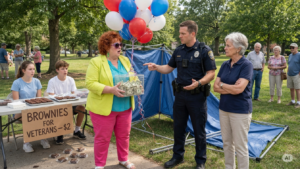
Karen entered through a side door.
Her walking boot was gone, although she still used a cane. She wore a dark blue jacket and carried a thick binder.
For years, that binder had been a familiar symbol of her authority.
Residents had watched her open it before announcing fines, restrictions, and decisions.
Tonight, nobody appeared intimidated.
Linda Foster chaired the meeting.
She began by explaining the procedures and reminding residents that the discussion needed to remain respectful.
Then the independent reviewer presented preliminary findings.
The drainage contract had been awarded without adequate documentation of competitive evaluation or the family relationship involved.
Several contracted repairs remained incomplete.
Final payment had been authorized despite evidence that the work was unfinished.
The review also identified weaknesses in the association’s enforcement practices and recordkeeping.
Some penalties had been issued inconsistently.
Certain homeowner requests had been marked resolved without supporting documentation.
There was no evidence presented that every questionable decision involved intentional wrongdoing.
Nevertheless, the failures were substantial.
Karen stood and defended herself.
She described the hours she had spent organizing community events, supervising contractors, and answering resident complaints.
She argued that volunteers could not be expected to perform like professional administrators.
For a moment, her frustration seemed understandable.
Serving on a homeowners association board could be demanding and thankless.
But Walter knew that difficult responsibilities did not excuse dishonest paperwork or abusive behavior.
When his turn came, he approached the microphone.
He described the maintenance complaints he had submitted.
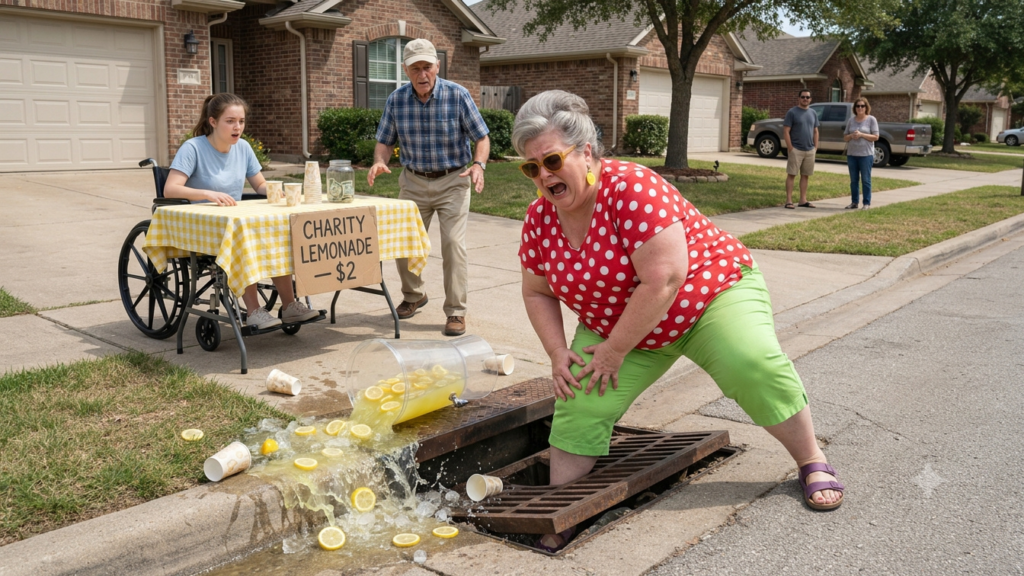
He explained how the lemonade fundraiser had been destroyed.
He acknowledged that Karen’s injury had been painful and frightening.
Then he reminded the audience that the same defective drain could have injured a child or an elderly resident.
The room became silent.
Walter did not demand revenge.
He asked for competent leadership, honest records, fair enforcement, and safe common areas.
Emily spoke next.
She had prepared several pages of notes but left most of them untouched.
She explained why she had organized the fundraiser and how the violation notices had affected her family.
She described the embarrassment of having strangers debate whether she deserved to operate a charity stand in her own driveway.
Finally, she addressed the residents directly.
“I don’t want special treatment. I want the same respect everyone else deserves.”
Several people applauded.
Susan wiped her eyes.
Karen stared at the table.
The meeting proceeded to the leadership question.
Following the association’s applicable voting procedures, homeowners cast their ballots concerning Karen’s continued board membership.
The counting took nearly thirty minutes.
When the results were announced, the outcome was decisive.
Karen was removed from the board.
The remaining directors would oversee the association until the appropriate election process could be completed.
Linda also announced that the Carter family’s violation would be withdrawn.
Other disputed fines would be reviewed individually.
The association would retain qualified contractors to address the identified drainage hazards.
Karen gathered her binder.
She appeared stunned.
For seven years, she had believed the neighborhood depended on her.
Now the residents had chosen to continue without her.
She walked toward the exit, then stopped beside Emily.
For a moment, Emily thought Karen might apologize.
Instead, Karen said nothing.
She left the clubhouse.
Outside, the summer evening was warm and quiet.
Residents lingered near the entrance, talking in groups.
Some expressed relief. Others worried about the financial cost of correcting the drainage problems.
Nobody pretended that removing Karen would automatically solve everything.
The association still faced unfinished repairs, potential insurance issues, disputed expenses, and the difficult task of restoring trust.
But those problems could now be addressed openly.
Over the following weeks, the independent review continued.
The association’s attorney and insurer evaluated Karen’s injury claim, including the circumstances of the accident and the known maintenance concerns.
Daniel’s company entered negotiations concerning the incomplete work and disputed payments.
The board avoided announcing conclusions before the relevant reviews were finished.
Meanwhile, Emily’s charity event was approaching.
Volunteers had arranged tables, tents, donation containers, and accessible pathways.
A local grocery store donated lemons and bottled water.
A hardware business contributed supplies for wheelchair ramps.
The neighborhood was beginning to feel like a community again.
Then Susan received a handwritten envelope.
Inside was a short note from Karen.
She wanted to speak with Emily privately.
There was no threat, no demand, and no official HOA letterhead.
For once, Karen was asking rather than ordering.