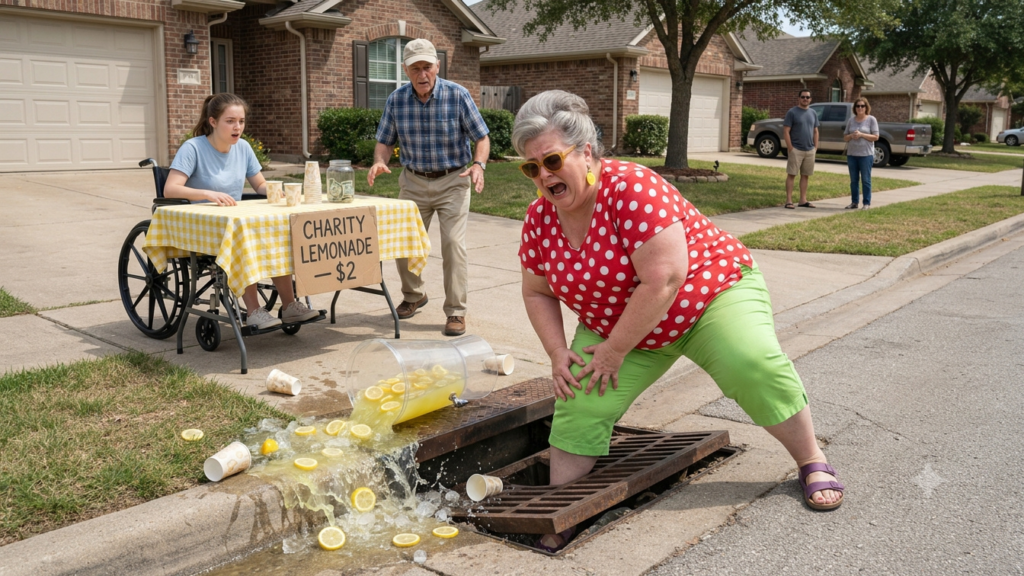
Chapter 3: The Repair That Never Happened
The former board member’s name was Robert Hayes.
At seventy, Robert lived alone in a modest brick house near the neighborhood entrance. He had served as HOA treasurer for nearly a decade before resigning eighteen months earlier.
Walter remembered his resignation.
Karen had announced that Robert was stepping down for personal reasons.
Nobody had questioned it.
When Walter arrived at Robert’s house on Tuesday afternoon, he found several cardboard boxes stacked beside the dining room table.
Robert had been waiting.
Inside the boxes were meeting minutes, financial statements, contractor proposals, and correspondence from his years on the board.
He explained that he had resigned after repeated disagreements with Karen concerning financial oversight.
Initially, their differences had been minor.
Karen preferred faster decisions. Robert preferred documentation.
But over time, she began treating financial questions as personal attacks.
The disagreement that finally ended their working relationship concerned the neighborhood’s drainage system.
Several residents had reported flooding, loose storm drain covers, and deteriorating concrete around drainage openings.
Robert obtained three contractor estimates.
The most comprehensive proposal included replacement of damaged grates, structural repairs, and inspections of the affected drainage channels.
Karen rejected it.
Instead, she recommended a smaller property maintenance company called Whitmore Property Services.
Robert immediately recognized the surname.
The company belonged to Karen’s adult son, Daniel.
Karen insisted that hiring him would save the neighborhood money.
Robert asked her to disclose the family relationship formally and abstain from voting on the contract.
She became furious.
The contract was eventually approved after Robert resigned.
He had retained copies of the original estimates and the proposed scope of work.
Walter examined the paperwork carefully.
Whitmore Property Services had quoted $28,400 for the drainage project.
The amount matched the financial report.
But Robert possessed another document.
It was a preliminary inspection summary from the independent contractor whose proposal Karen had rejected.
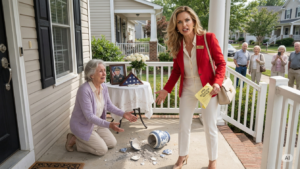
The report specifically identified the storm drain beside the Carter driveway as requiring urgent attention.
A photograph showed the same rectangular metal cover.
Its unstable support frame had been circled in red.
Walter felt a cold sensation in his stomach.
Karen had known about the hazard.
At minimum, the information had been available to her before the repair contract was awarded.
The following morning, Walter and Susan submitted a written request for the association’s relevant financial and maintenance records.
They asked for invoices, payment documentation, inspection reports, and evidence that the contracted repairs had been completed.
They also formally disputed Emily’s fine.
Karen responded through the association’s management email.
She claimed that residents were attempting to exploit her accident for political purposes.
She described the lemonade fundraiser as irresponsible and suggested that Emily’s family had encouraged neighbors to harass her.
Walter was astonished by the accusation.
Nobody had visited Karen’s home.
Nobody had threatened her.
In fact, several residents had offered to deliver meals while she recovered.
Nevertheless, Karen began telling neighbors that she had been deliberately humiliated by an organized group seeking to remove her from office.
She portrayed herself as the victim of an ungrateful community.
For some residents, the explanation was convincing.
Karen had been president for years. She organized holiday decorations, supervised landscaping projects, and frequently reminded homeowners how much work she performed without compensation.
A few neighbors believed Walter was overreacting.
Others wondered whether Emily should simply have obtained permission before setting up the stand.
Then something happened that changed the discussion.
A county inspector visited Willow Creek Estates after Susan reported the dangerous drain to the appropriate local authorities.
The inspector examined the damaged opening, reviewed available maintenance information, and recommended that the association secure several additional drainage structures pending further evaluation.
Three more potentially unsafe grates were identified.
One was near the community playground.
Another stood beside a popular walking route used by elderly residents.
The third was located near a bus stop.
Suddenly, the issue was no longer limited to Karen’s injured leg.
Children, retirees, delivery workers, and ordinary pedestrians had been exposed to possible hazards.
Residents began examining the neighborhood differently.
Frank Dawson remembered his grandson jumping across one of the drainage covers.
Margaret Ellis recalled helping a neighbor retrieve a dropped walking cane near another.
The potential consequences were frightening.
Meanwhile, Emily received an unexpected telephone call from the nonprofit benefiting from her fundraiser.
Someone had forwarded the lemonade stand footage to its director.
The organization had received several donations specifically mentioning Emily.
The director wanted to know whether Emily would consider organizing a larger community fundraising event.
Emily hesitated.
The original stand had been intended as a quiet Saturday project.
Now her name was becoming associated with a neighborhood controversy she had never wanted.
She agreed to think about it.
That evening, Walter returned home and found an envelope tucked beneath his front door.
There was no return address.
Inside was a photocopy of an invoice from Whitmore Property Services.
The document claimed that all damaged storm drain covers had been replaced and inspected.
At the bottom was Karen’s signature approving final payment.
Walter compared the invoice with his photographs.
The grate beside Emily’s driveway was unmistakably the original one.
Whatever work the neighborhood had paid for, the invoice did not appear to describe what had actually happened.