Chapter 8: A Different Kind of Apology
Three weeks after the confrontation, Daniel received a letter.
It arrived in an ordinary white envelope, addressed in careful handwriting.
The return address belonged to Brenda Whitcomb.
Daniel recognized the name immediately.
He placed the envelope on his kitchen table.
Ruth was sitting nearby, working on a crossword puzzle.
“Who’s it from?”
“The woman from the parking lot.”
Ruth lowered her pencil.
Daniel opened the envelope.
Inside was a single handwritten page.
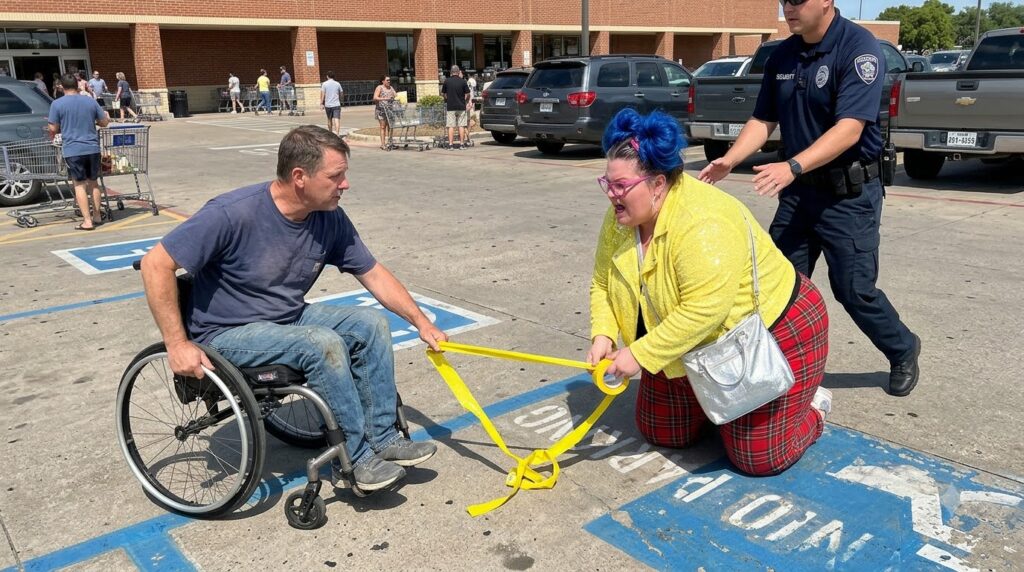
Brenda acknowledged that she had blocked the access aisle, ignored the purpose of the markings, and treated Daniel disrespectfully.
She admitted that she had no authority to create a parking space.
She also acknowledged that her complaints against Marcus had been unfair.
The letter did not attempt to explain away her behavior.
It did not blame stress, traffic, or misunderstandings.
Near the end, Brenda wrote that her daughter had helped her understand how her actions affected people who depended on accessible spaces.
She said she had contacted the supermarket to withdraw her accusations and apologize to Marcus.
Then she offered Daniel an apology as well.
Daniel read the letter slowly.
Ruth waited.
Finally, he set it down.
“Well?” she asked.
“She apologized.”
“Do you believe her?”
Daniel considered the question.
He had no way to know whether Brenda’s change would last.
An apology was a beginning, not proof.
But he appreciated that she had named what she did without trying to justify it.
“I think she’s trying,” he said.
Ruth nodded.
“Sometimes that’s where people have to start.”
Daniel did not respond immediately.
Forgiveness was not something he believed should be demanded from the person who had been wronged.
He did not owe Brenda reassurance.
He did not need to become her friend.
And he did not need to pretend the incident had been harmless.
Still, he believed people should have the opportunity to change.
He wrote a brief reply.
He thanked Brenda for acknowledging her actions.
He explained that accessible spaces were not privileges granted to particular individuals, but practical necessities that allowed people to participate in everyday life.
He told her that the most meaningful apology would be respecting those spaces in the future.
Then he mailed the letter.
A few days later, Elaine Foster invited Daniel to inspect the completed parking improvements.
The accessible aisle had been freshly painted.
The blue stripes were bright and clear.
New signs had been installed.
A curb ramp near the entrance had been repaired, and employees had received updated instructions for keeping access routes unobstructed.
Marcus met Daniel outside.
He was smiling.
“Looks better, doesn’t it?”
Daniel surveyed the area.
“It does.”
Marcus pointed toward a small notice posted near the entrance.
The sign reminded customers that accessible parking spaces and adjacent access aisles must remain clear.
It included a number for reporting obstructions.
The message was simple.
No speeches.
No public shaming.
Just a clear expectation.
Daniel noticed that the store had also changed how shopping carts were collected, reducing the chance that carts would accumulate near the accessible spaces.
It was a small adjustment.
But small adjustments mattered.
For someone using a wheelchair, a walker, or a vehicle ramp, they could determine whether an ordinary errand remained ordinary.
Elaine joined them.
She thanked Daniel for participating in the review.
He shook his head.
“The people who spoke at that meeting deserve the credit.”
Elaine smiled.
“They helped us see what we’d been missing.”
Daniel looked toward the entrance.
Customers came and went.
A mother pushed a stroller.
An older man walked slowly with a cane.
A young employee helped a shopper load groceries.
Nobody appeared to notice the freshly painted stripes.
That was exactly how Daniel wanted it.
Good accessibility should not demand attention.
It should quietly make everyday life possible.
Before leaving, Daniel asked Marcus one final question.
“How are things with Mrs. Whitcomb?”
Marcus shrugged.
“She came by and apologized.”
“How’d that go?”
“Awkward.”
Daniel smiled.
Marcus continued.
“But she meant it, I think.”
Then he added something unexpected.
“She asked whether the store needed volunteers for its next community cleanup.”
Daniel raised an eyebrow.
“Did she?”
Marcus nodded.
“Elaine told her we’d let her know.”
Daniel looked toward the parking lot.
He was not ready to call Brenda a changed woman.
But he was willing to believe she might become one.