CHAPTER 2: THE CREEPING ROT
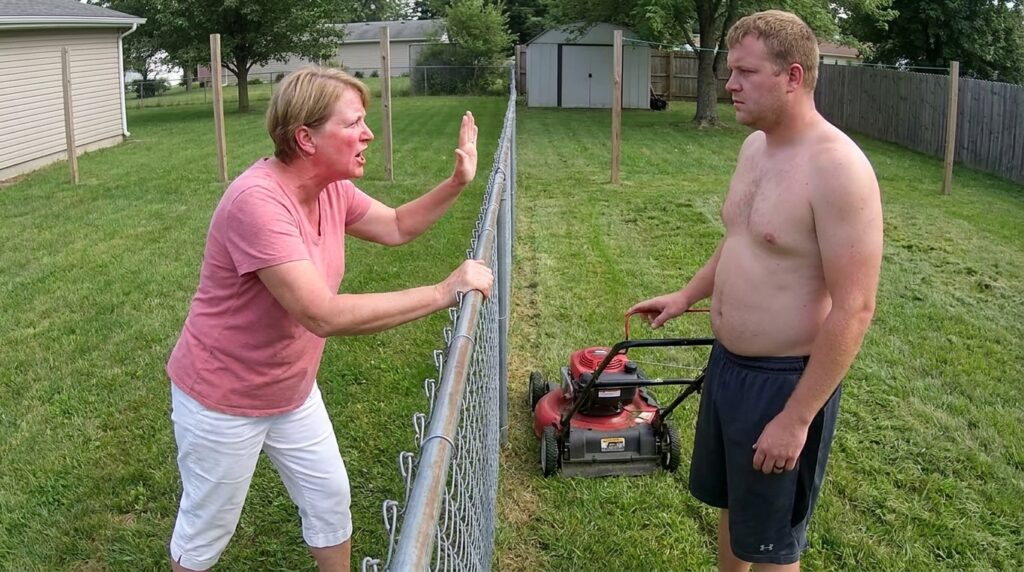
The pink fabric of her blouse pulled taut across her shoulders as she spun away from the fence, her clean white sneakers kicking up a tiny puff of dry, limestone dust from the edge of the driveway. Arthur didn’t watch her climb her porch steps. Instead, his gaze remained fixed on the lower right quadrant of her plastic clipboard as it vanished behind her hip—specifically, the sharp red grease-pencil line that cut through the designation for Tract 4B. It was an archivist’s mark, the kind used in county surveyor vaults before the state digitized its property records in the mid-nineties.
Beneath his palms, the push mower’s rubber handles vibrated with a low, bone-deep hum. The machine was old, its red deck scarred by years of flinging gravel against the foundation stones of his house, but the blade was freshly ground. He engaged the drive clutch. The transmission gave a dry, metallic click, and the machine moved forward into the thick of the fescue, its engine note dropping an octave as it began to chew through the dense, dry blades.
He kept his eyes on the ground directly ahead of the front wheels. He wasn’t looking for stray toys or twigs; he was tracking the line.
Three feet from the chain-link fence, the grass changed. It wasn’t the natural yellowing of a Midwestern summer drought—this was a brittle, ash-gray discoloration that began at the tips and went down to the crown. When the mower wheels passed over this section, the turf didn’t bend; it snapped under the weight of the chassis, dissolving into a fine, pale powder that smelled faintly of industrial sulfur and old vinegar.
Arthur stopped the machine, pulling the throttle back until the engine settled into a wet, rhythmic idle. He knelt in the dirt, the heat from the engine block radiating against his shirtless shoulder. His stocky fingers reached out, gripping the base of a mature privet hedge that formed the green screen between the two lots. The bark was cold. When he squeezed, the outer cambium layer slid away under his thumb like wet paper, revealing an interior that had turned the color of stagnant river water.
Someone had drenched the roots. And they hadn’t done it from a distance.
He looked up through the zinc-coated diamonds of the chain-link fence. The neighbor’s house sat silent behind its double-paned vinyl windows, the air conditioning unit hummed its heavy, expensive tune from the side yard. On her side of the line, the soil was perfectly dark, covered in fresh, black-dyed cedar mulch that looked almost wet in the noon glare. The line of death was absolute; it stopped precisely one inch short of the metal posts that held the wire mesh in place.
Arthur stood up, his joints popping against the silence of the yard. The salt on his forehead caught the dust from the lawn, burning his eyes. He didn’t finish the pass. He rolled the mower back toward his garage, the wheels squeaking on the oil-stained concrete as he pushed it into the shadows of the rafters.
The garage smelled of old tools, iron filings, and rusted copper. On the workbench, beside an assortment of open-end wrenches and a half-empty can of penetrating oil, sat a black plastic monitor. It was a cheap, unbranded security receiver he’d wired into the eaves of the roof two months ago, after his first set of replacement hoses had been cleanly sliced near the outdoor spigot.
His hand left a gray grease smudge on the plastic bezel as he clicked the power button. The screen flickered with a green-tinted night-vision feed, labeled Cam 02 – North Boundary. The timestamp in the corner read 03:14:22 AM—Thursday.
He used the plastic dial to scrub back through the hours, the static popping in his small desktop speakers. The footage showed the yard in stark, infrared contrast—the grass looking like fields of pale snow under the moon. At 03:18, a shape broke the gray geometry of the fence line.
It was her. She wasn’t wearing the pink blouse; she was in a dark, oversized windbreaker that hung down to her knees, but her short, rigidly styled blond hair was unmistakable under the infrared light. She wasn’t carrying her clipboard. In her right hand, she dragged a four-gallon agricultural compression sprayer—the kind with a brass wand and a heavy, manual pump handle.
Arthur leaned closer, his chest nearly pressing against the rusted edge of the workbench.
The video showed her slip her arm through the space between two fence posts where the wire had sagged from an old storm. She didn’t spray the foliage; she was too smart for that. She pressed the brass nozzle directly into the dirt, right at the base of his privet roots, and held the trigger down for twelve seconds per plant. Her movements were methodical, almost rhythmic. She didn’t look around to see if anyone was watching; her posture was completely devoid of the frantic energy she displayed during her daytime confrontations. She looked like a foreman verifying a structural weld.
But it was what happened after she finished that made Arthur freeze.
Before she pulled the brass wand back across the chain-link boundary, she reached into her pocket and produced a long, thin metallic rod—a standard surveyors’ pin with a strip of weathered blue flagging tape tied to the eyelet. The infrared camera caught the glint of the steel as she pushed it deep into the soft earth on his side of the fence, burying it until only the rusted loop stayed above the sod line. She didn’t look at it after it was placed. She simply picked up her tank, gave two high, stiff pumps to re-pressurize the cylinder, and melted back into the shadow of her screened-in porch.
Arthur reached down to his tool rack, his hand bypassing the screwdrivers and settling on a heavy, flat-headed spade with a hickory handle that had been worn smooth by his father’s palms. The wood felt cool against his calloused skin, the iron blade dull and gray from years of digging through the clay-heavy soil of the valley.
He walked back out into the blinding white heat of the afternoon. He didn’t look toward her house, but his ears caught the faint, distinct sound of a blind turning behind the glass of her kitchen window.
He went straight to the base of the third privet hedge, where the gray rot was thickest. He didn’t use his boots to drive the shovel; he used the weight of his upper body, ramming the iron blade straight down into the parched turf. The steel struck something hard six inches below the surface—a sharp, high-pitched ping that vibrated straight through the hickory handle and into his collarbone.
It wasn’t a stone. It was the sound of iron hitting iron.
He twisted the spade, lifting a heavy clod of gray, chemical-scorched earth out of the hole. There, wedged tightly between two dying root clusters, was the top of a thick, square-headed iron spike. It wasn’t the flimsy surveyor’s pin from the night footage. This was an original, rusted property marker—the kind installed by the county in the late 1950s when the plat was first drawn.
And it was sitting exactly twenty-four inches inside his own yard from where the chain-link fence had been anchored.
Behind him, at the curb, the heavy, low-frequency rumble of a diesel engine broke the suburban quiet. An orange strobe light flashed against the gray siding of his garage, its rhythmic pulse washing over the dry grass. Arthur didn’t turn around immediately. He wiped the dirt off his hands onto his dark work shorts, his fingers brushing against the cold steel of the spade as the sound of a heavy car door slamming shut echoed from the front of the driveway.