Chapter 2: The Neighborhood That Learned to Stay Quiet
Six years earlier, Lake Haven Estates had seemed like the perfect place for Robert and his wife, Susan, to retire.
The private community sat beside a quiet freshwater lake in central Florida. Its winding streets were lined with palm trees, flowering shrubs, and well-maintained single-story homes.
Residents enjoyed walking trails, a swimming pool, a fishing pier, and a spacious clubhouse overlooking the water.
For Robert, the attraction had been simple.
He wanted a peaceful home where he and Susan could spend their remaining years without unnecessary complications.
They had worked hard for that peace.
Robert had spent decades inspecting buildings throughout Florida. Susan had taught elementary school for thirty-four years.
They had raised two children, paid off their mortgage, and saved carefully.
When they purchased their home at Lake Haven Estates, they believed the HOA existed to protect the neighborhood.
At first, it did.
The association organized landscaping, maintained common areas, and handled routine community repairs.
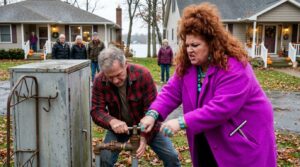
Then Karen Whitmore became president.
Her first year brought relatively minor changes.
She insisted that residents use approved paint colors, submit landscaping requests, and keep outdoor decorations within association guidelines.
Most homeowners considered those requirements reasonable.
But Karen gradually began treating the neighborhood as though it belonged to her personally.
She started issuing violation notices for matters that had never been problems before.
A retired firefighter received a warning because his American flagpole stood several inches outside an approved location.
A widow was fined because the flowers in her front garden extended beyond the edge of a decorative border.
Another resident was ordered to remove a small wooden bench from his porch because Karen considered it inconsistent with the neighborhood’s appearance.
Complaints became increasingly common.
So did fines.
Karen rarely apologized or reconsidered.
Instead, she reminded residents that the HOA board possessed enforcement authority.
Over time, people stopped challenging her.
They paid the fines.
They removed the decorations.
They attended fewer meetings.
Robert noticed the change during his third year in the community.
The clubhouse, once filled with neighbors sharing coffee and discussing local events, had become a place where residents lowered their voices whenever Karen entered.
Susan found the atmosphere particularly troubling.
She had spent her teaching career encouraging children to speak respectfully and stand up for themselves.
Now she watched grown adults hesitate to question decisions affecting their own homes.
One afternoon, she received a violation notice concerning a ceramic bluebird beside their front walkway.
The decorative bird had stood in the same location since they moved in.
Karen claimed it violated a newly adopted exterior ornament policy.
The fine was seventy-five dollars.
Susan removed the bird rather than fight.
Robert found her sitting quietly on the back patio afterward, holding the little ceramic figure in her lap.
She was not crying over the money.
She was upset because their home no longer felt entirely theirs.
Robert paid the fine under protest and requested a copy of the rule.
The association office took three weeks to respond.
When the documents finally arrived, he discovered that the policy had never been properly recorded in the board’s official minutes.
That discovery changed his attitude.
He began attending meetings regularly.
He asked questions about expenditures, enforcement decisions, and board procedures.
Karen disliked him almost immediately.
She accused him of wasting everyone’s time.
When he requested financial records, she called his inquiries disruptive.
When he asked why landscaping expenses had increased despite reduced maintenance, she refused to answer during the meeting.
Robert continued asking.
Other residents gradually approached him.
They brought copies of fines, warning letters, and unexplained charges.
One elderly couple had been billed for a drainage repair they believed belonged to the association.
A widower had received three separate violation notices concerning the same fence.
Several homeowners claimed their appeals had never been heard.
Robert began organizing the complaints.
He was careful not to promise results.
He simply believed residents deserved clear explanations about the money they paid and the rules they were expected to follow.
Then Linda Parker, the HOA secretary, contacted him privately.
Linda had served on the board for nearly four years.
She was organized, cautious, and deeply uncomfortable with confrontation.
But she had begun noticing inconsistencies in the association’s records.
Meeting minutes did not always match the decisions she remembered.
Certain expenses appeared without supporting invoices.
And several board votes had been recorded as unanimous even though Linda distinctly remembered objecting.
She had kept copies of her handwritten notes.
Robert encouraged her to preserve them.
Together, they reviewed the HOA’s governing documents and the procedures for requesting a membership vote.
Within six weeks, enough homeowners had signed a petition seeking Karen’s removal as president and, if the governing documents permitted, her removal from the board.
The petition was submitted through the association’s official process.
Karen reacted furiously.
She called the petition a personal attack.
She accused Robert of organizing a campaign against her.
But the required signatures were there.
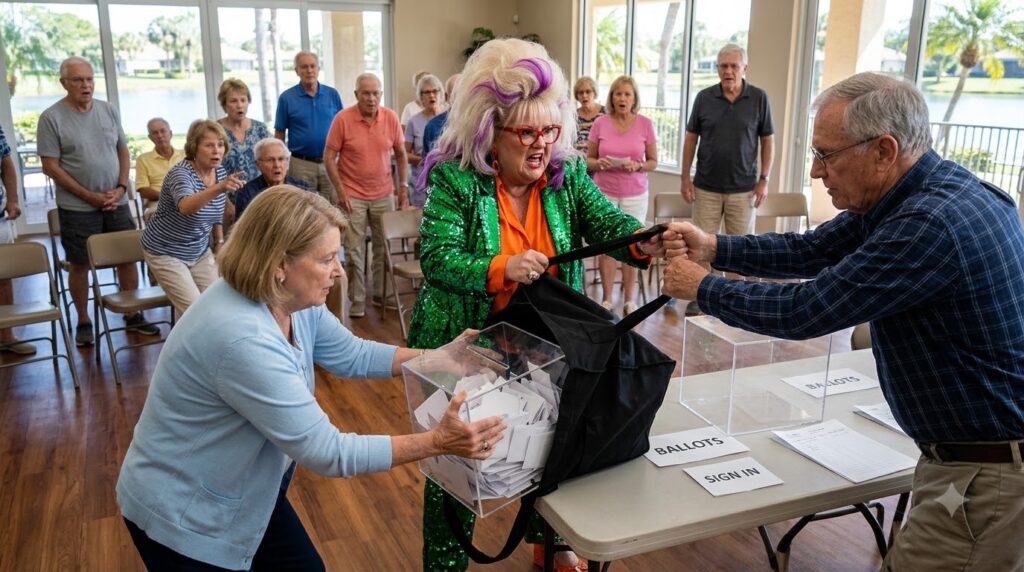
The recall vote was scheduled.
And as the meeting approached, Karen became increasingly desperate to control the outcome.
What Robert did not know was that someone had already seen her preparing a second ballot box.