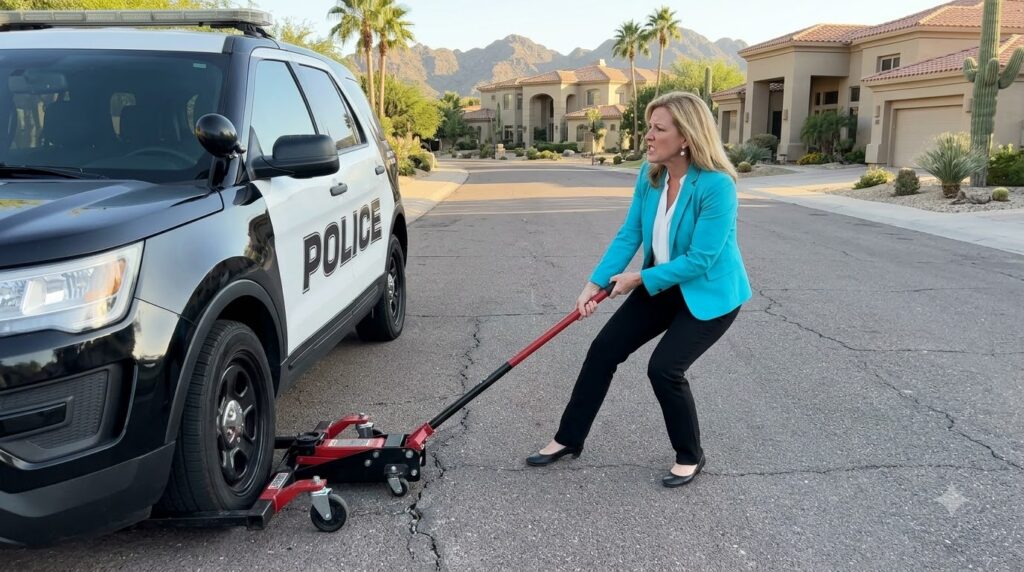
Chapter 8: The Price of Being Right
Marilyn spent the next several days trying to save her position.
She called supporters.
She prepared a written statement.
She reviewed years of maintenance records and gathered photographs showing improvements made during her presidency.
Her defense emphasized accomplishments that nobody could reasonably deny.
The clubhouse roof had been repaired.
The entrance landscaping had been redesigned.
Drainage improvements had reduced flooding near the southern cul-de-sac.
The association’s reserves were stronger than when she first took office.
Marilyn had worked hard.
That was part of what made the situation painful.
She had not begun her presidency intending to frighten elderly homeowners or punish people who disagreed with her.
She had wanted to be effective.
She wanted Willow Crest to be admired.
She wanted people to recognize her contributions.
But recognition had gradually become something she demanded.
And disagreement had become something she treated as disloyalty.
One afternoon, Richard found her reviewing the footage incident report.
She had obtained information about the documented encounter through the appropriate process and was studying it for inaccuracies.
The report described the sticker, her statements, and the recording.
It also noted that no permanent vehicle damage had been found.
Marilyn had hoped that detail would make the incident disappear.
Instead, she kept returning to the same uncomfortable fact.
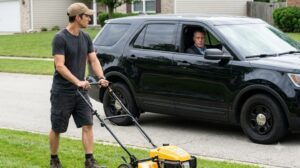
She had placed a violation sticker on a legally parked police SUV because she disliked seeing it in front of her house.
No one had threatened her.
No emergency existed.
She had simply believed her preference should become someone else’s obligation.
Richard sat beside her.
For once, he didn’t argue.
He asked what she would think if someone placed an oversized adhesive warning across the door of her car.
Marilyn stared at the report.
She knew the answer.
She would be furious.
She would demand accountability.
She would insist that the person responsible had no right to touch her property.
The realization settled slowly.
The problem wasn’t that she had been embarrassed by the camera.
The problem was what the camera had captured.
Later that week, the board’s attorney sent Marilyn a summary of the association’s proposed corrective actions.
Her conduct involving the patrol SUV would not be defended as an authorized HOA enforcement action.
The association would not pay personal legal expenses arising from actions outside her official authority.
The independent review also recommended reversing several enforcement charges connected to improperly documented procedures.
Marilyn read the letter in silence.
She had spent years presenting herself as the person who protected Willow Crest from disorder.
Now the board was protecting Willow Crest from her.
That evening, she drove through the neighborhood alone.
She passed Thomas Mercer’s house.
The wooden bench beneath the oak tree was still there.
For years, Marilyn had considered it an eyesore.
Now she noticed the small brass plaque attached to its back.
Ellen Mercer — Always Room for One More.
Marilyn slowed her car.
She remembered Ellen.
Years earlier, before Marilyn became president, Ellen had brought homemade soup when Richard underwent surgery.
She had also welcomed Marilyn’s family to the neighborhood with a basket of fresh bread and a handwritten note.
Marilyn had forgotten that kindness.
Or perhaps she had stopped allowing herself to remember it.
She pulled over farther down the street.
For several minutes, she sat behind the wheel.
Then she took out her phone and began writing a letter.
Not a legal defense.
Not a statement blaming misunderstandings.
An apology.
She wrote to Officer Mercer for interfering with his vehicle.
She wrote to the board for acting without proper authority.
And she wrote to the homeowners for allowing her desire for control to override fairness.
She did not ask anyone to forgive her.
She knew forgiveness could not be demanded.
The next morning, she submitted the letters.
Then she informed Robert that she would resign as HOA president effective immediately.
She would also relinquish her board seat rather than force the community through a removal vote.
It was the first major decision she had made in years that did not place her authority at the center.
And it would not erase what had happened.
The association still had work to do.
So did she.