Chapter 7: The Neighbors Finally Speak
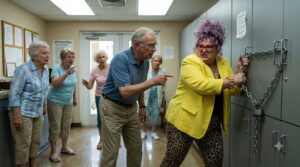
The clubhouse was filled beyond capacity on the evening of the special meeting.
Additional folding chairs lined the back wall.
Homeowners stood near the entrance, holding folders, notebooks, and printed copies of association records.
Thomas arrived with Evelyn and Linda Alvarez.
Daniel drove his father to the meeting but did not participate in the HOA proceedings.
He was careful to keep his professional role separate from his father’s private concerns.
He helped Thomas from the car, wished him luck, and left him with the neighbors.
Inside, Robert Hale opened the meeting.
He explained that the board had commissioned an independent review of enforcement procedures and financial records.
The review had not found evidence that Marilyn personally diverted association money.
But it had identified serious failures in oversight, inconsistent enforcement, unsupported fees, and inadequate documentation of appeals.
The distinction was important.
The board would not accuse anyone of theft without evidence.
At the same time, it would not excuse harmful conduct simply because no money had been stolen.
Susan presented the financial findings.
She explained that affected homeowner accounts would be individually reviewed, with corrections or refunds made where charges were unsupported or improperly assessed.
She also outlined proposed reforms.
Future fines would require consistent documentation.
Appeals would be recorded and decided through a defined process.
Board members with personal conflicts would recuse themselves.
And enforcement authority would be clearly assigned rather than concentrated informally in one person.
The room listened closely.
Then Robert opened the floor to homeowners.
Evelyn spoke first.
She described spending months trying to correct a fine that had continued accumulating after she repaired the issue.
She had submitted photographs, receipts, and written requests.
Nobody had given her a clear answer.
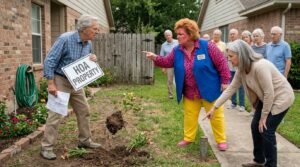
Linda described receiving a violation notice shortly after her grandchildren planted flowers in her front garden.
The flowers were eventually approved, but the experience had left her feeling unwelcome in her own home.
Harold Jenkins explained that he had stopped inviting friends to park near his house because he worried they might receive complaints.
The stories were different.
The feeling beneath them was the same.
People had begun treating their own neighborhood as a place where they might be punished for ordinary mistakes.
Then Thomas stood.
He held his cane in one hand and a single sheet of paper in the other.
He had prepared a speech.
But when he looked around the room, he folded it.
Thomas spoke about Ellen.
He described how they had moved to Willow Crest when their children were small, how neighbors helped one another after storms, and how people once shared tools, meals, and rides to medical appointments.
He remembered the winter a pipe burst in their house.
Three neighbors had arrived before the plumber.
Nobody had asked whether the damaged pipe violated community standards.
They had simply helped.
Thomas paused.
He said rules were necessary.
People deserved safe streets, maintained common areas, and reasonable protections for their property.
But rules should serve the people who lived under them.
They should not become weapons against anyone who asked a question.
His voice trembled slightly when he mentioned the fear of losing his home.
He explained that after Ellen died, the house became more than a building.
It was the place where he could still remember her most clearly.
The room was silent.
Thomas looked toward Marilyn.
He did not insult her.
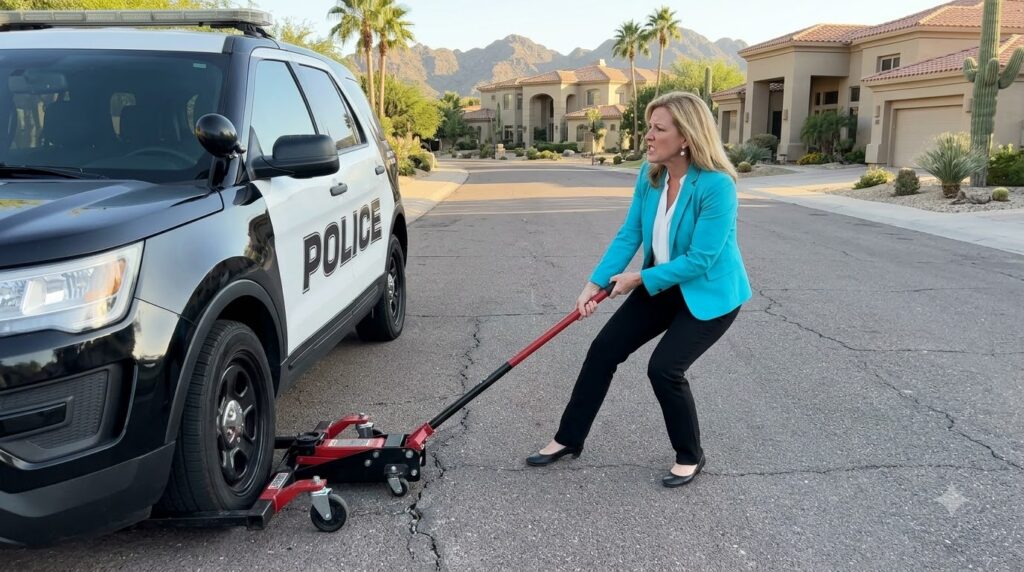
He did not mention the police SUV.
He simply said that nobody should have to feel powerless in the home they had worked a lifetime to keep.
When he sat down, several neighbors quietly applauded.
Others joined them.
Marilyn remained still.
She had prepared a defense of her presidency.
She had planned to discuss landscaping improvements, reserve balances, and rising property values.
But Thomas had changed the conversation.
The question was no longer whether Willow Crest looked beautiful.
It was whether the people living there felt respected.
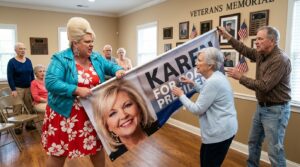
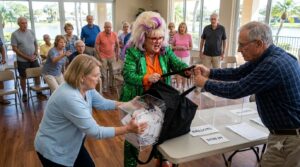
Robert then announced that the board had received a formal petition requesting a membership vote on Marilyn’s removal as president and, if permitted under the governing documents, her removal from the board.
The petition had enough verified signatures to trigger the required process.
Marilyn looked around the room.
Many of the people who had signed were neighbors she had known for years.
Some had once supported her.
A few had attended her holiday parties.
She realized that the opposition was not a small group of habitual complainers.
It was the community itself.
And the vote would take place in two weeks.