Chapter 10: The Street Belonged to Everyone
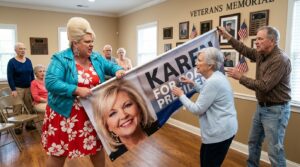
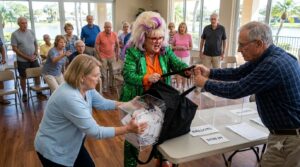
By the following spring, Willow Crest Estates had elected a new board.
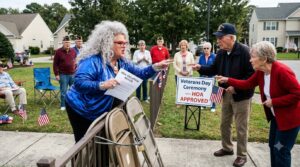
The annual meeting was held on a mild April evening.
Attendance was higher than it had been in years.
Residents who once avoided HOA gatherings now came prepared with questions, suggestions, and occasional homemade desserts.
The association had adopted revised enforcement procedures, completed its review of disputed accounts, and published a summary of corrective actions.
Affected homeowners received account adjustments or refunds where warranted.
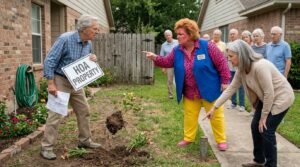
The board also established a small volunteer assistance program for older residents and homeowners facing temporary hardships.
The program did not exempt anyone from reasonable property standards.
Instead, it connected neighbors who needed help with neighbors willing to provide it.
A teenager might help an elderly homeowner bring trash containers back from the curb.
A retired landscaper might offer advice about low-maintenance plants.
Someone recovering from surgery might receive assistance with basic yard work.
The goal was simple.
Correct problems before turning them into punishments.
Thomas Mercer became one of the program’s most enthusiastic supporters.
He couldn’t do much heavy lifting anymore, but he could organize volunteers, make phone calls, and help people understand the association’s rules.
He also volunteered to serve on a homeowner advisory committee.
His experience as a teacher proved useful.
He asked thoughtful questions.
He listened.
And when disagreements became heated, he reminded everyone that the person on the other side of the table would still be their neighbor tomorrow.
At the annual meeting, Robert announced that the association had closed its review of the previous enforcement system.
The financial corrections were complete.
The new procedures were in effect.
And future boards would receive training on their responsibilities and legal limitations.
There was applause.
Not the loud, angry applause of people celebrating an opponent’s downfall.
It was quieter.
The applause of people who had been heard.
Marilyn did not attend.
She had decided that the community deserved time to move forward without her presence dominating every discussion.
But she had sent a short written message wishing the new board success.
She also made a personal contribution to the neighborhood volunteer program, with no request for recognition.
Thomas learned about the donation afterward.
He didn’t make a speech about it.
He simply hoped it meant Marilyn was beginning to understand the difference between leadership and control.
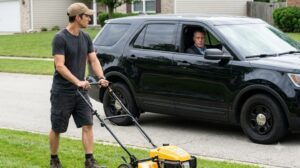
Several weeks later, Daniel Mercer returned to Willow Crest for a Sunday dinner with his father.
This time, he arrived in his personal pickup truck.
He parked along the public curb, several houses away from Thomas’s driveway.
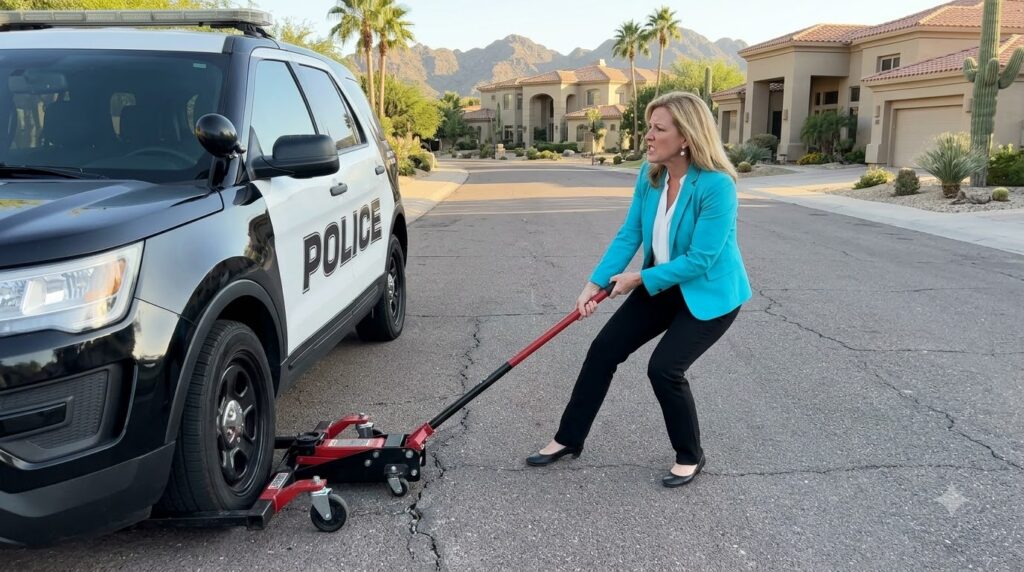
The afternoon sunlight fell across the same stretch of street where Marilyn had once slapped a giant violation sticker onto his patrol SUV.
The place looked ordinary.
There was no sign of the confrontation.
No adhesive residue.
No police vehicle.
No crowd.
Just a quiet suburban street where people came and went.
Daniel carried a bag of groceries to his father’s front door.
Thomas was waiting on the porch.
He looked healthier than he had the previous fall.
His doctor had adjusted his treatment, and the reduced stress seemed to have helped.
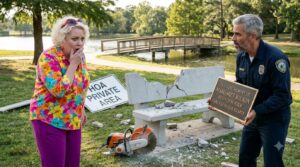
After dinner, father and son sat beneath the oak tree.
The brass plaque on Ellen’s bench caught the late sunlight.
Daniel asked whether Thomas had ever considered moving after everything that happened.
Thomas looked across the lawn.
He could see the house where he had raised his children.
The flower beds Ellen had planted.
The sidewalk where Daniel had learned to ride a bicycle.
The front window where Ellen used to stand and wave when he came home from work.
For a moment, his eyes grew moist.
Then he shook his head.
“This is home.”
Daniel nodded.
A car rolled slowly down Willow Crest Drive.
Its driver paused to let two children cross the street, then continued past Marilyn Whitcomb’s house.
No one rushed outside with a warning.
No one tried to claim the curb as personal property.
The street belonged to the public.
The houses belonged to the people who had worked to make them homes.
And the association existed to serve those people, not rule over them.
Thomas leaned back against the bench.
He thought about how the entire controversy had begun.
One woman.
One police SUV.
One oversized red-and-white sticker.
One tiny camera blinking beside a driver’s mirror.
Marilyn had believed the sticker would demonstrate her power.
Instead, it revealed how far she had allowed that power to go.
But the camera alone had not changed Willow Crest.
The real change came afterward.
It came when neighbors compared their experiences, when board members questioned decisions they had once accepted, and when ordinary homeowners refused to surrender their dignity simply to avoid conflict.
It came when people chose fairness over fear.
Thomas looked at his son.
For years, he had taught students that American communities depended on more than laws written on paper.
They depended on citizens willing to respect those laws, question authority responsibly, and stand up for one another.
Now he had seen that lesson unfold on his own street.
Daniel rose to leave as the sun began setting behind the houses.
Thomas remained on the bench.
A neighbor walking her dog waved.
He waved back.
Somewhere nearby, children laughed.
A sprinkler clicked across a lawn.
The evening was peaceful.
And for Thomas Mercer, that peace meant more than perfectly trimmed hedges, expensive houses, or impressive neighborhood signs.
It meant he could sit beneath the tree his wife had loved, in front of the home they had built together, without wondering whether someone would punish him for being there.
Marilyn Whitcomb had tried to prove that nobody was above her authority.
In the end, Willow Crest learned something far more important.