Chapter 8: What the Records Revealed
The independent financial review took nearly two months.
It was slower than many residents wanted.
Every disputed invoice had to be examined.
Bank statements needed reconciliation.
Vendor payments required confirmation.
The accountant had to distinguish poor recordkeeping from unauthorized spending and possible misappropriation.
Robert insisted that the process be thorough.
He had learned what happened when a board allowed one person to control too much information.
The final report identified approximately $31,000 in payments and collections that lacked adequate authorization or supporting documentation.
Not all of that amount represented missing money.
Some services had been performed but improperly approved.
Some invoices contained inflated charges.
Other transactions remained unexplained.
The report also confirmed that Margaret had failed to disclose her family relationship with Curtis when recommending his company.
Curtis cooperated with the review.
He provided emails, invoices, and bank records.
His documents helped establish which services his company had actually provided.
He also agreed to return certain disputed payments as part of a civil settlement with the association, without admitting to criminal wrongdoing.
Margaret’s attorney disputed several findings.
He argued that she had exercised emergency discretion and that the board had historically allowed her broad administrative authority.
The association’s attorney responded that emergency discretion did not eliminate financial controls or permit unauthorized collection practices.
The matter proceeded through separate legal channels.
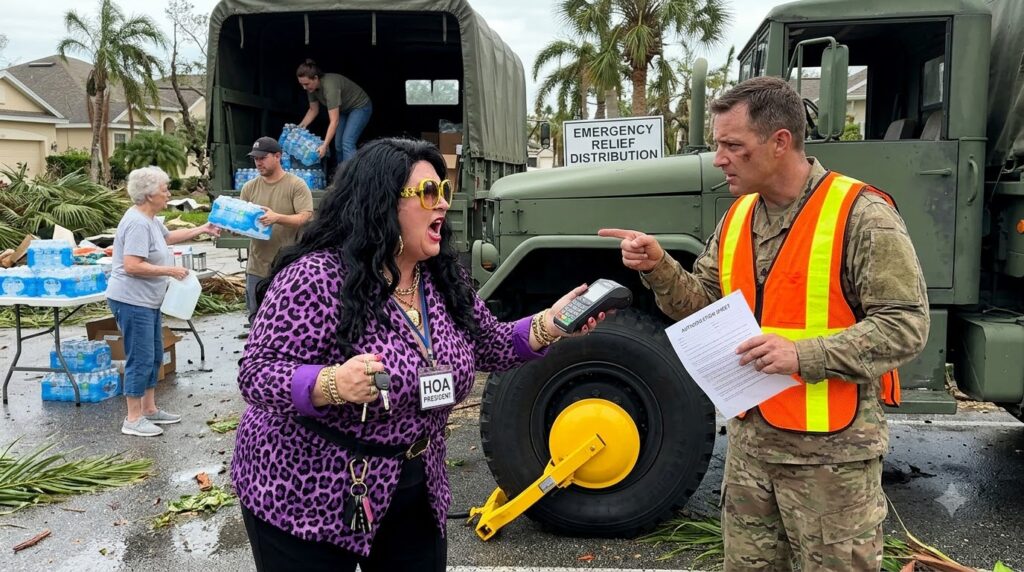
The sheriff’s office completed its investigation into the relief truck incident.
Prosecutors reviewed the evidence, including the video, witness statements, and Margaret’s demand for payment.
Margaret was charged in connection with the unauthorized taking of the keys and interference with the relief operation.
The financial investigation continued separately.
Several months later, Margaret entered a negotiated resolution to the criminal case involving the truck.
She accepted responsibility for taking the keys and obstructing the authorized relief operation.
The court imposed probation, community service, and financial penalties consistent with the agreement.
She was also ordered to avoid interfering with emergency personnel.
The association pursued civil recovery for unauthorized expenditures.
After negotiations, Margaret agreed to repay a portion of the disputed funds and relinquish any remaining administrative access to HOA accounts and records.
The settlement did not resolve every disagreement about the past.
But it returned money to the community and ended a costly legal dispute.
For Thomas, the outcome was complicated.
He had spent months gathering documents, answering questions, and helping residents understand what had happened.
He had imagined that accountability would bring a feeling of satisfaction.
Instead, he felt mostly tired.
He knew Margaret had caused real harm.
He also knew that the community had allowed warning signs to go unaddressed.
The board had approved budgets without demanding sufficient detail.
Residents had stopped attending meetings.
Some had remained silent because they feared fines or retaliation.
Others simply wanted to enjoy retirement without becoming involved in neighborhood politics.
Thomas understood that instinct.
He had felt it himself.
But silence had allowed too much authority to accumulate in one person’s hands.
The new board began making changes.
Financial statements would be available to homeowners through a secure online portal.
Contracts above a specified amount would require competitive bids or documented exceptions.
Board members would disclose family relationships with vendors.
Emergency supplies would be inventoried regularly and stored where multiple authorized people could access them.
Residents could submit concerns without having their names announced at public meetings.
The board also reviewed the association’s enforcement policies.
Several excessive fines were reduced or canceled.
Walter’s old wheelchair-ramp violation was formally withdrawn.
Evelyn’s porch railing case was closed after the board acknowledged that her repairs had been delayed by circumstances beyond her control.
These changes weren’t dramatic.
They didn’t make television news.
But they mattered.
They meant residents could live in their homes without constantly worrying that a minor issue would become an expensive confrontation.
They meant the HOA would return to its proper purpose.
Maintaining shared property.
Managing common expenses.
Protecting the community’s interests.
Not controlling every detail of people’s lives.
One afternoon, Daniel Mercer returned to Pelican Shores to inspect the repaired emergency distribution area.
The county had helped the community establish a better disaster response plan.
Daniel found Thomas near the clubhouse.
The two men shook hands.
Daniel told him that the video had helped investigators understand what happened.
Thomas said the important thing was that the water reached the residents.
Daniel looked across the street, where volunteers were installing a new emergency supply cabinet.
He agreed.
Then he mentioned something Thomas hadn’t known.
After leaving Pelican Shores on the day of the confrontation, Daniel’s team had delivered supplies to three more communities.
The delay had been frustrating.
But the team had completed its route.
Thomas felt relieved.
He had worried that Margaret’s actions might have prevented other people from receiving aid.
Knowing the deliveries had continued lifted a burden he hadn’t realized he was carrying.
Before leaving, Daniel handed Thomas a small envelope.
Inside was a photograph taken by one of the relief volunteers.
It showed Evelyn Carter receiving her first bottle of water.
Behind her, residents stood in line.
The truck’s rear doors were open.
And in the far corner of the photograph, barely visible, was the yellow wheel clamp.
Thomas studied the image for a long time.
The clamp had been intended as a symbol of power.
Instead, it had become a reminder of something else.
People could keep helping one another even when someone tried to stop them.