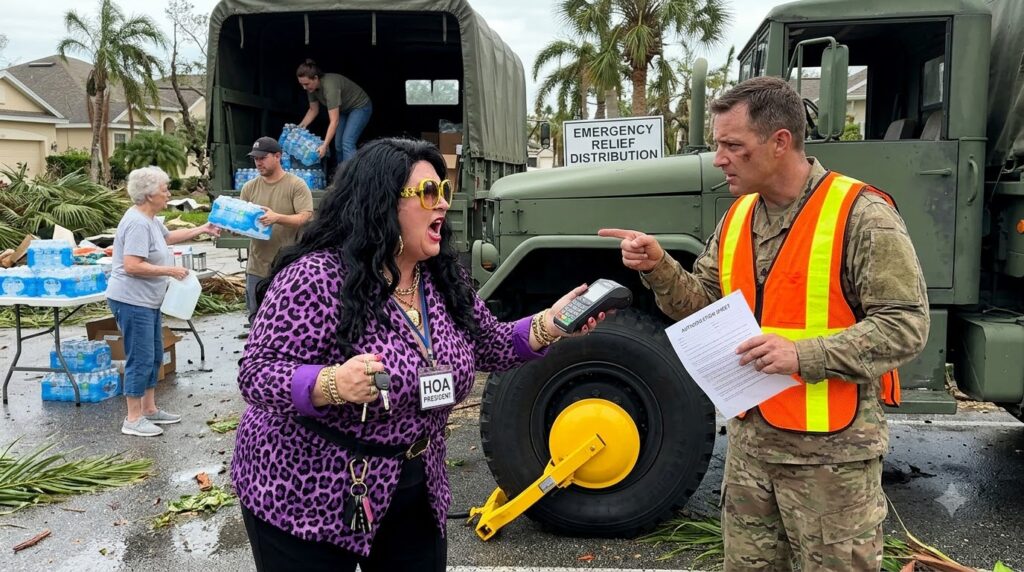
Chapter 2: The Neighborhood That Had Nowhere Else to Go
Before Hurricane Caroline, Pelican Shores had been the kind of coastal Florida community people dreamed about during their working years.
There were 214 homes, most occupied by retirees or families who had lived there for decades.
The streets curved around two retention ponds. White fences bordered carefully maintained lawns, and mature palms shaded the sidewalks.
At the center stood a modest clubhouse overlooking a narrow canal.
For many residents, Pelican Shores represented the reward for a lifetime of work.
A quiet home.
Friendly neighbors.
A place where grandchildren could visit during school vacations.
The hurricane had changed everything.
Caroline made landfall thirty miles south of the community, bringing violent winds and a storm surge that pushed seawater through the drainage system.
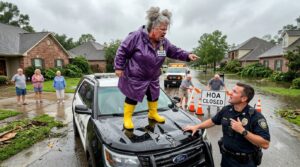
By morning, several streets were underwater.
Power lines lay across lawns.
Roof shingles covered the pavement.
The clubhouse windows had shattered, and the main entrance road was blocked by fallen trees.
Most residents remained in their homes because they had nowhere else to go.
Some were too old to evacuate easily.
Others had believed the storm would weaken before landfall.
A few simply couldn’t afford a hotel several counties away.
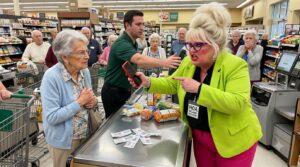
For forty-eight hours, neighbors survived by sharing what they had.
Walter Price, seventy-nine, used his portable generator to keep a neighbor’s oxygen concentrator running until the fuel supply ran low.
A retired schoolteacher named Helen Brooks organized a handwritten list of residents who needed medication, drinking water, or assistance clearing debris.
Thomas Bennett walked from house to house checking on people who lived alone.
The neighborhood’s unofficial rescue operation worked because people trusted one another.
But there was one person almost nobody trusted.
Margaret Voss.
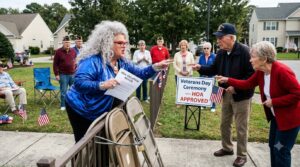
She had become HOA president eight years earlier after promising to protect property values and maintain community standards.
At first, her leadership seemed ordinary enough.
She organized landscaping contracts, enforced parking rules, and argued for improvements to the clubhouse.
Then the warnings began.
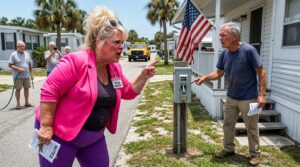
A resident received a fine for leaving a garden hose visible from the street.
Another was penalized because a visiting granddaughter parked overnight in the driveway.
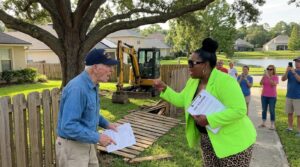
Walter was once threatened with a violation for placing a temporary wheelchair ramp near his front door.
Margaret treated every disagreement as a challenge to her authority.
Over time, board meetings became shorter.
Financial reports became less detailed.
Residents who questioned expenses were accused of creating unnecessary conflict.
Thomas had noticed the pattern while serving as HOA treasurer.
He had spent thirty-five years working for regional newspapers, where he learned that suspicious behavior often began with something small.
An unexplained invoice.
A missing receipt.
A payment approved without the required signatures.
Six months earlier, Thomas had discovered that the HOA was paying a company called Coastal Community Compliance for administrative services.
The monthly invoices were unusually high.
When he asked what services the company provided, Margaret told him the matter was confidential.
Thomas reminded her that HOA spending was not a personal secret.
At the next board meeting, Margaret accused him of disrupting operations.
Two weeks later, she persuaded a board majority to remove him as treasurer.
Thomas went home with a cardboard box of paperwork and a growing sense that something was wrong.
He didn’t stop asking questions.
Then the hurricane arrived.
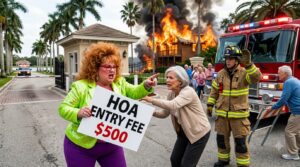
While residents were securing windows and moving furniture, Margaret announced that she would personally coordinate all emergency access to Pelican Shores.
She placed a temporary sign near the community entrance.
AUTHORIZED ENTRY BY HOA APPROVAL ONLY.
The sign had no emergency exemption.
Thomas photographed it.
He also photographed Margaret speaking with a private security contractor near the clubhouse the evening before the storm.
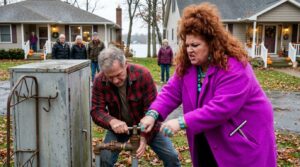
The contractor delivered several yellow wheel clamps.
At the time, Thomas assumed they were intended for unauthorized parking.
After the hurricane, he began to suspect otherwise.
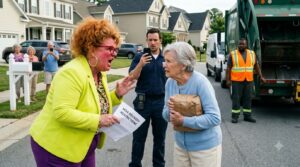
When the county relief truck approached Pelican Shores, Thomas was already standing near the distribution area with his phone.
He filmed Margaret walking toward the truck.
He filmed her inspecting the tires.
And he filmed her quietly instructing a maintenance worker to move a portable barrier behind the vehicle.
The barrier didn’t block the rear cargo doors.
It blocked the easiest route out.
Thomas continued recording as Margaret reached for the wheel clamp.
Now, standing beside the distribution table, he replayed the footage.
One detail troubled him more than the stolen keys.
Before confronting Daniel, Margaret had received a phone call.
She answered it while looking directly at the relief truck.
Thomas couldn’t hear the caller.
But he heard Margaret’s response clearly.
She said she had found a way to make the emergency profitable.
Thomas saved the recording.
Then he called Helen Brooks.
He asked whether she still had the list of residents waiting for emergency supplies.
She did.
Thomas told her to make a second copy.
Because the dispute at the truck was no longer just about an outrageous fee.
It was becoming a question of whether Margaret had deliberately exploited the disaster.
And the paperwork might reveal how far she had gone.