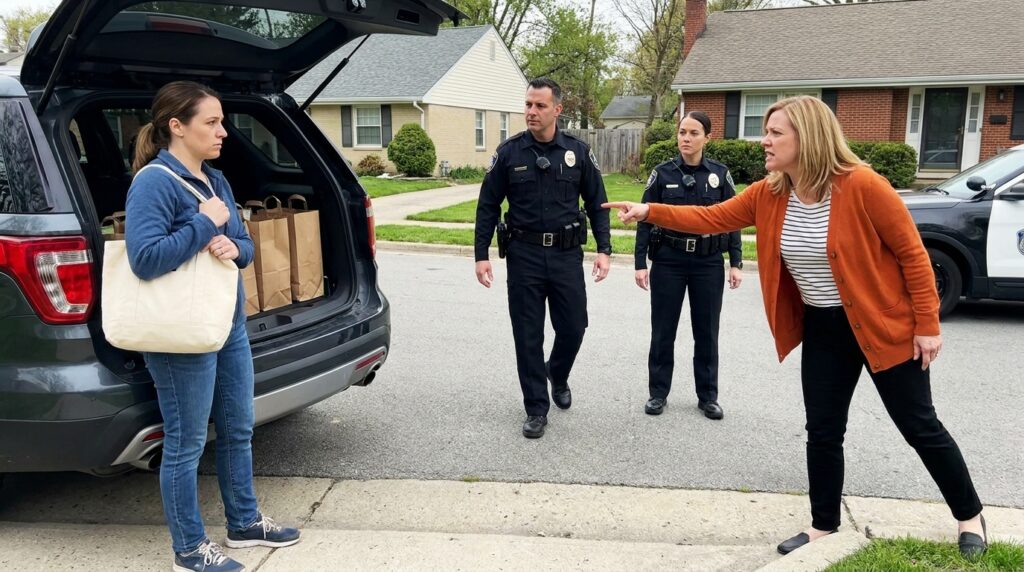
CHAPTER 4: THE FENCE LINE IN THE RAIN
The storm didn’t ease the humidity; it just gave the heat a physical, weighted momentum. Large, flat drops of summer rain slammed into the unsealed cedar slats of the shared boundary fence, turning the dry wood the color of clotted oil. Beneath my rubber-soled boots, the packed dirt along the property line had dissolved into a thick, gray paste that pulled at my heels with every step, making each movement a calculated test of balance.
I wiped a mix of rainwater and cold sweat from my eyes, my palm catching on the rough skin of my knuckles. Across the property boundary, Mrs. Gable was already waiting. She stood just inside the drip-line of her low porch roof, but the wind was driving the downpour sideways, splashing her striped shirt and plastering the thin fabric of her black pants to her shins. She didn’t have her sunglasses on now. Her eyes looked small, dark, and hyper-focused through the silver-rimmed reading glasses she wore like a shield.
Between us sat the low gravel fence—a three-foot barrier of wire mesh and split cedar posts that my grandfather had set forty years ago to catch the runoff from the high road. Tucked into the corner where the wood met the concrete driveway retaining wall was an old five-gallon zinc bucket, its handle rusted thin and collapsed into the weeds. It was filled to the brim with irregular, dark-gray slag stones that didn’t match the light river gravel of the driveways. It had sat there for decades, a static marker everyone ignored, but looking at it now through the blur of the downpour, the bucket sat exactly twelve feet inside the line the old vellum map had claimed as public right-of-way.
“You’re tracking mud across the easement,” Gable called out. Her voice was thin, stripped of its performative volume by the steady thrum of the rain against the gutters, but it carried a sharp, transactional edge that didn’t waver. “The drainage district regulations are explicit about slope maintenance. If your side of the line washes into my culvert, the county inspector writes the citation to your parcel number, not mine.”
I didn’t answer right away. I took a half-step closer to the wire mesh, my hand reaching out to steady myself against the top of a cedar post. The wood was split-grain and splintered, the raw fibers soaking up the moisture until they felt spongy and cold under my thumb.
“I looked at the 1954 tract files, Mrs. Gable,” I said, keeping my tone flat, matching the level neutrality the anonymous caller had used on the phone. “The original frontage allowance doesn’t stop at the ditch. It cuts twelve feet into your lawn. The boxwoods you planted are sitting on the county’s right-of-way.”
Gable didn’t flinch. Her jaw simply locked, the muscles along her neck going rigid as she stepped out from under the porch roof, letting the full force of the rain hit her face. She walked down the short grass slope, her leather loafers sinking deep into the sod with a wet, bubbling squelch. She stopped exactly two inches from her side of the wire mesh.
“A file in a basement isn’t a title,” she said, her voice dropping into a low hiss that barely carried over the sound of the water rushing down the driveway channel. “The digital registry is the only record that carries legal weight in this district. Go look at the county portal right now. Scan the current parcel layout for Lot 4A and 4B. The setback is closed. The coordinates are locked.”
“The caller from the city annex said the paperwork was closed, too,” I replied, watching her eyes through the rain-streaked lenses of her glasses. “But the purple stamp on the master map didn’t have a signature. No clerk signed off on the variance.”
A sudden, sharp look of calculation crossed Gable’s face—not fear, but the cold assessment of a chess player who had just realized her opponent had seen an unlisted piece on the board. She reached out and grabbed the top wire of the mesh fence, her knuckles turning the same bloodless white as the unraveled thread on my tote bag. Her index finger didn’t jab this time; it curled around the galvanized metal until the wire bit into her skin.
“There are people in the civic building who understand how this town stays solvent,” she said, her words measured, spaced out like transactional figures on a ledger. “We don’t live on handshakes from 1954 anymore. We live on infrastructure. The people who pay for the blacktop are the ones who decide where the curb stops. If you think a blank signature line is going to change who owns the access to this road, you don’t know how deep the concrete goes under your own house.”
Before I could challenge her, the back door of her house clicked open. A man stepped onto her porch—not a cop, and not a resident. He wore a heavy, yellow rubber slicker with no municipal markings, but tucked under his arm was a large, plastic-wrapped folder of engineering schematics. His face was obscured by the hood, but as he leaned against the railing, I caught the glint of a polished silver grommet holding the strap of his high-visibility vest together.
Gable didn’t look back at him, but her posture eased slightly, her fingers uncurling from the wire fence, leaving small, gray impressions of zinc flake on her skin.
“Go inside,” she said, her voice dropping the anger, leaving only the hard, unvarnished finality of a neighbor who had already deployed her counter-move. “The rain is going to compromise your foundation if you keep standing in the ditch.”
She turned and walked back up the slope, her boots leaving deep, water-filled craters in the manicured grass. The man in the yellow slicker waited until she reached the dry boards of the porch, then followed her inside, pulling the heavy wood door shut behind them with a flat, hollow thud that cut through the sound of the storm.
I stood alone at the fence line, my hand still resting on the wet cedar post. The downpour was slackening now, turning into a fine, gray mist that coated the surface of the five-gallon zinc bucket at my feet. I reached down, my fingers wrapping around the cold, mud-slicked rim of the old container, and pulled.
The bucket didn’t move. It wasn’t just filled with slag stones; it was bolted directly into a thick, square block of poured concrete buried deep beneath the topsoil—a permanent survey monument that someone had deliberately tried to hide beneath forty years of weeds and iron-scented dirt.