CHAPTER 6: THE SUBMISSION OF LINKED DATA
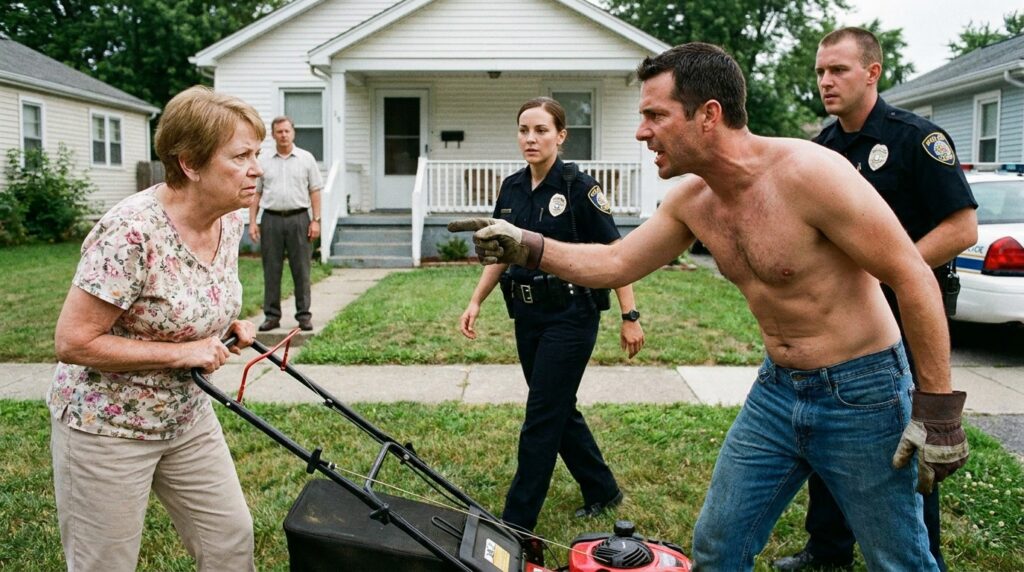
“The local board variance doesn’t overwrite a high-pressure line registration, Clara,” the resident said, his fingers tracing the blunt edge of the iron shear pin inside his pocket. He didn’t pull his hand out. He stood dead-still against his truck’s fenders, letting the heat from the radiator bake into his lower back while the Patrol Officer’s fingers cleared the remaining layer of mud from the square bolt head.
The officer didn’t look back at the sidewalk. Her fingers left grey streaks across the face of her handheld terminal as she swiped through a series of system maps. The blue light from the digital layout reflected off the dull zinc plates of her tactical vest, tracking the tiny, irregular pulses of the satellite correction link.
“Hold on,” the female officer muttered. Her voice lost its clinical cadence for a fraction of a second, dropping into a rougher, lower tone. She stood up straight, her boots grinding a mix of dried clay and clover into the grass line as she turned her terminal toward the open window of the cruiser. “Miller, check the terminal on the dash. Pull up the 1980 regional engineering plot for the whole cul-de-sac. Not the county parcel map. The actual master water district survey.”
The Backup Officer let his weight shift off the resident’s arm. His heavy boots made a sticky, sucking sound as he stepped away from the red-and-black mower frame, his attention pulled toward the blue flicker inside the vehicle’s cab. “What are you looking for, Vance?”
“Look at the benchmark point,” she said, her thumb stabbing at the glass screen. “The original iron stake isn’t where the homeowners’ association marked the drainage edge. It’s listed twenty-eight feet from the historical hydrometer line. If this private stamp is the authentic layout anchor, then the entire curb line on the north side of the street is tracking two degrees out of plumb.”
The resident’s chin went up. He didn’t look at Mrs. Gable’s face; he looked down at his own smartphone, which was still clamped inside his leather-gloved palm. The live recording loop from his porch camera showed the three of them—the officers frozen in the middle of the lawn, the neighbor pinned against her rose bushes, and the red mower sitting like an iron block between their boots. But his internal calculation was already jumping three steps ahead of the system log. If the master benchmark was out of square, the decoy of the moved retaining wall was just a symptom. His entire garage footing was legally built on thin air.
Mrs. Gable’s clipboard slipped another inch against her side, the metal clip scraping a long gray mark across her floral blouse before she caught it with her wrist. Her short hair looked dry and brittle under the harsh western sun. “The builder executed the final plot clearance with the county inspector on site. You can’t invalidate forty years of residency because a digital terminal has an uncalibrated tracking variance.”
“The terminal isn’t the problem, ma’am,” the resident said, his voice carrying the hard, transactional clarity of an old engine block hitting its stride. He stepped forward onto his concrete driveway apron, his boots dry and clear of the swale mud. “The private stamp under your stone wall matches the survey tags I found in the glove box of the utility truck when they cleared the ditch last spring. The contractor didn’t miss the line by accident. Your uncle didn’t just authorize a landscape variance in ninety-six—he signed the original civil engineering layout that shifted the entire street three feet to the left to save the developer from blasting the limestone ledge under lot five.”
The Patrol Officer turned her head, her dark tied hair catching a gray layer of limestone dust from the air. She didn’t offer a rebuttal to the resident’s statement. She walked back to the center lane, her leather boots stopping exactly on the line where his manicured rye met her unkept clover.
“Ma’am,” the officer said, her gaze locking onto Mrs. Gable with the weight of an unyielding administrative hammer. “I need you to unlock your phone and display the full PDF copy of the title search you said you pulled from the county annex this morning.”
“The document is private property,” Mrs. Gable said, her shoulders pulling back until her posture looked like a fence post driven into hard clay. Her voice was thin, but her eyes held that rigid, unblinking glare of someone who believed the system would protect her as long as she stayed inside her own shadow. “It’s part of an active lien request.”
“If it’s part of a public lien record, it’s open to municipal inspection during an active investigation into infrastructure tampering,” the Patrol Officer replied. She took one step closer, her large frame completely cutting off the neighbor’s view of the street. “Miller, tell the dispatcher to log a code-four verification request with the state infrastructure desk. We need an on-site supervisor from the water authority before we clear this unit from the call.”
The neighbor’s fingers froze against the screen of her phone. The confidence of her unappointed authority seemed to drain straight into the dry soil beneath her shoes, her silhouette looking smaller, heavier against the white limestone blocks of her wall.
The resident watched her fingers, noticing the small, white scar across her thumb where she had cut herself on a cold chisel three weeks ago. The decoy of her property overreach had collapsed on-screen, but the ultimate reality remained locked behind the digital records inside the cruiser’s dash—and every house on the cul-de-sac was currently sitting inside the blast radius of that data.