Chapter 4: The Neighbor Who Had Kept Every Receipt
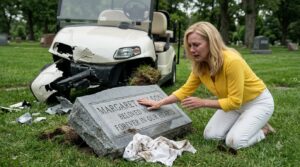
Margaret Ellis lived in a white ranch-style house with blue shutters and a flower garden that had once won Brookhaven’s annual neighborhood award.
The garden was still beautiful, though the roses needed pruning.
Daniel arrived on a cool Thursday afternoon.
Margaret opened the door before he reached the porch.
She was a small woman with carefully curled gray hair, wearing a pale green cardigan and comfortable walking shoes.
Her husband had died seven years earlier.
Since then, she had lived alone.
She welcomed Daniel into a tidy living room filled with family photographs, antique furniture, and the familiar scent of freshly brewed coffee.
“I hope you don’t mind the mess,” she said.
There wasn’t any.
Daniel smiled.
“My daughter would call this a museum.”
Margaret laughed softly.
Then her expression became serious.
She led him to the dining room.
Three cardboard storage boxes sat on the table.
Each was labeled by year.
“I kept copies,” she explained.
Daniel looked at the boxes.
“Of what?”
“Everything I was allowed to see.”
Margaret had been secretary during the early years of Patricia’s presidency.
At first, she had admired Patricia’s confidence.
The neighborhood had needed leadership.
Several common areas were deteriorating, and previous board members had struggled to agree on repairs.
Patricia promised action.
But as months passed, Margaret began noticing inconsistencies.
Contractors were paid before work was inspected.
Meeting minutes were revised after approval.
Certain expenditures were discussed privately rather than during recorded board meetings.
When Margaret raised concerns, Patricia accused her of being difficult.
Then came the accessibility improvement project.
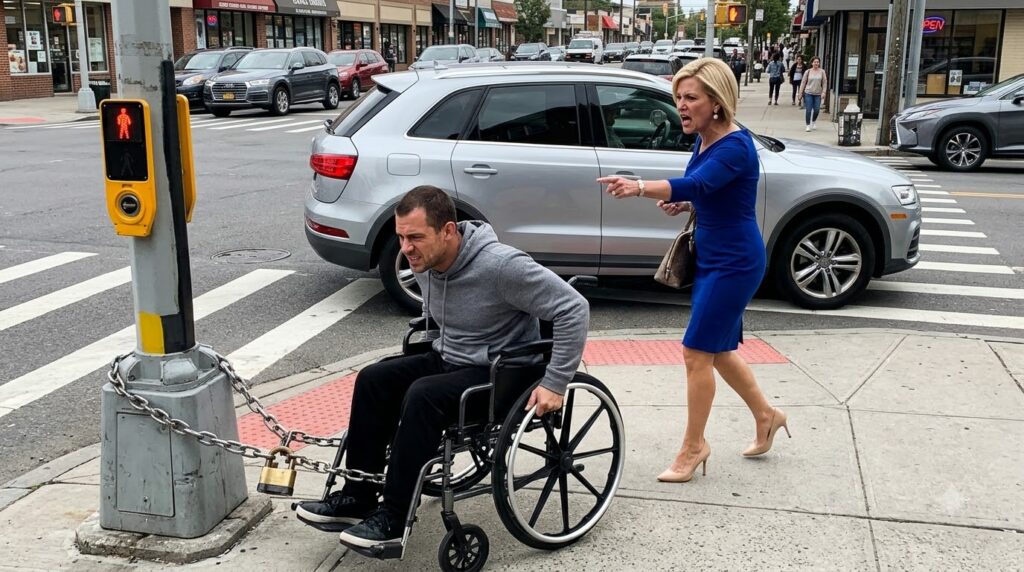
The association had approved funds for several sidewalk repairs, including improvements near the main commercial intersection.
Margaret remembered the meeting clearly.
One board member had mentioned an elderly resident who used a walker.
Another had raised concerns about wheelchair access.
The proposal passed unanimously.
The estimated cost was $38,000.
Margaret opened a folder and showed Daniel the authorization.
Then she produced a payment record.
The association had paid Whitmore Property Services the full amount.
But the inspection report was missing.
Margaret said she had requested it repeatedly.
She never received one.
Several months later, she visited the sites herself.
Some repairs had been completed.
Others appeared unfinished.
At one location, a newly installed curb ramp was too steep for comfortable wheelchair use.
At another, the concrete was already cracking.
When Margaret brought photographs to a board meeting, Patricia publicly accused her of undermining the neighborhood.
The argument ended with Margaret’s resignation.
“I should have fought harder,” she admitted.
Daniel shook his head.
“You tried.”
“Not enough.”
He studied the papers.
The documents did not prove that Patricia had stolen money.
They did, however, raise serious questions about oversight and whether the association had received the work it paid for.
Daniel asked whether anyone else had copies.
Margaret nodded.
“The former treasurer might.”
His name was Robert Hale.
He had moved to a nearby retirement community after selling his Brookhaven home.
Margaret hadn’t spoken to him in almost two years.
She believed he had additional records.
But there was another problem.
Patricia’s husband, Charles Whitmore, had once been a respected real estate developer.
Although he had retired from active business, he still knew many local contractors, property managers, and association attorneys.
Margaret believed those relationships had helped Patricia maintain her influence.
Daniel listened without interrupting.
He didn’t want to build a case on rumors.
He wanted documents, dates, and witnesses.
Margaret seemed to understand.
She pushed one box toward him.
“These are copies. Keep them.”
Daniel looked surprised.
“Are you sure?”
“I’ve spent years being afraid of that woman.”
She paused.
“After watching what she did to you, I realized fear hasn’t protected anyone.”
Daniel accepted the box.
Before leaving, he asked about the rose garden.
Margaret smiled sadly.
“Patricia fined me because the border stones were the wrong color.”
Daniel looked through the window.
The stones were ordinary gray landscaping blocks.
“How much?”
“Four hundred dollars.”
“Did you pay it?”
“Yes. I didn’t want a lien on my house.”
Daniel felt anger rising.
Margaret had worked as a school librarian for thirty-two years.
She had raised three children.
She had cared for her husband through his final illness.
And now, in retirement, she was paying penalties over garden stones because someone had decided they were unacceptable.
On his way home, Daniel stopped at the intersection.
The traffic light stood exactly where it had before.
Cars passed.
Pedestrians crossed.
A delivery truck waited at the curb.
Nothing about the location suggested what had happened there.
Daniel approached the curb ramp and examined the concrete.
A faded patch near the sidewalk showed where repairs had been made.
He took several photographs.
Then he noticed a small metal plate embedded beside the ramp.
It identified a municipal improvement project completed years earlier.
The date was older than the HOA’s payment records.
Daniel stared at it.
The plate didn’t establish that the association’s funds had been misused. The association might have paid for later work or adjacent improvements.
But it raised a question that deserved an answer.
What exactly had Whitmore Property Services been paid to repair?
Daniel took another photograph.
That evening, he sent the images to Reed.
The attorney responded with a short message.
We need the original invoices and work orders.
Daniel was preparing to put away his phone when another message appeared.
It came from an unknown number.
Stop digging into HOA business. Think about your daughter.
Daniel stared at the screen.
His anger turned cold.
Whoever had sent the message knew about Sophie.
And they wanted him frightened enough to stop.