Chapter 3: The Empty Space Nobody Could Use
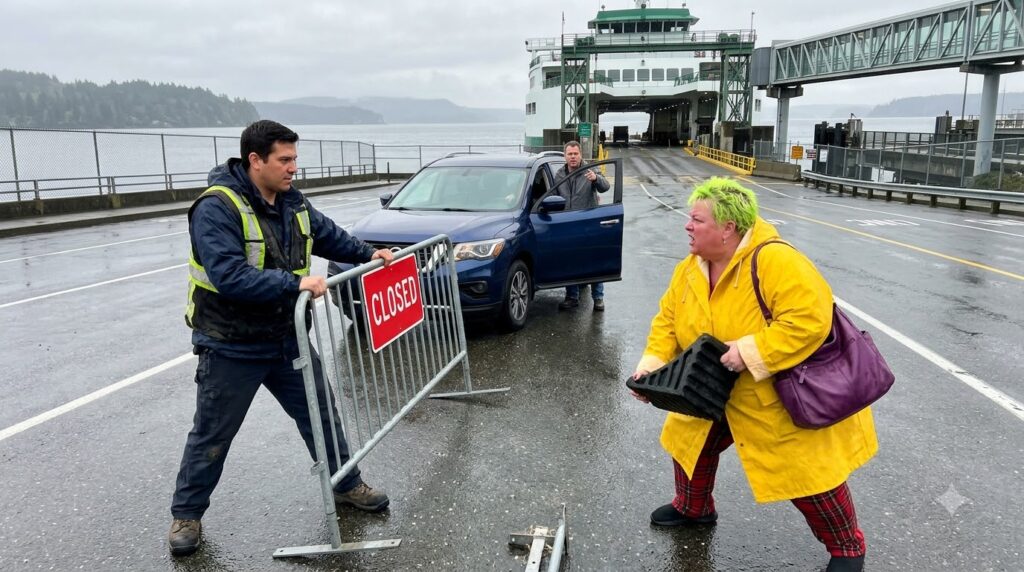
From the boarding lane, the ferry appeared enormous.
Its white superstructure rose above the terminal, and rows of windows reflected the gray afternoon sky. To someone standing outside, the vessel seemed capable of accommodating several more cars.
Patricia pointed toward a visible section near the rear of the vehicle deck.
There was space there.
She could see it.
Therefore, she argued, the crew had lied about the ferry being full.
Laura did not raise her voice.
She explained that vehicle capacity was not determined by how many empty patches of deck a passenger could see from shore.
Every sailing required careful consideration of vehicle placement, weight distribution, emergency access, and operational restrictions.
A space that looked empty could be reserved for equipment clearance or needed to maintain a safe loading arrangement.
On that particular sailing, a portion of the deck had been restricted because of a maintenance-related limitation.
The crew had adjusted the loading plan accordingly.
Patricia demanded to know why nobody had announced that information earlier.
Laura explained that the terminal had already notified waiting passengers about reduced vehicle capacity and a possible delay.
Michael remembered hearing the announcement.
So did Evelyn.
Patricia had apparently been occupied with something else.
Evelyn remembered seeing her earlier near the ticket booth, arguing with another employee about whether the ferry company should provide priority boarding for neighborhood representatives.
At the time, Evelyn had assumed the disagreement would end at the counter.
Now she wondered whether Patricia had been planning to challenge the boarding closure from the beginning.
Laura continued explaining the situation.
The vessel was not simply refusing additional vehicles for convenience. Its crew had reached the approved limit under the day’s operating conditions.
Reopening the ramp to accommodate Patricia’s demands would require coordination with the vessel, a revised loading assessment, and authorization from the responsible crew.
It was not something a loading attendant could decide because a passenger shouted loudly enough.
Michael felt his frustration give way to concern.
He had been irritated about missing the ferry. Now he was grateful Daniel had refused to let anyone drive forward.
Michael’s father had worked as a commercial truck driver. Growing up, he had heard countless stories about preventable accidents caused by people who ignored procedures because they were in a hurry.
One lesson had stayed with him.
Safety rules often seemed unnecessary until the moment someone needed them.
Patricia listened with narrowed eyes.
Then she changed tactics.
She accused Laura of discriminating against older passengers.
Evelyn’s expression tightened.
She was seventeen years older than Patricia and had been waiting longer.
Nobody had offered Evelyn special treatment.
Nobody had singled her out for punishment.
The ferry was full.
That was the problem.
Patricia continued, claiming that elderly residents were being abandoned at the terminal.
Evelyn finally opened her car door and stepped carefully onto the pavement.
She approached slowly, using the side of her vehicle for support before walking toward the gathering.
“Please don’t speak for me,” she said.
Patricia turned sharply.
Evelyn stood several feet away.
Her silver hair was tucked beneath a navy rain hat, and she wore a long brown coat buttoned against the wind.
She looked tired but composed.
Evelyn explained that she wanted to get home as much as anyone. She had groceries in her trunk and a daughter expecting her for dinner.
But she would rather wait another hour than pressure a ferry crew into making a decision they believed was unsafe.
A few nearby passengers nodded.
Patricia’s cheeks reddened.
She accused Evelyn of siding with the employees.
Evelyn did not argue.
She simply returned to her car.
That quiet refusal seemed to anger Patricia more than any shouted response.
Laura asked Daniel to secure the wheel chock and move it away from the passenger lane.
Patricia reluctantly surrendered it.
For a moment, the confrontation appeared finished.
Then Laura received a call over her radio.
She listened, glanced toward Patricia, and asked the caller to repeat the information.
When the transmission ended, Laura looked at the pink clipboard.
The terminal office had received several calls that morning from someone claiming to represent the Harbor View Residents Alliance.
The caller had requested priority loading for a private group.
And according to the office records, those requests had been denied.