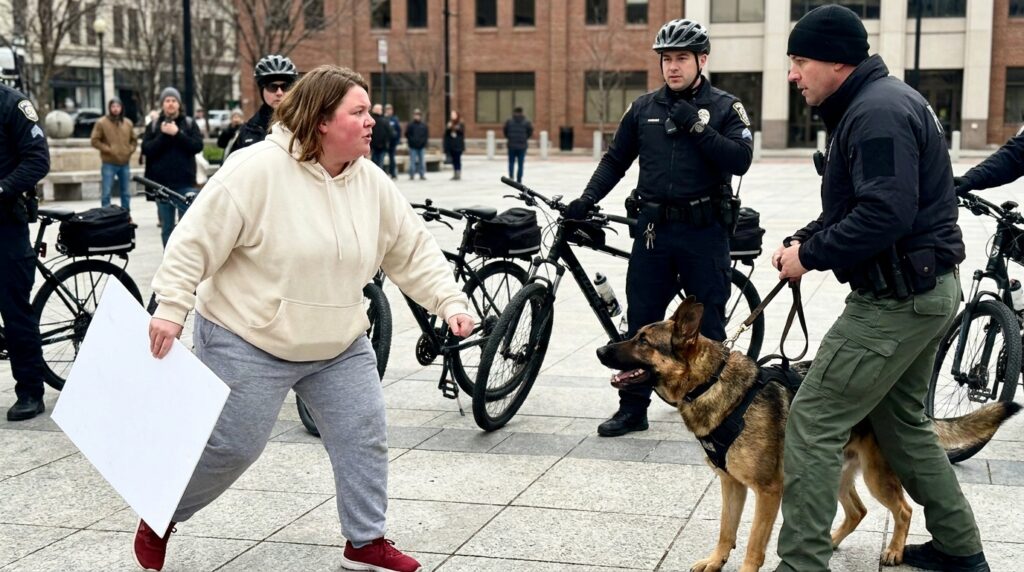
CHAPTER 1: THE WARN LINE
“One more call about their trailer, Brenda, and the county clerk processes the harassment filing. It’s signed, it’s stamped, and it stays on your record.”
Deputy Miller didn’t look up from his clipboard. His thumb, calloused from fifteen years of handling steering wheels and report clip hinges, pressed against the yellow carbon copy sheet. The air between them smelled of dry fescue grass and hot asphalt, typical for a late July afternoon in the Oakridge Estates cul-de-sac.
Brenda didn’t step back from the property line. Her red sneakers were planted exactly two inches inside her own sod, her stocky frame leaning forward so hard the heavy cream cotton of her oversized hoodie bunched around her throat. She gripped a blue plastic folder against her ribs like a piece of light ballistic plating. Inside were three distinct highlightings of the municipal code regarding commercial vehicle storage in low-density residential zones.
“It’s an open obstruction of the easement, Miller,” Brenda said, her voice dropping into the flat, granular register she used when citing ordinances to people who didn’t want to hear them. “The wrapped logo on the side constitutes an unpermitted billboard under Section Four. The town can’t just look the other way because they have kids.”
“The trailer is legal,” Miller said. He finally raised his head, his sunglasses reflecting the glare off Brenda’s white garage door. The plastic lenses showed two distorted, miniature versions of her flushed face. “The tires are behind the curb line. The hitch doesn’t extend into the asphalt path. The landscape crew has a valid business tax receipt from the hall. We’re done checking it.”
Behind him, thirty yards down the pavement, the young family’s utility trailer sat under the shade of a silver maple. Its green and white vinyl wrap—Oakridge Professional Turf Solutions—looked clean, clean enough to pass any health or safety inspection the county could throw at it. A small red plastic tricycle lay on its side near the trailer’s rear double axle, a silent marker of occupancy that Brenda had already logged in her morning memo as a ‘secondary public hazard.’
“The town will look at the video,” Brenda muttered, her thumb tracing the plastic edge of her folder. “The internet doesn’t care about the precinct’s relationship with local contractors.”
Miller didn’t argue. He tore the carbon sheet off his pad with a single, sharp snap of his wrist. The sound was dry, like a dead branch breaking in the heat. He didn’t hand it to her. He walked past her toward his cruiser, the heavy leather of his utility belt groaning under the weight of his radio, handcuffs, and sidearm. “Go inside, Brenda,” he said over his shoulder. “Before you write a check your house can’t cash.”
She watched the cruiser’s exhaust pipe sputter as the engine caught, the smell of burning oil mixing with the dust raised by the tires. As the car rounded the corner past the subdivision gate, Brenda looked down at her feet. Right there, half-buried under the encroaching weeds at the edge of the asphalt, was the rusted iron surveyor’s pin. It was cold despite the midday sun, a rigid piece of iron that defined where her safety ended and the public world began. Her phone buzzed inside her crossbody bag—a notification from the neighborhood forum showing zero replies to her last post. They were ignoring her.
Turning on her heel, she headed toward the garage, her mind already shifting the line from the curb to the civic plaza downtown. If the local precinct wouldn’t hold the line, she would force them to do it under the lights.