
CHAPTER 9: THE CONDUIT SEGMENT
The steel grate at the baseline of the cellar wall didn’t yield to a pry-bar; it gave way when John dropped his entire body weight into the rusted copper grounding line he had leveraged through the sleeve joints. The iron bars sheared with a dry, metallic crack that was instantly buried by the sound of the flash-bang canister detonating in the hallway directly above his head.
He slid down through the rupture, his boots splashing into six inches of stagnant sewer runoff that coated the concrete floor of the municipal overflow conduit. The air down here was a cold, dense soup of iron scale, old laundry soap, and the faint, sweet rot of marsh gas. He didn’t use a light. He kept his left hand hooked into the strap of the olive-drab transit case, his right fingers tracking the slick, slimy brickwork of the wall as he moved south toward the main drainage canal.
Behind him, the narrow light from the cellar window was cut in half by a gray silhouette. A tactical torch swept the water, its blue beam catching the white flakes of lime-wash peeling from his cap-less head.
“Transit log is active,” a voice rattled down the pipe, muffled by the thick masonry. “Target is in the infrastructure lane. Alert the perimeter vehicles to cover the junction at the wash.”
John didn’t quicken his stride. He maintained the long, rhythmic crawl-step he had learned in the tidal flats of the delta, his knees slightly bent to absorb the uneven texture of the silt-covered floor. Every hundred yards, the brickwork changed—transitioning from the hand-set clay of the old municipal core to the modern corrugated iron pipes of the suburban expansion. Each seam gave a low, hollow ring as the weight of the residential traffic passed over the asphalt three feet above his head.
The terminal in his jeans pocket gave three short, sharp vibrations against his hip. He didn’t pull it out until he reached the confluence point—a wider brick vault where the residential overflow spilled into the open concrete channel of the county canal. Under the dim gray light filtering through the iron street-level storm drain, he squinted at the amber screen.
The countdown had dropped to nine minutes.
The sync indicator was no longer tracing a straight line to the white utility van. It had branched into a regional network tree, its primary trunk rooted to a secondary server node located within the administrative office cage at the rear of the very supermarket where Miller had challenged him. The data wand used on the shopper’s phone hadn’t just scrubbed her local memory; it had established a localized network mask across the entire commercial block, turning Aisle 4 into a passive signal collector that was currently gathering every piece of unredacted metadata his tracking drive was emitting.
“They aren’t hunting the house,” John whispered, his breath leaving a faint frost on the silver-plated casing of the drive. “They’re using the house to drive the signal back to the store node.”
He looked at the utility map displayed on the terminal’s lower quadrant. The sewer line beneath his boots didn’t just circle the subdivision; its main collection branch ran straight under the northern freight lane of the plaza, terminating exactly twenty feet below the supermarket’s rear loading dock. The privatized defense firm hadn’t just integrated the security contract—they had mapped their tactical architecture onto the existing physical grid of the town.
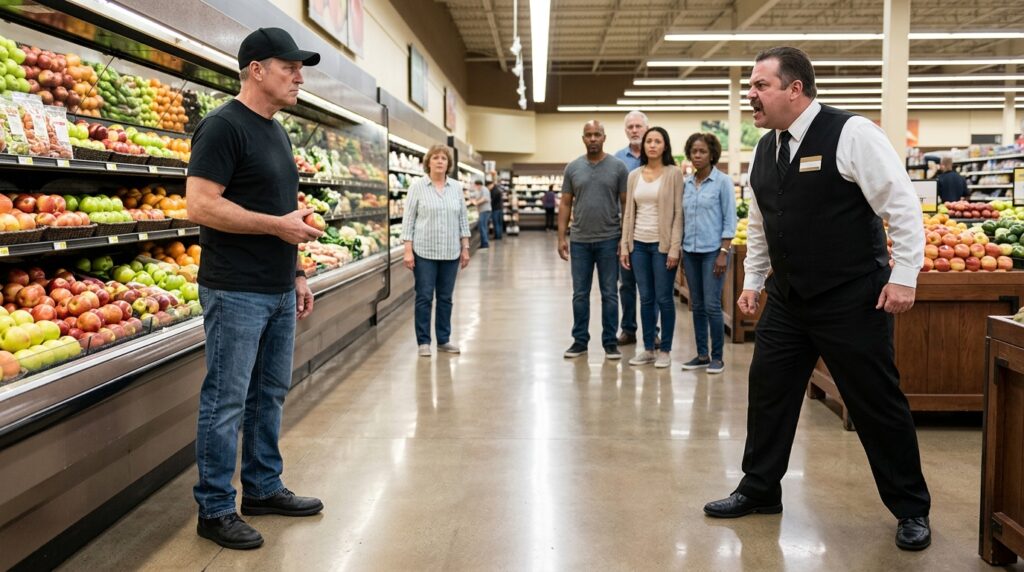
To kill the tracking sync, he couldn’t run for the county line. The corporate manifest would simply update the transit units along his route. He had to carry the old task-force drive back into the store, through the very lane where the fruit was turning brown on the concrete, and terminate the network at its physical root.
He pulled the matte-gray carbine tighter into his armpit, his fingers checking the green tape on his spare magazine through the layer of cold black slime that had settled over his knuckles.
A hundred yards ahead, where the open canal cut through the parched rye grass of the community park, the sound of a diesel engine rose over the hum of the HVAC units. A white utility van had just climbed the gravel bank of the wash, its front wheels pivoting smoothly to block the tunnel exit, its unlit headlights staring into the dark mouth of the brick archway like two blind silver eyes.
John didn’t stop. He turned left, into the dark, narrow pipe that marked the intake line for the store’s commercial drainage system.








