
CHAPTER 6: THE MAP AND THE MANIFEST
“—all units on the northern sector, the transport flatbeds are holding at the main gate. Advise when the lane is clear.”
The radio console speaker gave a dry, rhythmic hiss, the static cutting through the enclosed dark of the cruiser’s cabin like sand hitting a sheet of tin. Miller dropped the manila folder into the footwell, his hands sliding over the textured plastic of the dashboard to silence the volume knob. His fingers left gray grease smudges across the dust-coated speedometer.
He didn’t use the driver’s side door to clear the vehicle. He crawled flat across the transmission hump, his belt buckle scraping against the plastic housing of the rifle rack, and pushed his legs through the passenger side opening. The ditch water beneath the rear tire was cold, filling the seams of his left boot with a slick, silt-heavy mud that smelled of iron ore and rotted weeds.
He reached into the open glove compartment before dropping down. His fingers caught the edge of a small, thick object that hadn’t been listed on Gidley’s log—a double-sealed envelope, its corners charred as if someone had pulled it from a burning oil drum. There were no postal stamps, only a single word written in heavy purple ink: Vanguard.
He stuffed the envelope into his leather jacket alongside the re-zoning maps, then rolled away into the tall wire-grass just as the headlights of Silas’s utility truck flared at the top of the lane.
The path back to the ridge was straight up the old logging incline, a half-mile of washed-out clay ruts where the primary timber had been stripped thirty years ago. The soil here was thin, held together by nothing but the roots of stunted pines and the rusted coils of abandoned wire fencing from the old pasture lines. Every step was a calculation of weight; the shale plates under his boots were loose, sliding down the slope behind him with a series of dry, hollow clicks that sounded entirely too loud in the valley quiet.
He stopped at the crest, leaning his back against a lightning-scarred pine to catch his breath. Below him, the valley layout was etched out in the yellow glow of the industrial flatbeds. His house looked small, an isolated island of gray board completely ringed by the white graphic shapes of the timber transports. They were already unloading the heavy steel ground-plates, dropping them into the mud with a succession of iron booms that echoed off the ridge walls.
They weren’t just clearing trees. They were laying a foundation road.
Miller pulled the charred envelope from his pocket. The paper was heavy, a coarse bond that didn’t belong in a rural county depot. He used his penlight under the shelter of his arm, tearing the unburnt edge with his thumb.
Inside was a single sheet of carbon paper—a duplicate of a subterranean lease agreement between the County Commissioners and Vanguard Basin Holdings. The description didn’t mention the timber or the surface acres. It specifically covered the sub-surface void volume of the dry copper shafts beneath the ridge, listing a storage capacity fee that scaled into millions of dollars upon the successful declaration of a municipal safety hazard.
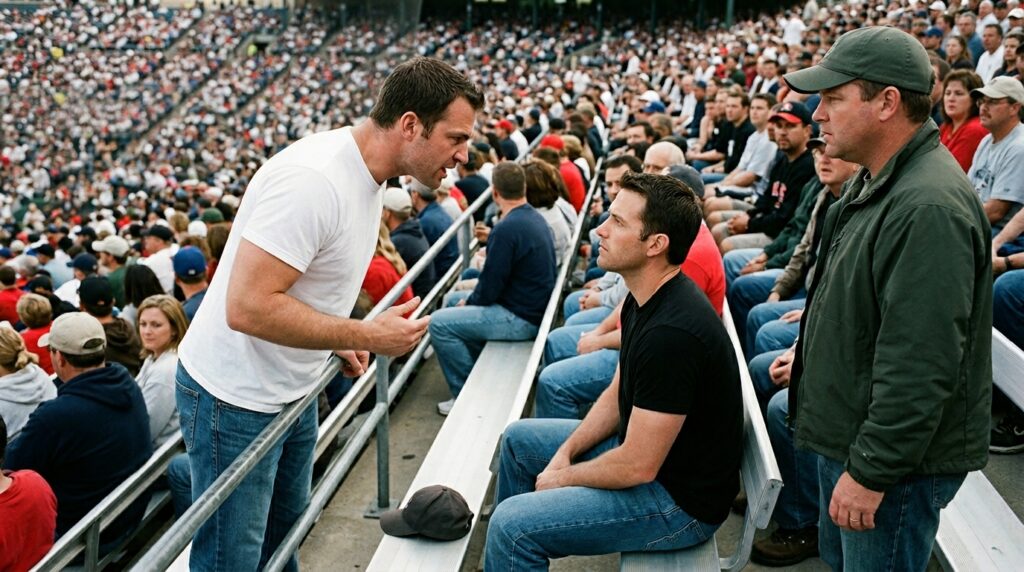
The pieces ground together in his head, cold and precise. The stadium fight wasn’t just a legal pretext to take his five acres; it was the trigger mechanism for an emergency declaration that would condemn the entire drainage district. By provoking a public altercation, Chief Halloway wasn’t just clearing out a stubborn neighbor—he was establishing the legal foundation that the area was unstable, unchecked, and subject to immediate state takeover under the emergency public safety clauses. And Vance had been the scout who verified that Miller’s property sat directly over the main ventilation shaft for the entire underground complex.
A twig snapped behind him.
Miller didn’t turn his head. He dropped his arm, extinguishing the penlight in the same movement, his body slipping into the shadow of the pine trunk before his boots could shift on the shale.
“You should have taken the highway, Frank.”
Vance was standing ten feet down the ridge path, his silhouette broken by the low branches of the scrub oak. He didn’t have his truck now; he had come up the surveyor’s trail on foot, his uniform jacket dark with sweat. In his hand, he held a short, heavy iron wrench—the kind used to bleed air from the hydraulic brakes of the logging rigs.
“The lease is for industrial waste, Jesse,” Miller said, his voice flat, matching the dead tone of the wind coming off the flats. “They aren’t putting up power lines. They’re filling the shafts with chemical run-off from the state capital’s manufacturing sector.”
Vance didn’t advance. He stood with his boots planted on the loose shale, his head tilted slightly to track the headlights of the trucks below. “The money is real, Frank. It’s more than this valley makes in five years of winter logging. The Chief already signed the environmental variance. The only thing left on the ledger is the clearance certificate for the access road.”
“And my signature on the deed,” Miller said.
“The county doesn’t need your name if you’re in the state farm on an active assault charge,” Vance said, his voice dropping until it was barely a whisper against the rustle of the pine needles. “The boy’s hip is broken, Frank. Gidley didn’t tell you that down in the basement, but the medical report is already logged. You’re a violent element with an undocumented background. The Chief has three deputies waiting at the crossroads right now.”
Miller looked past Vance toward the main road. The yellow lights of the county precinct were visible at the gate line, their red and blue bars turning the dust into a purple fog. The trap had closed, but it had a false bottom. They expected him to run for the state line, to disappear down the highway like every other contractor with a hidden past.
“Tell the Chief I’m not leaving the ridge,” Miller said.
“He won’t wait for the court order, Frank,” Vance said, his hand tightening on the iron wrench. “He’s got the authority to clear the obstruction by any means necessary during an active zoning transition. If you’re still here when the loaders start up, you’re just debris.”
“Then he’ll have to find me in the records office,” Miller said.
Before Vance could lift the wrench, Miller didn’t move backward up the hill. He dropped his weight into the slide, his boots catching the shale plates as he went straight down the steep incline toward the dark perimeter of the old mine gate, leaving the deputy standing alone on the shifting gravel of the ridge crest.








