
CHAPTER 6: THE THREEWAY SPLIT
“The gate isn’t clear, Arthur.”
The old man’s voice barely rose above the low, rhythmic rattle of the truck’s transmission as they coasted down the final embankment toward the river lanes. He didn’t use the brakes. He simply jammed the shifter into low gear, letting the engine compression slow the heavy pickup until the front tires groaned against the wet river silt.
Ben lay flat under the stiff canvas tarp, his face pressed within inches of the cold, oxidized green surface of the copper water mains. The newly harvested bronze valve was a massive, dead weight against his left hip, shifting slightly with every dip in the road. Through a frayed gap in the canvas hem, he could see the gray morning fog rolling off the river, thick enough to taste like wet iron scale.
“What do you mean it isn’t clear?” his father whispered from the passenger seat. His silhouette was sharp, his shoulders hunched tight against the door panel. “The night guard at the barge dock was supposed to leave the slip unbolted until four.”
“Look at the lock box,” the old man said.
The truck rolled to a complete stop, its headlights extinguished, leaving only the dim, amber parking lights to illuminate the perimeter fence of the river yard. Ben shifted his position, squinting through the canvas tear.
The iron gate wasn’t held by the usual commercial chain. A heavy, hardened steel bar had been clamped across the latch mechanism, secured by a bright blue padlock that gleamed under the river mist. Hanging from the center of the bar was a laminated white card—the official notice of asset quarantine from the regional bank’s corporate receiver. The signature at the bottom was fresh, the ink unsmudged by the damp air, dated less than twelve hours ago.
“The receiver didn’t wait for Monday,” Ben’s father muttered, his hand going to his mouth, the stump of his missing index finger twitching against his lip. “They’ve locked the barge slip. They’re running an audit on the structural inventory right now.”
“They aren’t auditing,” the old man said, his knuckles clicking as he tightened his grip on the wheel. “They’re collecting. The barge at the dock isn’t empty, Arthur. Listen.”
Through the dead air, past the low lap of the black river water against the wooden pilings, came a mechanical rumble. It wasn’t the slow, rhythmic chug of a commercial river tugboat. It was the high-efficiency whine of an industrial sorting crane, its iron cables whistling as it lifted heavy material into a steel hopper.
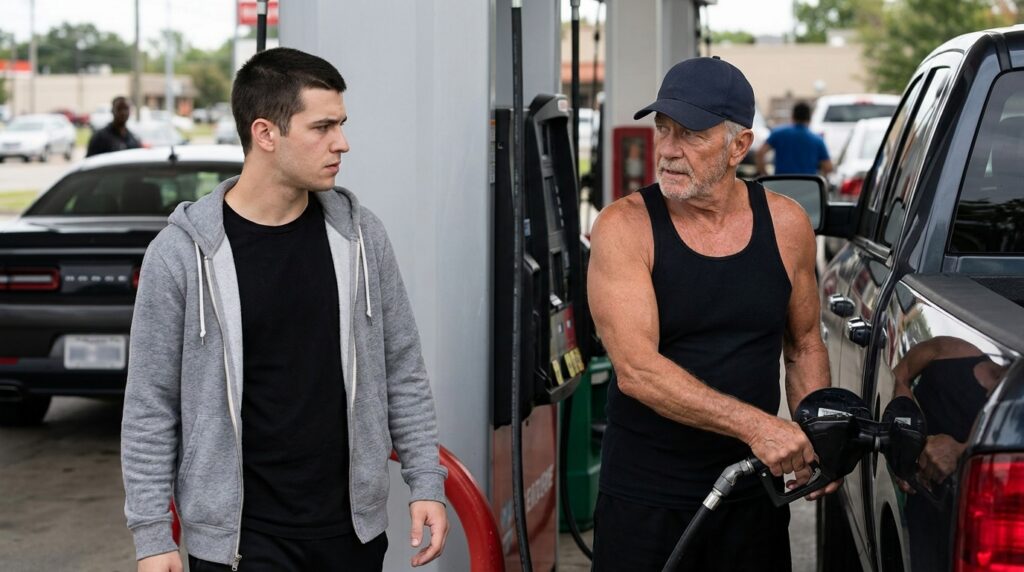
Ben scrambled out from beneath the tarp, the rough canvas scraping across his gray hoodie as he dropped over the side of the truck bed into the soft silt. His ribs flared with a sharp, localized heat, but he ignored it, stepping closer to the driver’s side window.
“They’re already stripping the warehouse,” Ben said, his breath pluming in the dark. “That crane isn’t clearing old inventory. It’s loading the municipal brass fittings from the deep vaults.”
The old man turned his head slowly, his eyes deep pockets of shadow beneath his thick gray brows. He looked at Ben, then down at the ledger sitting on the bench seat between him and Arthur. “The red initials at the bottom of the manifest wasn’t the sheriff, son. It was the state receiver’s field agent. The town board didn’t split the line to save the ridge from foreclosure. They sold the scrap rights to the bank’s holding company three weeks ago to clear their own individual corporate indemnities.”
The whole decoy structure shattered in Ben’s mind like cold slag under a sledgehammer. The town trustees weren’t fighting an desperate, illegal rearguard action to protect the local families from the bank. They had already signed the surrender, and his father and the old man were simply the low-level labor, scavenging the leftover crumbs of copper before the official corporate clearance swept the yard clean.
“Arthur,” the old man said, his gravelly tone dropping into a hard, defensive cadence. “We’ve got eighty thousand dollars worth of municipal copper in this bed that the bank already considers their secured property. If we turn this truck around, the state patrol has the ridge road blocked at the county line. If we stay here, that crane operator calls the receiver’s security detail in exactly five minutes.”
Ben’s father grabbed the taped ledger, his fingers tearing at the frayed duct-tape spine. “The receipts are still inside the shack. If they find the cross-references with my signature—”
“The papers are already turning into pulp in the yard, Arthur,” the old man cut him off, his arm reaching across the seat to plant a heavy, grease-stained palm directly on the center of the book. “The book stays here. The truck stays here. We split the load across the footpaths behind the old smelting bays, or we sit in the cab and wait for the county van.”
He looked up at Ben, the tire iron in his leather-gloved hand giving off a dull, iron gleam.
“You wanted to know what the county was fighting for, boy,” the old man said, his voice dropping into the absolute silence of the river fog. “Now you know. Nobody’s saving the ridge. We’re just deciding who holds the debt when the sun comes up.”
From behind the machine shop at the top of the embankment, two sharp pricks of white light cut through the mist—the high-intensity halogen spotlights of an unflagged security vehicle turning into the river road lane, its tires grinding the wet limestone into mud.








