
CHAPTER 2: TRACKING THE CALCIUM TRAIL
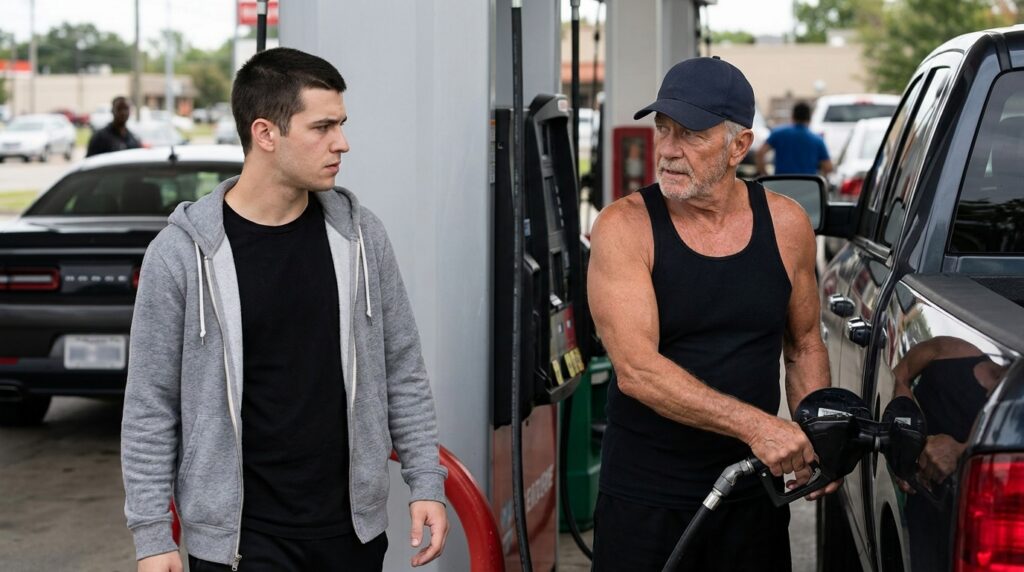
The brass edge of the key dug into Ben’s palm like an iron filings splinter, cold and grease-slicked. He walked with his right arm pinned flat against his ribs to quiet the dull, rhythmic throbbing where the old man’s boot had left its mark. Every step on the gravel shoulder of the four-lane highway sent a shudder through his collarbone, but he didn’t slow down. In this valley, if you stopped moving after dark, the dampness settled into your clothes until you smelled like old cellar insulation.
The white dust was the giveaway. It lay in thick, pale drifts along the weed-choked drainage ditch, sloughing off the tires of the heavy haulers that ran between the pit and the river barges. But the old man’s pickup had a mismatched rear axle; the left wheel tracked two inches wider than the right, leaving a distinct, dragging gap in the soft calcium powder wherever the truck had veered off the asphalt.
Ben followed that broken shadow through the dark. The moon was a gray smear behind the low hanging cloud cover, providing just enough light to illuminate the pale limestone trail where it turned sharply off the state road and plunged into the throat of the old industrial park.
The gate was supposed to be chained. The county had slapped an orange receiver’s notice on the chain-link fence six months ago, but when Ben reached the perimeter, the heavy galvanized links were dangling loose. Someone had cut the padlock with an oxy-acetylene torch—the slag at the tip of the severed link was still cold to the touch, but the iron was raw, unrusted by the evening mist.
He slipped through the gap, the fabric of his gray hoodie catching on a frayed wire barb. He yanked it free with a sharp, angry tug, the sound of tearing fleece loud in the dead air of the yard.
The air here tasted different. The petroleum hum of the highway gas station was replaced by the sour stench of stagnant runoff and old iron scale. This was the graveyard of the county’s manufacturing core—roofless metal sheds where the wind made a hollow, whistling noise against the corrugated iron panels, and piles of discarded casting sand that had hardened into dark, tumorous mounds after the last winter freeze.
The truck tracks led straight toward the back of the property, behind the old machine shop where the foundation had cracked and dropped three inches into the creek bed.
Ben kept his boots in the grass along the gravel lane, avoiding the loose limestone chunks that could roll under his feet and announce his presence. His eyes adjusted to the deeper dark beneath the rusted overhang of the loading dock. The old pickup truck was there, its engine killed, the exhaust manifold still giving off a sporadic, ticking ping as the metal cooled in the damp air.
The truck bed was covered by a heavy, tattered canvas tarp, held down by coarse hemp ropes tied to the stake pockets.
Ben reached the tailgate, his breath coming shallow and hot. His fingers were stiff as he worked the first knot at the corner of the bumper. The rope was stiff with river silt and old grease, smelling strongly of river water and motor oil. He hauled back on the heavy canvas, the fabric stiffened by the cold until it crackled like dried hide.
The beam of his small pocket light—shielded by his fingers so only a thin thread of yellow light leaked out—revealed the cargo.
It wasn’t personal scrap. It wasn’t old lawnmowers or broken cast-iron radiators from a residential basement remodel. Packed tight into the bed of the truck, nested in straw to keep them from clattering against the metal sides, were thick, heavy segments of industrial copper water mains. The metal was dark green with patina, but the freshly sawed ends gleamed like new pennies under his palm. These were municipal lines, the heavy-gauge infrastructure that ran beneath the old foundry hill—the kind of metal that required county blueprints and hydraulic shears to extract.
A soft, metallic clink from inside the darkened office of the machine shop made Ben freeze, his hand still resting on the cold, heavy copper.
Through the cracked windowpane of the foreman’s shack, twenty feet away, a small kerosene lantern flickered to life. The yellow glow didn’t show the old man from the gas station. It caught the side of a desk, a stack of pink weigh station receipts, and a hand holding an old iron crowbar. The hand was missing the tip of the left index finger—a detail Ben knew better than his own reflection. It was his father’s hand.
Ben’s boots remained rooted to the limestone dust, the heavy brass key in his pocket suddenly feeling like a dead weight dragging him down into the floor of the valley.








