CHAPTER 6: THE SPREAD OF THE COUNTERPLOT
The map didn’t unroll easy. The heavy, laminated plastic had been tucked behind the bench seat of the Dodge for too many winters, the tight curl holding the edges stubborn until Miller brought the flat of his forearm down across the middle section. The loud smack of his sleeve hitting the hot, white enamel of the cruiser hood echoed across the asphalt, sharp enough to bring two more porch watchers out onto the steps down at the corner house. Frank didn’t lean forward. He kept his heels dug into the gravel ridge, his eyes tracking the blue grease marker lines that Miller had drawn over the old creek boundary twenty minutes ago. The sun was directly overhead now, the reflection off the laminated surface a blinding, white slit that cut right through Frank’s vision.
“Look at the cross-hatch, Frank,” Miller said. He didn’t lift his arm. He used his other hand to pull his carpenter’s pencil across the corner of the sheet, the flat graphite leaving a dull gray scratch over a series of dotted lines labeled Secondary Flowway 1998. “The easement doesn’t end at the post. The text in the margin says the whole strip—everything from the edge of the macadam to the third line of fruit trees—is tied to the state drainage release. If there’s an active bypass leaking under this turf, the county surveyor has the statutory authority to tear down every picket on this parcel without a local court warrant.”
Frank spat a bit of road dust into the weeds, his eyes dropping to the lower corner of the plot map where the engineer’s stamp had faded into a pale lavender smudge. “The state didn’t find a bypass because they were looking for an iron culvert, Bobby. They didn’t look for the field stone line your uncle laid back before the clean water regulations were registered in the county court.”
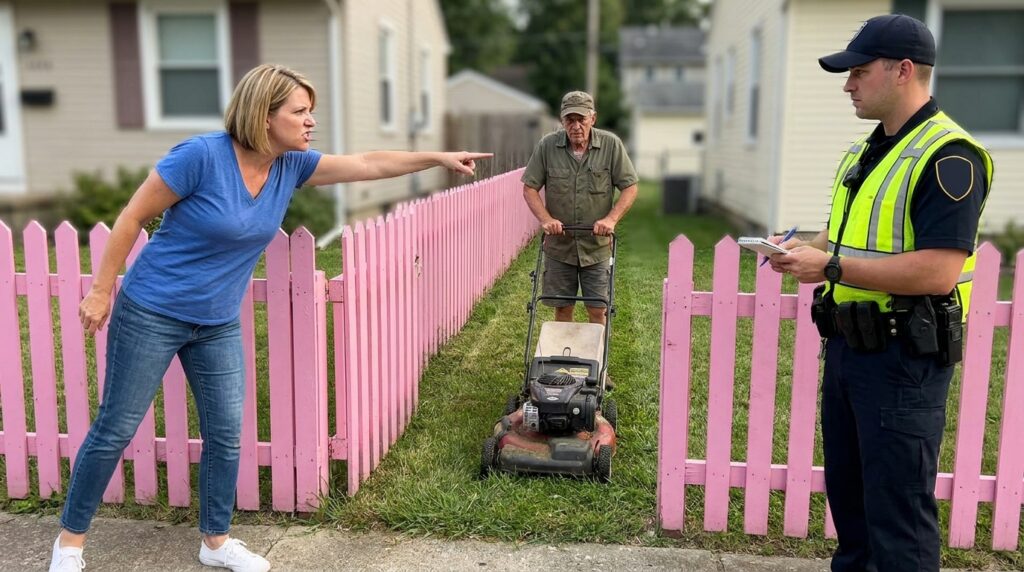
Martha Vance didn’t leave her step, but her chin dropped toward the leather folder held tight against her ribs. Her fingers were twitching against the grain of the hide, the white sneakers shifting an inch to the left, away from where the dark, sour-smelling ooze had reached the gravel lip. “My father paid the assessment fee in full, Deputy,” she said, her voice dropping into a dry, defensive rattle that stayed low behind the pickets. “The town gave him a certified clearance certificate when they closed the old asphalt pits. If the county has an unrecorded lien on the subsoil, it’s a legal defect in the municipal ledger, not a private violation.”
“The clearance certificate wasn’t filed with the state recorder, Martha,” Miller said. He didn’t look up from the map. He used the flat edge of his utility knife to score a neat, thin crease right down the center of the ninety-eight survey plot, splitting the pink lot line into two unequal parts. “My uncle might have given your daddy a piece of paper with a seal on it to keep the bank from freezing the mortgage, but the state enforcement branch didn’t sign the ledger. According to the capital vault, this whole block is still registered as a commercial disposal sump.”
The radio inside the cruiser gave off another short, wet blast of static, the dispatch voice lost beneath the heavy drone of a logging truck gear-shifting out on the state highway. Miller didn’t reach through the window to clear it. He kept his weight pressed over the hood, the heat from the block below making the laminated map soft and greasy under his wrists.
Frank reached down and took the pencil from Miller’s hand, his leather glove stiff enough to make the wooden shaft creak. He pointed the flat graphite tip toward the third post panel where the iron flange was sticking out of the dry clay. “The flange isn’t from ninety-eight, Bobby. That’s three-inch high-pressure line. The town didn’t use that weight for ditch water. They used it for the waste tanks at the wash plant.”
Miller’s face went entirely still, the skin around his jaw tightening until the strap of his patrol cap left a deep, red mark in the flesh below his ears. He looked across the pink gate, his eyes following the fresh hand-trowel marks that Frank had spotted in the weeds behind the hydrangea bush. The soil there was gray and pasty, completely different from the red clay that formed the rest of the ditch bank—it looked like lime sludge, the heavy, alkaline waste that stays behind after an asphalt mixer is cleared out with fuel oil at the end of a shift.
“Martha,” Miller said, his voice dropping into a slow, rhythmic delivery that didn’t have any of the valley crawl left in it. “Who was down here with a spade before the sun cleared the trees this morning?”
She didn’t answer right away. She turned her face toward the dark screened porch, her mouth opening slightly but no sound coming past her teeth. The brass key on the blue lanyard by her doorframe caught the glare from the cruiser hood, a single, sharp spark of yellow light that seemed to hold her still against the wood of the house.
“The lane was clear at six o’clock,” she muttered, her fingers tightening around the leather edge of her folder until the seam split twice near the top ring. “Nobody has the legal right to alter the grade without a certified notice from the owner of record.”
Frank took his hand off the mower handle, his boots crunching loud as he stepped into the gap between the white cruiser and the pink picket gate. He could see his own reflection again in her square glasses, but it was broken now by the long, blue grease lines of the map behind his back. The victory wasn’t clean; it felt heavy and rusted, like an old iron chain that had been pulled out of the mud after forty years of rot. Every second they stood on the line, the smell of the old plant was getting stronger, rising through the hot clay until it choked out the clean scent of the wild onions.