
CHAPTER 3: THE COLD IRON RECKONING
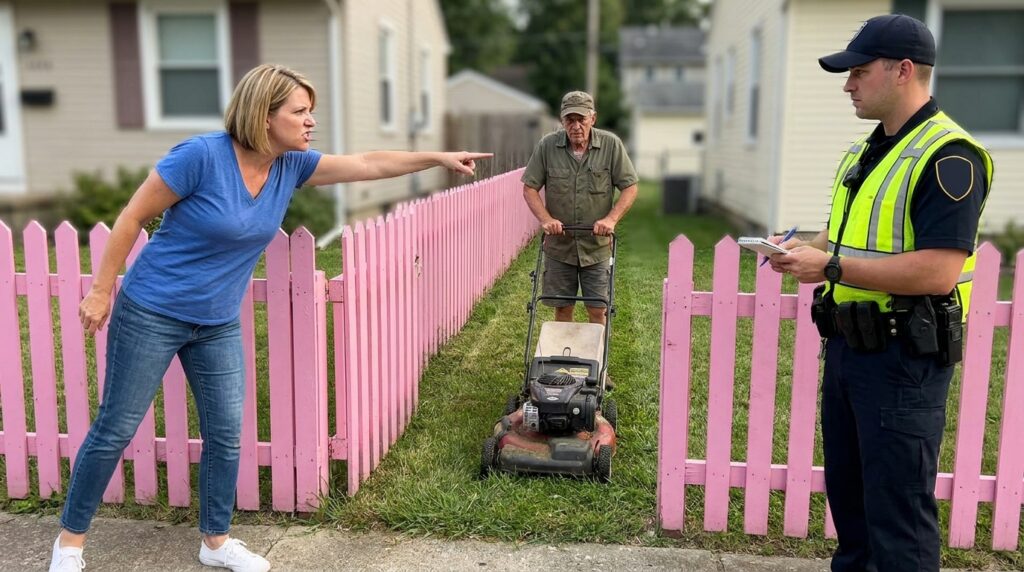
The patrol car’s front tires didn’t drop gently into the ditch lane; they came down hard, pushing a wave of loose slate and powdered lime over the concrete lip of the culvert. The engine ticked—a heavy, metallic rhythm of scaling cast iron cooling down under the heavy shade of the box elders. Deputy Miller didn’t get out right away. He let the wipers swipe once across the windshield, dragging a dry smear of yellow grass seed across the glass before the blade parked with a rubbery thud. Through the hazy arc of the clean pane, Frank watched the bill of the patrol cap tilt down toward the steering column. The man was logging the mileage. In the valley, every stop had to be justified by a number in a carbon-copy book, or the county commissioners would start asking why the south precinct was burning through three hundred gallons of regular unleaded a week.
When the heavy steel door clicked open, the heat from the engine bay followed it, smelling of scorched transmission fluid and old vinyl. Miller’s boots hit the loose stone with a slow, flat crunch that belonged to a man who spent his life climbing in and out of state-issued vehicles on roads that didn’t go anywhere important.
“Frank,” Miller said, his hand resting on the top corner of his door frame, his knuckles gray with the kind of fine silt that stays behind after the county graders run the secondary routes. He didn’t look at Martha yet. His eyes went straight to the Toro, tracking the wet line where Frank had scraped the deck. “You’re getting grease on the concrete. The road crew’s going to complain about the emulsifier if the rain doesn’t clear it before August.”
“The grass is growing through the expansion joints, Bobby,” Frank said, his shoulder blade pressing against the dry cedar post behind his hip. He didn’t use the title. He’d seen Bobby Miller clean out the grease traps at the secondary school back when the boy was still trying to pay off his first hunting trailer. “If the town doesn’t want the roots splitting the apron, they can either send the sickle bar down from the shop or let me run the blade over it. Martha here thinks the weeds have a deed.”
Martha didn’t move her arm from the gate. Her fingers stayed tucked inside the leather ledger, the edge of the grain pressed so deep into her palm that the red mark looked like a scar from an old wire cut. “The county doesn’t maintain the shoulder beyond the utility pole, Deputy,” she said. Her voice had taken on that thin, administrative hardness that Frank remembered from the town budget meetings of ninety-eight. “The municipal code specifies forty-eight inches from the center line of the easement for residential parcels without a concrete curb. This isn’t a shoulder. It’s a structural garden bed, and it’s logged under the primary tax block.”
Miller walked around the front fender of the cruiser, his utility belt giving off a sharp, dry squeak—leather rubbing against nylon webbing where the handcuff case sat against his hip. He didn’t pull a book out yet. He stopped two feet from the pink gate, his eyes dropping to the lower rail where the pink paint had bubbled into small, gray blisters.
The oil stain at the post foot was larger now. The heat from the idling car seemed to be drawing the moisture out of the dirt, forcing that slow, iridescent ooze up through the roots of the wild chicory. It had a sharp, vinegary smell that didn’t belong to vegetable rot or the clean iron of the ditch—it smelled like the bottom of an industrial sump tank, the heavy, sour tang of old machine solvent that had been sitting under pressure for too many seasons. Miller’s nose twitched once, his eyes lingering on the dark streak for three seconds before he shifted his weight onto his right boot.
“The clerk’s office hasn’t updated the secondary plot maps since the county road realignment, Martha,” Miller said. He reached into his shirt pocket, his fingers tracking the small, metal clip of his ink pen but not drawing it out. “We had the same issue down on the lower fork last November. The old stakes don’t line up with the GPS coordinates because the state moved the monument marker when they widened the bridge over the creek.”
“The monument marker wasn’t part of the secondary drainage assessment,” Martha snapped. She didn’t look at the officer’s face; she looked down at the leather binder, her carpenter’s pencil making another deep, indenting line across the cover page. “The ninety-eight filing stands until a certified surveyor logs a lateral shift with the county recorder. You know that, Bobby. Your uncle signed the variance for the culvert drainage when he was on the board.”
Frank noticed how her thumb stayed tucked over the bottom edge of the paper, covering the small, red ink stamp that noted a prior amendment from 2014. It was the same year the state EPA had done the core samples along the old rail line three hundred yards behind her orchard lane. He kept his mouth shut, his teeth grinding on a bit of road grit as he watched Miller take a step closer to the pink gate post, his boot toe right at the edge of that wet, chemical line in the weeds.








