CHAPTER 5: THE WEIGHT OF THE REBARRING
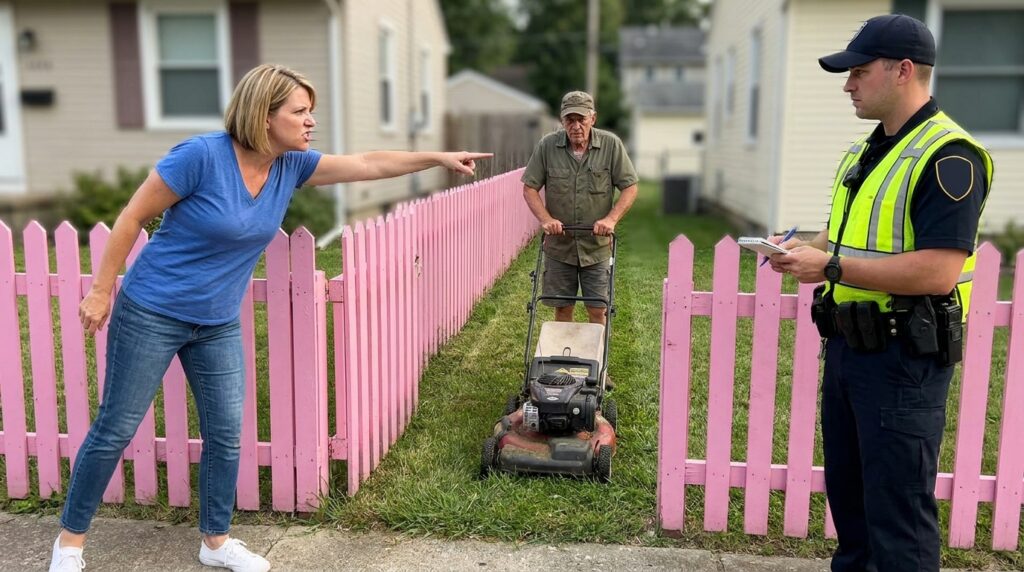
The high, metallic squeal of the deputy’s radio cut through the stagnant noon air before Miller could even drop the leather ledger back onto the gate rail. The dispatch voice was shredded by the ridge line, a flat, mechanical drone that sounded like dry husks grinding inside a thresher. Miller didn’t clear the call right away. He kept his left thumb hitched under the rim of his utility belt, his fingers tapping a slow, uneven rhythm against the black polymer casing of his flashlight. His eyes were pinned to the third panel of the pink fence, where a heavy, rusted brass lock was clamped through a length of heavy log chain, binding the cedar rail directly to an iron pipe that had been driven deep into the red clay.
“South five, hold your position at the cul-de-sac,” the speaker rattled, the carrier wave popping once with the sound of a microphone button being released in a cooling basement room three towns away. “District enforcement just flagged that parcel. The supervisor isn’t clearing any local citations on the fence line. There’s an active environmental injunction from the state capital coming down by certified courier.”
Miller’s hand went still against his belt. The easy, slow-valley posture he’d taken since dropping his tires into the gravel seemed to tighten, his shoulders square beneath the yellow high-vis vest. He looked at the pink wooden slats, then down at the dry, powdery silt where his boot had left a crusty tread mark right beside the dark oozing stain.
“Say again, dispatch,” Miller said, his thumb finally clicking the side button of the lapel mic. The radio gave off a short, clean chirp. “We’ve already got the resident on scene. The ninety-eight plot sheet doesn’t show an environmental hold on the ditch run.”
“The ninety-eight sheet is out of date, south five,” the voice came back, faster now, stripped of the usual small-town preamble. “The injunction was logged under the corporate name of the old asphalt plant, not the residential deed. If that worker touches the soil with mechanical blades, the county’s liable for cross-contamination fines. Tell him to pull his equipment out of the easement line immediately.”
Frank didn’t look at Miller. He reached down and grabbed the crossbar of the Toro’s handle, his leather gloves stiff from grease and old salt where his sweat had dried into the seams. He could feel the heat radiating off the engine shroud, a warm, thick smell of parched oil that mixed with the sour chemical stink rising from the hydrangea roots. He didn’t pull the mower back toward his truck. He just leaned his weight over the tires, the rubber groaning against the loose stones of the ditch.
“The state didn’t find anything in the core samples back in fourteen, Bobby,” Frank said, his voice dropping into that low, flat gravel roll that didn’t leave room for an argument. “They ran the auger three times right behind her orchard and came up with nothing but river silt and old coal ash. If there’s an injunction now, it’s because somebody paid to keep the state surveyor from digging within twenty feet of that pink post.”
Martha Vance didn’t move from the top step of her porch lane, but her hand had dropped away from the carpenter’s pencil. Her fingers were tucked inside the pockets of her blue shirt, her shoulders hunched forward as if she were trying to pull the crisp, ironed collar over her jaw. The shadow from the box elder trees had shifted, the green leaves casting a mottled, shifting pattern across her face that made her square sunglasses look like broken pieces of coal.
“The plant was closed before my father built the west section, Deputy,” she said, her voice carrying across the yard with a dry, papery rattle that barely reached the fence line. “The state has no legal right to freeze a residential maintenance parcel based on an old commercial filing. The county road crew signed the release when they dropped the twin pipes.”
“They didn’t sign the secondary release, Martha,” Miller said. He didn’t look at her binder this time. He walked back to the cruiser fender, his boots dragging through the dry weeds with a heavy, scraping sound that left a trail of gray dust across his polished leather. He pulled a yellow carbon-pad from the dashboard mount, his pen finally scratching against the surface with a short, furious click. “My uncle might have left the file open, but the district attorney didn’t. This sheet right here says the town had to pay three thousand dollars in civil penalties because the runoff from this specific corner was killing the pasture grass down on the Miller fork.”
He ripped the top copy off the pad with a sharp, dry zip that sounded like a dry branch snapping under a boot. He didn’t hand it to Martha. He walked over to the Toro and slid the yellow paper under the rubber strap that held the grass bag frame against the handle.
“Frank, you shut that machine down and load it,” Miller said, his voice flat, completely stripped of the school-yard familiarity. “If you turn that blade over the junction box before the state courier gets here, I’m going to have to log a willful violation. The county isn’t going to take the heat for your nephew’s development project.”
Frank looked down at the yellow slip. The ink was fresh, the numbers written in a rigid, blocky print that didn’t look like Bobby Miller’s hand at all—it looked like the old man’s handwriting, the same heavy, downward strokes his uncle used when he was signing the tax foreclosures back during the mill layoff. He looked across the pink gate, past the bubbling purple crust at the base of the wood, deep into the dark gap between the third panel and the orchard wall. A rusted piece of steel—a three-inch pipe flange with four empty bolt holes—was sticking out of the dry weeds just six inches from the hydrangea stems. It hadn’t been there when he started the morning shift. The ground around it was fresh, the gray clay turned over recently, as if someone had been digging with a hand trowel before the sun had even cleared the ridge.
“Somebody’s been at the line, Bobby,” Frank said, his glove tracking the cold iron of the mower frame. He didn’t look up at the deputy. “And they didn’t bring a county plot sheet.”