The Iron At The Gate Where Every True Boundary Is Paid For In Dust

CHAPTER 1: THE FRICTION OF THE SEAMS

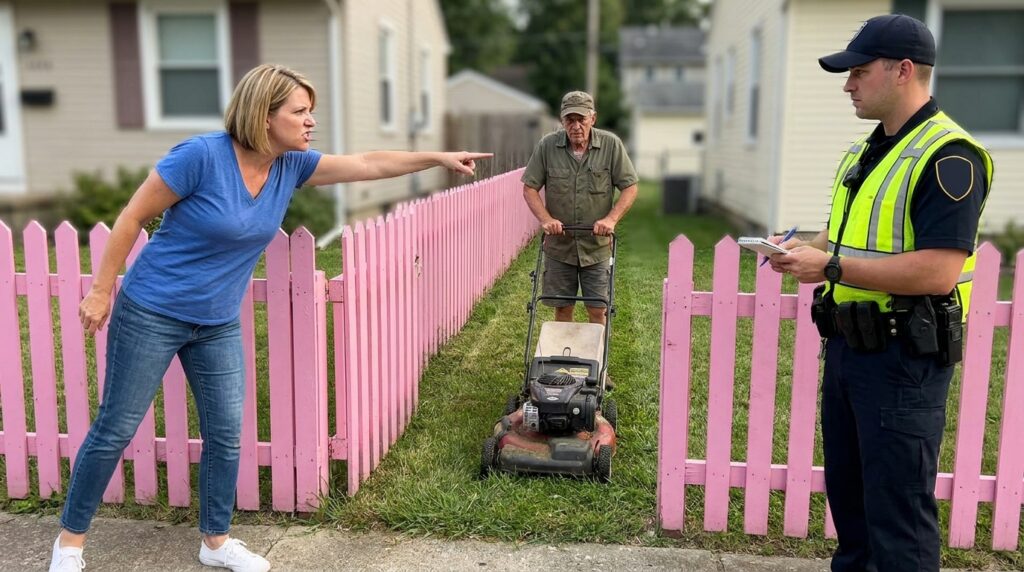
The heat came off the asphalt in gray, oily waves, thickening the smell of unwashed iron and the dry, bitter scent of wild onion before the morning had even turned ten o’clock. Frank didn’t look up from the blade. He kept his thumbs pressed against the underside of the deck, scraping away a plug of damp, fermented grass with the flat of a rusted putty knife. Every scrape left a clean streak of gray steel against the green oxidation of the housing. Across the street, the blinds in the front room of the beige split-level didn’t move, but the glare off the glass was wrong—too flat, broken by the distinct silhouette of a phone pressed tight against the screen frame. He knew the logbook was open on the kitchen counter over there. He knew the pencil was already sharp.

He let the putty knife drop into the canvas tool bag at his hip, the metal clinking against the spare spark plug and the wire brush. His knuckles were raw where they had grazed the concrete curb two days ago, the skin split into neat, red lines that had filled with dark garden soil. A man his age didn’t heal fast; the skin just stayed leathery and gray around the edges until the next season took it. He reached for the starter rope, his fingers tracking the frayed nylon where the handle had rubbed against the shroud during the long haul from the lower lot.

“You’re tracking that grease onto the culvert,” she said.

The voice didn’t carry the usual high pitch of an argument; it was flat, rhythmic, and heavy with the dry certainty of a clerk who had spent thirty years behind a counter reading tax codes. Mrs. Vance stood three inches behind her gate, her white sneakers perfectly aligned with the edge of the bottom rail. The pink paint on the pickets was already checking under the midday sun, peeling back in small, brittle curls that showed the gray cedar beneath. Her blue V-neck shirt was ironed clean, the seam down the sleeve sharp enough to catch the light. In her left hand, the leather binder was closed, but her index finger was wedged between the pages like a bookmark.

Frank didn’t drop his hand from the rope. He stood up slowly, his spine clicking twice beneath the olive cotton of his work shirt. The push mower sat between them like an anchor, its single cylinder still warm enough to make the air above the muffler tremble.

“The town has six feet from the blacktop, Martha,” Frank said. His voice was low, raspy from thirty years of small-engine exhaust and dry clay. “The garden strip belongs to the utility run. It’s been that way since seventy-four.”

“The seventy-four filing was amended during the secondary drainage assessment,” she replied, her arm extending over the picket line. Her index finger pointed straight down into the wild orchard grass where the mower’s front left wheel had flattened a patch of chicory. “Look at the stake, Frank. Look at what you’re standing on. You’re five inches deep into a private easement, and every pass you make is a separate civil trespass.”

Frank looked down at her shoes. The white leather was immaculate, completely free of the fine yellow dust that rose from the ditch every time a delivery truck took the corner too fast. He could see his own reflection in her oversized sunglasses—a small, dark smudge against the vast glare of the sky. Behind her, deep in the shadow of her screened porch, a small brass key hung from a blue nylon lanyard on a nail by the doorframe. It hadn’t moved in five years, but today the lanyard was swinging, just an inch either way, catching the hot wind that came off the valley.


CHAPTER 2: THE ANGLE OF THE RECKONING

“A civil trespass requires an established line, Martha, not just an opinion written down in a soft-lead pencil,” Frank said. He didn’t take his hand off the starter grip of the Toro. The rubber handle was cracked from three summers of valley heat, the black compound leaving a greasy, charcoal-colored smudge across the meat of his palm. He could feel the grit from the ditch road settling into the collar of his olive work shirt, itching against his throat like dry horsehair. He didn’t shift his boots. If he moved three inches to the left, he’d be standing on the sun-bleached rye grass that grew through the bottom wire of her fence, and he wasn’t about to give her the satisfaction of a photograph.

Martha Vance didn’t blink behind the square, tinted lenses of her sunglasses. The reflection of the gravel road stayed perfectly flat in the dark plastic, two gray lines meeting at a point somewhere near Frank’s shins. She adjusted her grip on the leather binder, her knuckles turning the color of skim milk against the grain of the hide. She wasn’t a tall woman, but she had the heavy, set-back posture of someone who had spent twenty years behind the zoning desk at the county annex, watching people run out of money before they could finish their retaining walls.

“The line was established by the district engineer during the municipal runoff survey of ninety-eight,” she said. Her voice had the dry, unhurried click of a typewriter carriage returning. She didn’t point this time; she simply shifted the ledger three inches to the right, using the corner of the heavy cover to indicate a small, notched scar on the concrete apron of the culvert. “The town code stays clear on secondary easements, Frank. If you’re operating mechanical equipment within eighteen inches of a structural barrier without an aggregate permit, the fine accumulates by the hour. I’ve already logged the timestamp.”

“The ninety-eight survey didn’t account for the lateral shift in the creek bed after the flood,” Frank muttered. He leaned his weight back onto his heels, his work shoes sinking an eighth of an inch into the dry, powdery silt of the ditch bank. “The whole culvert moved four inches south when the county dropped the twin pipes under the county line. Your old daddy knew that. He’s the one who planted these posts four inches short so he wouldn’t have to clear the poison ivy out of the riprap.”

Martha’s jaw didn’t just tighten; it seemed to lock into the skin around her ears, the small muscles below her cheekbones flattening until her bobbed hair caught the glare from the sky. She reached into the side pocket of her blue V-neck shirt, her fingers emerging with a small, worn piece of graphite—a carpenter’s pencil, the tip shaved flat with a utility knife instead of a sharpener. She didn’t look down as she made a single, heavy stroke across the top edge of the binder’s index page. It was a rhythmic, practiced motion, the sound of the dry lead tearing slightly at the cheap pulp paper between them.

“My father left a clean deed, Frank. More than you can say for the acreage your nephew’s trying to parcel out behind the lumber yard,” she said. She took half a step forward, her white sneakers coming within an inch of the pink picket gate’s lower edge. The movement brought the smell of her—laundry detergent, stale peppermint, and the dry, paper-dusted scent of old filing boxes—right through the gap in the cedar pickets. “The county doesn’t care about the creek shift. They care about what’s filed in the vault. And right now, the vault says you’re five inches into the tax lot.”

Frank let his eyes drift from her face down to the bottom rail of the fence. The pink latex paint was thick there, globbed over the screw heads where her father had reinforced the hinges after the frost heave of 2012. But below the paint, right where the cedar runner met the main corner post, there was a dark, wet stain that didn’t match the dry mid-summer dirt. It wasn’t water. It had an iridescent, oily sheen that didn’t belong in a front-yard garden bed—a sluggish, chemical rust that seemed to be bubbling up from beneath the root system of her prized hydrangeas.

He knew that stain. He’d seen it forty years ago when the old man was still running the asphalt distributor for the state road crew, parking the tank trucks in the lane after dark when the supervisors weren’t checking the mileage logs.

“Your daddy didn’t leave a deed, Martha,” Frank said, his hand finally dropping off the starter rope. The nylon cord snapped back against the engine shroud with a sharp, metallic clink that sounded like an empty shovel hitting gravel. “He left a map with three different ink colors on it, and two of them don’t have signatures from the recorder’s office.”

Before she could answer, the low, greasy rumble of a small-block V8 came down from the ridge road, the sound dropping into the cul-de-sac before the car even cleared the tree line. It was the white-and-gray Dodge from the south district precinct, its heavy tires crunching the loose stones at the edge of the asphalt as it slowed down to a crawl. The light bar on the roof didn’t have the flashers on, but the blue lenses looked like cold ice against the yellow dust of the valley.

Martha didn’t turn her head toward the noise. She just held the binder against her ribs, her thumb pressed so hard into the leather that the seam began to stretch. “That’s Deputy Miller,” she said, and for the first time, her voice had a small, dry pocket of air in it. “He’s got the ninety-eight plot sheet in the cruiser.”

Frank didn’t look at the car either. He kept his eyes on that dark, greasy line beneath the pink post, watching a single bubble of gray fluid break against the dry clay.

CHAPTER 3: THE COLD IRON RECKONING

The patrol car’s front tires didn’t drop gently into the ditch lane; they came down hard, pushing a wave of loose slate and powdered lime over the concrete lip of the culvert. The engine ticked—a heavy, metallic rhythm of scaling cast iron cooling down under the heavy shade of the box elders. Deputy Miller didn’t get out right away. He let the wipers swipe once across the windshield, dragging a dry smear of yellow grass seed across the glass before the blade parked with a rubbery thud. Through the hazy arc of the clean pane, Frank watched the bill of the patrol cap tilt down toward the steering column. The man was logging the mileage. In the valley, every stop had to be justified by a number in a carbon-copy book, or the county commissioners would start asking why the south precinct was burning through three hundred gallons of regular unleaded a week.

When the heavy steel door clicked open, the heat from the engine bay followed it, smelling of scorched transmission fluid and old vinyl. Miller’s boots hit the loose stone with a slow, flat crunch that belonged to a man who spent his life climbing in and out of state-issued vehicles on roads that didn’t go anywhere important.

“Frank,” Miller said, his hand resting on the top corner of his door frame, his knuckles gray with the kind of fine silt that stays behind after the county graders run the secondary routes. He didn’t look at Martha yet. His eyes went straight to the Toro, tracking the wet line where Frank had scraped the deck. “You’re getting grease on the concrete. The road crew’s going to complain about the emulsifier if the rain doesn’t clear it before August.”

“The grass is growing through the expansion joints, Bobby,” Frank said, his shoulder blade pressing against the dry cedar post behind his hip. He didn’t use the title. He’d seen Bobby Miller clean out the grease traps at the secondary school back when the boy was still trying to pay off his first hunting trailer. “If the town doesn’t want the roots splitting the apron, they can either send the sickle bar down from the shop or let me run the blade over it. Martha here thinks the weeds have a deed.”

Martha didn’t move her arm from the gate. Her fingers stayed tucked inside the leather ledger, the edge of the grain pressed so deep into her palm that the red mark looked like a scar from an old wire cut. “The county doesn’t maintain the shoulder beyond the utility pole, Deputy,” she said. Her voice had taken on that thin, administrative hardness that Frank remembered from the town budget meetings of ninety-eight. “The municipal code specifies forty-eight inches from the center line of the easement for residential parcels without a concrete curb. This isn’t a shoulder. It’s a structural garden bed, and it’s logged under the primary tax block.”

Miller walked around the front fender of the cruiser, his utility belt giving off a sharp, dry squeak—leather rubbing against nylon webbing where the handcuff case sat against his hip. He didn’t pull a book out yet. He stopped two feet from the pink gate, his eyes dropping to the lower rail where the pink paint had bubbled into small, gray blisters.

The oil stain at the post foot was larger now. The heat from the idling car seemed to be drawing the moisture out of the dirt, forcing that slow, iridescent ooze up through the roots of the wild chicory. It had a sharp, vinegary smell that didn’t belong to vegetable rot or the clean iron of the ditch—it smelled like the bottom of an industrial sump tank, the heavy, sour tang of old machine solvent that had been sitting under pressure for too many seasons. Miller’s nose twitched once, his eyes lingering on the dark streak for three seconds before he shifted his weight onto his right boot.

“The clerk’s office hasn’t updated the secondary plot maps since the county road realignment, Martha,” Miller said. He reached into his shirt pocket, his fingers tracking the small, metal clip of his ink pen but not drawing it out. “We had the same issue down on the lower fork last November. The old stakes don’t line up with the GPS coordinates because the state moved the monument marker when they widened the bridge over the creek.”

“The monument marker wasn’t part of the secondary drainage assessment,” Martha snapped. She didn’t look at the officer’s face; she looked down at the leather binder, her carpenter’s pencil making another deep, indenting line across the cover page. “The ninety-eight filing stands until a certified surveyor logs a lateral shift with the county recorder. You know that, Bobby. Your uncle signed the variance for the culvert drainage when he was on the board.”

Frank noticed how her thumb stayed tucked over the bottom edge of the paper, covering the small, red ink stamp that noted a prior amendment from 2014. It was the same year the state EPA had done the core samples along the old rail line three hundred yards behind her orchard lane. He kept his mouth shut, his teeth grinding on a bit of road grit as he watched Miller take a step closer to the pink gate post, his boot toe right at the edge of that wet, chemical line in the weeds.

CHAPTER 4: THE ACCUMULATION OF DEBT

“Show him the back of the third append sheet, Martha,” Frank said. He didn’t drop his hand back to his pocket. He extended one split, grease-stained finger toward the bottom edge of the leather binder where her thumb was still clamped hard enough to whiten the nail. “The part from twelve years back. When the county drainage supervisor had to sign off on the culvert repair after the winter overflow.”

Martha didn’t move for three seconds, her shadow stretching long and rigid across the sun-bleached rye grass between her shoes and the fence rail. The blue V-neck shirt didn’t give off the soft rustle of cotton; it stayed completely still under the noon glare, pinned by the dead air that pooled in the corner of the lot. Then, with a slow, jerky rotation of her wrist, she tilted the ledger just enough for the light to slide across the top document. A pale yellow sheet, thinned by basement damp and wrinkled at the margins where the water-mark had bled, lay directly beneath the current zoning log. It was an official county citation, dated April 2014, bearing the faded purple ink stamp of the South District Enforcement Office.

Deputy Miller leaned his chest forward, his leather utility belt groaning as his holster rubbed against the heavy metal of the gate hinge. He squinted through his tinted lenses, his nose twitching once at the sour, vinegary odor that continued to bubble from the root system of the hydrangeas.

“What is that, Martha?” Miller asked. He didn’t wait for her to flip the page. He reached out with two fingers, his gray knuckles dark against the brittle, yellowed paper as he turned the document over against the grain of the binder’s rings. “This says there’s a permanent stop-work order on the maintenance lane. Signed by my uncle when he was still presiding over the district board.”

“It was an administrative oversight that was countered by the secondary filing,” Martha said. Her voice didn’t rise, but it had a thin, scraping rattle like dry gravel being turned over with a shovel. She pulled the binder back against her ribs, her white sneakers shifting two inches away from the post foot where the dark ooze had begun to crust into a greasy, purple ring. “The town had no legal jurisdiction over the private right-of-way once the culvert was backfilled. The family took over the maintenance obligations under the standard civil exemption.”

“The exemption didn’t pass, Martha,” Frank said, his boots crunching into the dry clay as he took half a step closer to the pickets. He pointed directly at the purple ink at the bottom of the page. “Look at the line beneath the signature. The county didn’t give your father the maintenance rights. They ordered him to dig out the ditch line and expose the original survey stake because the flow was backing up into the lower orchard. He never did it. He just built this pink fence six inches higher and ran the latex paint over the rot.”

Miller didn’t take his eyes off the paper. He pulled his carpenter’s pencil out of his shirt pocket, using the flat, shaved graphite edge to trace a line of text that had been obscured by a heavy streak of blue ballpoint ink. “This line here,” Miller muttered, his face darkening under the shadow of his patrol cap. “It says any mechanical alteration of the grade within five feet of the junction box is a code violation until the primary line is cleared by a state engineer. Frank, when did you last see the junction box?”

“It’s under the third post from the corner,” Frank said, his voice dropping into the low, rumbling rhythm of an old tractor engine idling in a closed barn. “The one she’s standing next to. Her old man dropped three yards of river gravel over the iron cover back in eighty-eight so the district inspectors wouldn’t check the outlet pipe.”

Martha’s arm went rigid, the leather binder shaking slightly against the blue cotton of her shirt. She didn’t look at Frank; her eyes stayed pinned to the deputy’s badge, tracking the small, silver reflection of the box elder trees that wavered in the polished metal. “The gravel was placed for erosion control, Bobby. Your uncle knew about it. He’s the one who suggested it after the spring wash.”

“My uncle didn’t sign this append sheet, Martha,” Miller said, and this time his voice lost the easy, slow-valley crawl that he used for routine traffic stops. He tucked the paper back into the binder rings with a sharp, heavy flick of his wrist that left a small tear in the thinned margin. “This is a non-certified copy. The enforcement office kept the original because the fine was never settled. According to this record, this entire fence line has been under a statutory lien since before my first year in the academy.”

The grease beneath the post gave a soft, wet pop as another bubble of gray fluid broke through the crust. The smell of it was thick now—not just old solvent, but the sharp, metallic tang of industrial sulfur that had been cooking under five feet of packed clay and river stone for thirty summers. Frank didn’t look at Martha’s face. He looked at the single push mower sitting behind his shins, its steel blade still holding the plug of dried mud he’d scraped off an hour ago. He knew the fence wasn’t just a boundary anymore; it was a lid.

“Ma’am,” Miller said, his boots shifting until he was standing squarely between her gate and the edge of the asphalt. “You need to put that book in the house and step back from the ditch lane. I’m going to have to call the district supervisor out here to look at this grade.”

Martha didn’t answer. She took one slow step backward into the deep shadow of her porch lane, her white sneakers leaving two faint, gray impressions in the dust where the chemical line had begun to dry. Her fingers remained locked around the flat carpenter’s pencil, the graphite tip dug so deep into her index finger that the skin was stained a permanent, metallic gray.

CHAPTER 5: THE WEIGHT OF THE REBARRING

The high, metallic squeal of the deputy’s radio cut through the stagnant noon air before Miller could even drop the leather ledger back onto the gate rail. The dispatch voice was shredded by the ridge line, a flat, mechanical drone that sounded like dry husks grinding inside a thresher. Miller didn’t clear the call right away. He kept his left thumb hitched under the rim of his utility belt, his fingers tapping a slow, uneven rhythm against the black polymer casing of his flashlight. His eyes were pinned to the third panel of the pink fence, where a heavy, rusted brass lock was clamped through a length of heavy log chain, binding the cedar rail directly to an iron pipe that had been driven deep into the red clay.

“South five, hold your position at the cul-de-sac,” the speaker rattled, the carrier wave popping once with the sound of a microphone button being released in a cooling basement room three towns away. “District enforcement just flagged that parcel. The supervisor isn’t clearing any local citations on the fence line. There’s an active environmental injunction from the state capital coming down by certified courier.”

Miller’s hand went still against his belt. The easy, slow-valley posture he’d taken since dropping his tires into the gravel seemed to tighten, his shoulders square beneath the yellow high-vis vest. He looked at the pink wooden slats, then down at the dry, powdery silt where his boot had left a crusty tread mark right beside the dark oozing stain.

“Say again, dispatch,” Miller said, his thumb finally clicking the side button of the lapel mic. The radio gave off a short, clean chirp. “We’ve already got the resident on scene. The ninety-eight plot sheet doesn’t show an environmental hold on the ditch run.”

“The ninety-eight sheet is out of date, south five,” the voice came back, faster now, stripped of the usual small-town preamble. “The injunction was logged under the corporate name of the old asphalt plant, not the residential deed. If that worker touches the soil with mechanical blades, the county’s liable for cross-contamination fines. Tell him to pull his equipment out of the easement line immediately.”

Frank didn’t look at Miller. He reached down and grabbed the crossbar of the Toro’s handle, his leather gloves stiff from grease and old salt where his sweat had dried into the seams. He could feel the heat radiating off the engine shroud, a warm, thick smell of parched oil that mixed with the sour chemical stink rising from the hydrangea roots. He didn’t pull the mower back toward his truck. He just leaned his weight over the tires, the rubber groaning against the loose stones of the ditch.

“The state didn’t find anything in the core samples back in fourteen, Bobby,” Frank said, his voice dropping into that low, flat gravel roll that didn’t leave room for an argument. “They ran the auger three times right behind her orchard and came up with nothing but river silt and old coal ash. If there’s an injunction now, it’s because somebody paid to keep the state surveyor from digging within twenty feet of that pink post.”

Martha Vance didn’t move from the top step of her porch lane, but her hand had dropped away from the carpenter’s pencil. Her fingers were tucked inside the pockets of her blue shirt, her shoulders hunched forward as if she were trying to pull the crisp, ironed collar over her jaw. The shadow from the box elder trees had shifted, the green leaves casting a mottled, shifting pattern across her face that made her square sunglasses look like broken pieces of coal.

“The plant was closed before my father built the west section, Deputy,” she said, her voice carrying across the yard with a dry, papery rattle that barely reached the fence line. “The state has no legal right to freeze a residential maintenance parcel based on an old commercial filing. The county road crew signed the release when they dropped the twin pipes.”

“They didn’t sign the secondary release, Martha,” Miller said. He didn’t look at her binder this time. He walked back to the cruiser fender, his boots dragging through the dry weeds with a heavy, scraping sound that left a trail of gray dust across his polished leather. He pulled a yellow carbon-pad from the dashboard mount, his pen finally scratching against the surface with a short, furious click. “My uncle might have left the file open, but the district attorney didn’t. This sheet right here says the town had to pay three thousand dollars in civil penalties because the runoff from this specific corner was killing the pasture grass down on the Miller fork.”

He ripped the top copy off the pad with a sharp, dry zip that sounded like a dry branch snapping under a boot. He didn’t hand it to Martha. He walked over to the Toro and slid the yellow paper under the rubber strap that held the grass bag frame against the handle.

“Frank, you shut that machine down and load it,” Miller said, his voice flat, completely stripped of the school-yard familiarity. “If you turn that blade over the junction box before the state courier gets here, I’m going to have to log a willful violation. The county isn’t going to take the heat for your nephew’s development project.”

Frank looked down at the yellow slip. The ink was fresh, the numbers written in a rigid, blocky print that didn’t look like Bobby Miller’s hand at all—it looked like the old man’s handwriting, the same heavy, downward strokes his uncle used when he was signing the tax foreclosures back during the mill layoff. He looked across the pink gate, past the bubbling purple crust at the base of the wood, deep into the dark gap between the third panel and the orchard wall. A rusted piece of steel—a three-inch pipe flange with four empty bolt holes—was sticking out of the dry weeds just six inches from the hydrangea stems. It hadn’t been there when he started the morning shift. The ground around it was fresh, the gray clay turned over recently, as if someone had been digging with a hand trowel before the sun had even cleared the ridge.

“Somebody’s been at the line, Bobby,” Frank said, his glove tracking the cold iron of the mower frame. He didn’t look up at the deputy. “And they didn’t bring a county plot sheet.”

CHAPTER 6: THE SPREAD OF THE COUNTERPLOT

The map didn’t unroll easy. The heavy, laminated plastic had been tucked behind the bench seat of the Dodge for too many winters, the tight curl holding the edges stubborn until Miller brought the flat of his forearm down across the middle section. The loud smack of his sleeve hitting the hot, white enamel of the cruiser hood echoed across the asphalt, sharp enough to bring two more porch watchers out onto the steps down at the corner house. Frank didn’t lean forward. He kept his heels dug into the gravel ridge, his eyes tracking the blue grease marker lines that Miller had drawn over the old creek boundary twenty minutes ago. The sun was directly overhead now, the reflection off the laminated surface a blinding, white slit that cut right through Frank’s vision.

“Look at the cross-hatch, Frank,” Miller said. He didn’t lift his arm. He used his other hand to pull his carpenter’s pencil across the corner of the sheet, the flat graphite leaving a dull gray scratch over a series of dotted lines labeled Secondary Flowway 1998. “The easement doesn’t end at the post. The text in the margin says the whole strip—everything from the edge of the macadam to the third line of fruit trees—is tied to the state drainage release. If there’s an active bypass leaking under this turf, the county surveyor has the statutory authority to tear down every picket on this parcel without a local court warrant.”

Frank spat a bit of road dust into the weeds, his eyes dropping to the lower corner of the plot map where the engineer’s stamp had faded into a pale lavender smudge. “The state didn’t find a bypass because they were looking for an iron culvert, Bobby. They didn’t look for the field stone line your uncle laid back before the clean water regulations were registered in the county court.”

Martha Vance didn’t leave her step, but her chin dropped toward the leather folder held tight against her ribs. Her fingers were twitching against the grain of the hide, the white sneakers shifting an inch to the left, away from where the dark, sour-smelling ooze had reached the gravel lip. “My father paid the assessment fee in full, Deputy,” she said, her voice dropping into a dry, defensive rattle that stayed low behind the pickets. “The town gave him a certified clearance certificate when they closed the old asphalt pits. If the county has an unrecorded lien on the subsoil, it’s a legal defect in the municipal ledger, not a private violation.”

“The clearance certificate wasn’t filed with the state recorder, Martha,” Miller said. He didn’t look up from the map. He used the flat edge of his utility knife to score a neat, thin crease right down the center of the ninety-eight survey plot, splitting the pink lot line into two unequal parts. “My uncle might have given your daddy a piece of paper with a seal on it to keep the bank from freezing the mortgage, but the state enforcement branch didn’t sign the ledger. According to the capital vault, this whole block is still registered as a commercial disposal sump.”

The radio inside the cruiser gave off another short, wet blast of static, the dispatch voice lost beneath the heavy drone of a logging truck gear-shifting out on the state highway. Miller didn’t reach through the window to clear it. He kept his weight pressed over the hood, the heat from the block below making the laminated map soft and greasy under his wrists.

Frank reached down and took the pencil from Miller’s hand, his leather glove stiff enough to make the wooden shaft creak. He pointed the flat graphite tip toward the third post panel where the iron flange was sticking out of the dry clay. “The flange isn’t from ninety-eight, Bobby. That’s three-inch high-pressure line. The town didn’t use that weight for ditch water. They used it for the waste tanks at the wash plant.”

Miller’s face went entirely still, the skin around his jaw tightening until the strap of his patrol cap left a deep, red mark in the flesh below his ears. He looked across the pink gate, his eyes following the fresh hand-trowel marks that Frank had spotted in the weeds behind the hydrangea bush. The soil there was gray and pasty, completely different from the red clay that formed the rest of the ditch bank—it looked like lime sludge, the heavy, alkaline waste that stays behind after an asphalt mixer is cleared out with fuel oil at the end of a shift.

“Martha,” Miller said, his voice dropping into a slow, rhythmic delivery that didn’t have any of the valley crawl left in it. “Who was down here with a spade before the sun cleared the trees this morning?”

She didn’t answer right away. She turned her face toward the dark screened porch, her mouth opening slightly but no sound coming past her teeth. The brass key on the blue lanyard by her doorframe caught the glare from the cruiser hood, a single, sharp spark of yellow light that seemed to hold her still against the wood of the house.

“The lane was clear at six o’clock,” she muttered, her fingers tightening around the leather edge of her folder until the seam split twice near the top ring. “Nobody has the legal right to alter the grade without a certified notice from the owner of record.”

Frank took his hand off the mower handle, his boots crunching loud as he stepped into the gap between the white cruiser and the pink picket gate. He could see his own reflection again in her square glasses, but it was broken now by the long, blue grease lines of the map behind his back. The victory wasn’t clean; it felt heavy and rusted, like an old iron chain that had been pulled out of the mud after forty years of rot. Every second they stood on the line, the smell of the old plant was getting stronger, rising through the hot clay until it choked out the clean scent of the wild onions.

CHAPTER 7: THE RETREAT OF THE SHADOW LINE

“Get the binder inside, Martha,” Miller said. He didn’t look back up at her porch. He reached out and snatched the yellow carbon slip from the rubber strap of the Toro’s handle, the paper tearing slightly down the middle as he crumpled it into the thick leather palm of his left glove. His utility belt gave a sharp, wet squeak as he leaned his hip hard against the pink gate post, his weight shifting until his right boot toe was jammed into the wet, purple sludge at the bottom rail. “I’m not logging this as a discussion anymore. You’re three feet over the statutory easement marker, and you’re blocking a state-regulated utility run with a non-certified barrier.”

Martha’s shoulders dropped another inch beneath her ironed blue V-neck shirt, the stiff seams buckling under the weight of her forward lean. Her sunglasses slid slightly down the ridge of her nose, exposing the small, pale circles of skin where the plastic frames had blocked the midday glare. She didn’t drop the leather folder, but her index finger finally slid out from between the pages, leaving a wet smudge of sweat and graphite on the thinned yellow edge of the 2014 citation sheet.

“The county signed the release, Bobby,” she said, her voice dropping into a tight, dry rattle that barely carried past the first picket rail. Her fingers were shaking against the corner of the binder, her white sneakers taking one short, scraping step backward into the dry dust of her walkway. “My father left a clean lot. If your uncle didn’t clear the lien on the bypass line, it’s a defect in the hall of records, not a violation for the sheriff’s office to enforce on a Tuesday morning.”

“My uncle didn’t sign for a three-inch pressure flange under a garden bed, Martha,” Miller said, his hand dropping down to the handle of his flashlight, his knuckles gray with the dust that kept rising from the idling cruiser’s radiator fan. He pointed his finger straight over the gate line, tracing the fresh hand-trowel marks where the lime sludge had been turned over since dawn. “That’s industrial runoff from the tank wash. If the state inspector finds out this line has been venting toxic sludge into the Miller fork since the old plant closed, the district attorney is going to seize the whole parcel to pay for the clean-up.”

Frank didn’t move his boots from the gravel ridge. He kept his eyes on the rusted pipe flange sticking out of the weeds, watching a tiny drop of dark oil trail down the gray cedar runner where the pink paint had peeled away completely. The victory didn’t feel like an end; it felt like the first heavy clink of a shovel hitting a buried rock that went deeper than the lane itself. He could see his own reflection wavering in her sunglasses again, but it was small now, a thin gray mark against the white glare of the asphalt and the massive bulk of the white-and-gray Dodge behind his back.

“Fine,” she muttered, her jaw locking so hard the skin around her ears turned a dark, bruised red under her blonde bob. She took one long, reluctant step away from the pink fence line, her white sneakers leaving two neat, deep hollows in the dry silt before she reached the bottom step of her porch. “Fine, I’ll step back. But you tell your supervisor that the corporate deed has a secondary arbitration clause. This isn’t finished.”

“It’s finished for today, ma’am,” Miller said, his boots shifting until he was standing completely between her walkway and the edge of the mower lane. He kept his arm extended over the gate rail, his body blocking the line while the radio inside the cruiser gave off another long, ragged burst of static that remained unanswered in the heat.

Frank reached down and grabbed the starter rope again, his leather gloves stiff with the old grease of the shop floor as he prepared for the final pull. The neighborhood had gone completely silent, the porch watchers down at the corner house staying still behind their screens, their eyes fixed on the single step that Martha had taken into her own shadow. The boundary had been reset by an inch of laminated plastic and a faded signature from twelve years ago, but Frank could feel the weight of the subsoil beneath his heels, the rusted iron lid of the junction box still waiting down in the dark under thirty summers of packed river stone.

CHAPTER 8: THE LAST TURNING OF THE SOIL

The knots in the starter nylon didn’t give. When Frank wrapped the grease-hardened cord twice around his palm, the fiber bit deep into the raw split on his knuckle, cementing the yellow road dust directly into the meat of his skin. He didn’t wait for Miller to clear the gate opening. He took a short, lateral step until his left boot heel was wedged against the iron flange, braced his hip against the green shroud of the deck, and threw his weight backward into the white glare of the noon.

The engine didn’t catch on the first pass. It gave a dry, metallic hack—a flat slam of cast iron against steel rings that sent a small puff of oily, blue exhaust straight down into the wild orchard grass. The smell of scorched regular unleaded hit the dirt first, thick and hot, mixing with the vinegary sting of the lime sludge until the air in the ditch felt like the floor of an unventilated maintenance barn. Across the lane, the blinds in the beige house settled back against the glass with a dry, plastic rattle, their shadows dropping straight down the siding as the street-side watchers went quiet.

Frank didn’t drop his arm. He adjusted the loop around his fingers, feeling the frayed edges of the cord rasping against his wet calluses, and pulled again.

The single cylinder tore open with a heavy, ungreased roar that shook the lower rail of the pink gate. The vibration traveled up through the welded handle bars, settling into the bones of Frank’s elbows with a hard, continuous thrum that turned the glare of the street into a series of gray, trembling rings. He didn’t look back at Martha Vance where she stood on the second step of her porch, her blue V-neck shirt a flat square of faded cotton trapped inside the dark rectangle of the box elder shadow. He shifted his thumbs to the throttle wire, pinning the slide until the engine reached that flat, smoky scream it only hit when the blade was clogged with heavy mud.

He pushed the front wheels forward, the iron edge of the deck dropping through the transition into the overgrown garden lane.

The blade didn’t hit soft grass. The moment the housing cleared the boundary line, the steel took a violent, shuddering bite out of the gray sludge surrounding the hydrangea roots. The sound was a wet, heavy thud-thud-shred that tore the stalks out by the fiber, throwing chunks of pasty, chemical-soaked lime directly against the freshly painted pink pickets. With every inch the machine advanced, the dark ooze beneath the third post didn’t just drain—it widened, the churning action of the blade exposing the rusted lip of a secondary, unrecorded three-inch pipe that ran parallel to the wooden foundation, bypassing the city’s concrete culvert entirely.

It was an unpermitted drain line, the iron scaling off in thick, purple flakes that fell into the rotating blades. The truth of the line sat bare in the sun now, stripped of the three yards of river gravel Martha’s father had dropped to hide the outlet. It was a direct bypass, dumping the old tank wash runoff from the closed industrial site straight into the municipal ditch under the cover of a residential fence. The pink paint wasn’t a boundary markers’ shield; it was an active cover for thirty seasons of civil overreach that had poisoned the water down on the Miller fork.

Deputy Miller didn’t move his boots away from the gate. He stood with his official leather notepad pinned against his high-vis vest, his face completely gray under the stiff brim of his patrol cap as he watched the machine expose the pipe flange. He didn’t pull his pen. His fingers stayed hooked over his utility belt, the heavy dark fabric of his uniform trousers stained with the greasy slime that the rotating blade had whipped into the air. He didn’t order Frank to stop a second time. The radio on his lapel was still chirping with the high, broken static of the district office, but the sound remained secondary to the rhythmic, destructive chug of the Toro cutting through the last yard of the easement.

Frank held the machine steady, his shoulders locked against the bucking handle as the final strip of chicory and wild onion went into the discharge chute. The steel housing scraped once across the exposed iron of the illegal pipe, a sharp, screaming spark of orange fire cutting through the yellow dust before the deck cleared the transition and hit the clean gravel of the lower lot.

He pulled the throttle wire back until the engine died with a long, whistling hiss of hot oil.

The silence that came back over the block was heavy, full of the smell of turned lime mud and the dry, iron tang of split metal. Martha Vance didn’t move her hands from her pockets. She stood perfectly still on her step, her square sunglasses fixed on the fresh, black trench Frank had left along her white sneakers’ path. The carpenter’s pencil was gone from her fingers, dropped somewhere in the dust of her walkway when she took that single, forced step into the dark.

Frank didn’t look for an apology. He reached for his rag, wiped the greasy smudge from his palm, and looked down at the clean, flat line of the ditch. The fence was still standing, its bright pink pickets splattered with the gray sludge of the subsoil, but the boundary had shifted for good. The iron was out of the grass.

Similar Posts

Leave a Reply

Your email address will not be published. Required fields are marked *