CHAPTER 9: THE EXCAVATION SECRETS
The teeth of the mini-excavator’s bucket didn’t just scrape the earth; they gouged into a dense, unyielding mass of oxidized iron with a shrieking metallic squeal that sent a shockwave straight through the steel chassis. The operator instantly slammed the hydraulic levers backward, the diesel engine spitting a thick, black plume of soot into the suffocating afternoon heat.
“That’s not utility tile, lady,” the driver yelled down over the rattling hum of the block. He leaned over the side of the open cab, squinting into the deep trench his machine had torn along the fence line. “I just sheared the side off a heavy steel plate. This thing is structural, and it’s welded shut.”
Maya stood at the lip of the pit, her palms pressed flat against her denim shorts to stop the shaking. The air down in the trench was cold and foul, smelling of wet rust, ancient industrial grease, and the sharp, sulfurous stink of stagnant gray water that had been trapped under pressure for decades. The yellow bucket had ripped away the crude orange clay tile Harold had used for his cellar bypass, but beneath it lay the true skeleton of the lot line: a heavily fortified, military-surplus metal locker, its thick plates crusted with a scale of black municipal tar.
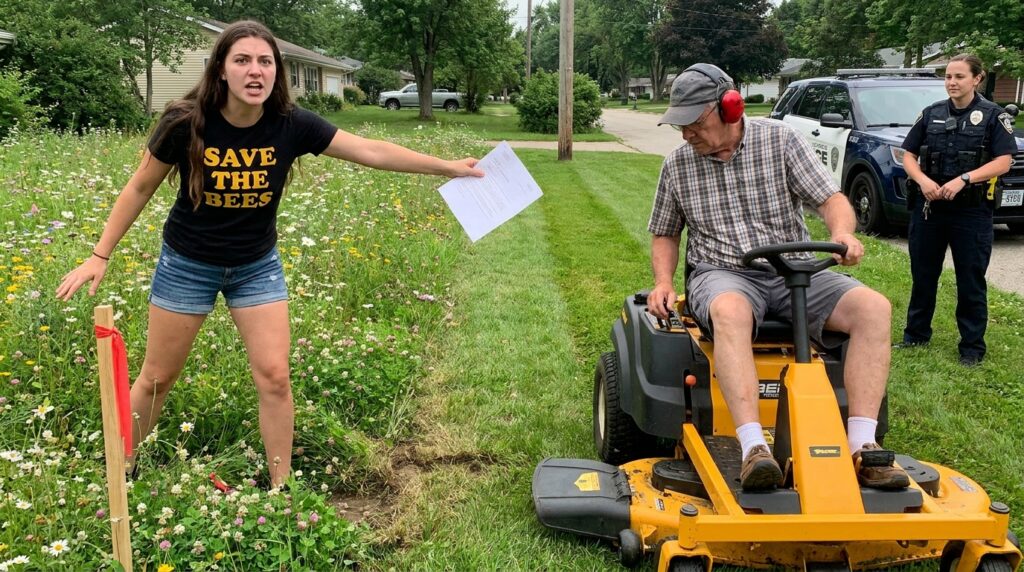
“Keep digging around the perimeter,” Maya said, her voice dropping into a hard, transactional stone. She didn’t look at Harold’s house. She didn’t need to. The side door of his garage had finally clicked open, and the old man was walking down the slope, his legs moving with a heavy, unstable hitch that made his stocky frame look smaller against the wide expanse of his sterile lawn.
“Stop the machine,” Harold said as he reached the edge of the fresh pile of clay. He wasn’t carrying his clipboard or his folder. His hands were empty, the fingers hooked tightly into the pockets of his gray shorts as if he were trying to anchor himself to the property line. His face was entirely desaturated under the brim of his gray cap, his skin the color of parched limestone. “You don’t know what you’re pulling out of that hole, girl. Leave the box where it sits.”
“The contractor says it’s on my side of the iron pin, Harold,” Maya replied, her gaze tracking a wide, horizontal fracture that had appeared across the front plate of the buried locker where the excavator’s tooth had hooked it. Through the narrow gap, the dark water wasn’t bubbling; it was leaking a dry, chalky white powder that dissolved into the sulfurous slurry. “You didn’t just tap a line. You buried a shoring box right beneath my garden.”
The excavator driver swung the boom out of the lane, the hydraulic cylinders groaning as he lowered a heavy iron pry-bar into the trench. With a single, heavy leverage crack, the rusted weld on the front of the locker snapped. The metal door didn’t slide; it fell inward with a hollow, leaden thud that shook the roots of the remaining milkweed stalks.
Inside the locker wasn’t an explosive or a municipal junction. It was a structural void—a crude, unpermitted shoring system holding up a massive, decaying municipal gray-water line that had been bypassed forty years ago during the original phase-two development. Wrapped in crumbling plastic sheets at the base of the box were bundles of original engineering blueprints bearing the bold, blue ink logo of V-ENG-84.
The final truth was exposed in the light. Harold hadn’t been fighting for his turf or his curb appeal; he had been protecting a catastrophic structural failure. The gray-water bypass he had constructed wasn’t just dumping water—it was a necessity to prevent the decaying main line underneath Maya’s garden from shifting and completely collapsing the unpermitted foundation wall he had poured for his own home decades prior. If the city inspectors found the box, his house would be condemned as a structural hazard.
Harold looked down into the open metal vault, his shoulders dropping under the weight of the noon sun. He didn’t offer a villainous speech, and he didn’t check the papers. He simply turned back toward his silent garage, his boots dragging through the dry, dead grass of his pristine lawn, his authority completely broken by the rusted machine truth that had risen from the dirt to redraw the neighborhood line forever.