The Iron Plats Yield No Mercy for the Guardians of Suburban Dirt

CHAPTER 1: THE CULDESAC CITATION

The yellow slip of paper didn’t flap in the dry morning heat; it was taped too aggressively to the center panel of the front door, secured at all four corners with industrial masking tape. I didn’t pull it off immediately. I stood on the concrete porch, the weight of the grocery bags cutting into the calluses of my fingers, reading the bold, stenciled ink through the cheap plastic film. VIOLATION NOTICE: UNAUTHORIZED ENCROACHMENT OF PRIVACY BOUNDARY.

Beneath the formal language, the handwriting was unmistakably sharp, slanting hard to the right like a row of small knives. It claimed the rear tires of my sedan were resting three inches past the invisible seam where my asphalt met the shared access lane—a lane no one had driven on since the county filled the cul-de-sac in ninety-eight.

“You’re late moving it,” a voice called out from the shade of the property line.

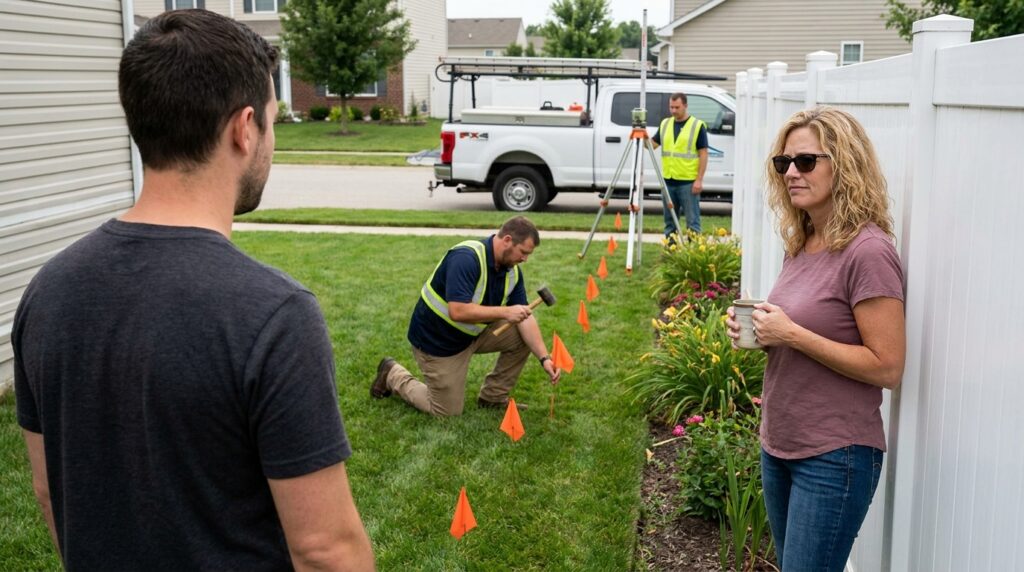
Brenda was already at the white vinyl fence, her forearm resting on the top rail, a heavy ceramic mug balanced between her palms. Her dark oversized sunglasses reflected the desaturated glare of the midday sun, turning her face into a twin pair of black chrome disks. She didn’t look like someone executing a neighborly check-in; she looked like a stationary piece of code-enforcement machinery that had grown out of the trimmed fescue.

I set the grocery bags down on the rough concrete step. The smell of hot tar and drying fertilizer hung heavy between our houses, thick enough to taste. “The notice says forty-eight hours, Brenda. It’s been twelve.”

“The board doesn’t count the hours by your watch, Adam,” she said, her lips thinning into a practiced, patronizing curve as she took a slow sip from the mug. The porcelain gave a dry, metallic click against her rings. “We count them by the clear-space rules. That car is blocking the emergency turning radius for the utility trucks. It’s a safety hazard. I’m just trying to keep the street functional before the county takes notice.”

I took three steps down the porch until my boots hit the grass. The earth beneath the sod was hard-packed clay, baked solid by a three-week dry spell. I could feel every uneven ridge through my soles. “The utility trucks haven’t turned around here in six months. The easement gives me five feet from the curb.”

“The old survey maps say different,” Brenda replied, her posture tightening just enough to lift her shoulders away from the vinyl slats. She pointed the base of her mug toward the rear corner of my property, where the newly edged flower bed lay under a fresh layer of dark mulch. “And while you’re checking your distances, you might want to look at that trench your boys dug yesterday. That’s my grading line you’ve cut into. If my cellar takes water during the August rains, the HOA won’t be the ones sending you the bill.”

I looked at the straight, dark line of the flower bed. The spade marks were clean, cutting through the thin root systems of the weeds she had allowed to creep across the perimeter for years. A tiny, rusted iron survey pin—half-buried and corroded to the color of dried blood—lay just three inches inside the fresh earth, completely missed by her calculation but visible to anyone looking down.

“We’ll see what the county plats say,” I said quietly, keeping my hands flat against my sides.

Brenda let out a short, dry laugh that lacked any real sound, her sunglasses shifting down her nose by a fraction of an inch. “I’ve lived on this circle for fifteen years, sweetie. I know exactly where the iron is buried.”

Behind her, near the bottom edge of the white vinyl panel, a thin, vertical fracture in the plastic had begun to collect the gray dust blowing off the dry access road.


CHAPTER 2: THE WEAR OF THE ASPHALT

“A fifteen-year ledger doesn’t overwrite a county stamp, Brenda,” I said, my voice dropping into the low, gravelly register I used when the server racks at work started throwing critical errors at three in the morning. I didn’t wait for her to formulate a counter-strike. I picked up the two grocery bags, the plastic handles groaning against the weight of the canned goods, and walked inside, letting the screen door slam shut behind me. The spring inside the mechanism gave a rusted, high-pitched whine before the latch caught.

Inside, the house smelled of old plaster and the faint, metallic tang of the copper pipes I’d spent the previous weekend scouring with steel wool. It was a standard 1970s split-level, built during the first suburban expansion when developers were turning old dairy pastures into grids of identical quarter-acre lots. The walls were thick, but the foundation settled unevenly, leaving a two-degree tilt in the utility closet that I could only track with a brass plumb bob.

I set the groceries on the laminate counter and walked directly to the hallway closet where the original closing documents were kept. The previous owner, an elderly veteran who had died in a VA hospice three months before I put down my deposit, had left everything in a green metal lockbox hidden behind the intake vent. The key was gone, but the cylinder was so worn from years of humidity that the tip of a pocketknife popped the internal tumblers with a dry clack.

The papers inside were crisp, yellowed at the margins by the slow seepage of time. I spread them out across the kitchen table, the rough grain of the veneer scraping against my forearms. My fingers traced the blue-ink signatures of the county clerk from 1974, the faded seals of the original land developer, and the plot maps that showed our cul-de-sac when it was nothing but an unlabeled turn off the state highway.

Everything looked uniform until I reached the back of the packet—a secondary envelope tucked beneath the title insurance policy, held together by a single, rusted paperclip that had left a brown stain across the top sheet. It was a copy of a private variance agreement from 1994.

The text was typed on an old IBM Selectric, the letters unevenly struck into the heavy bond paper. It was an easement release, signed by Brenda’s late husband, Richard, and the previous owner of my house. According to the typed lines, Richard had paid twelve hundred dollars in cash to extend their shared white vinyl fence four feet past the eastern boundary line. The reason wasn’t listed, but a hand-drawn schematic on the reverse side showed the outline of a concrete slab—the foundation for the detached double-car garage that currently sat at the back of Brenda’s property.

I leaned back, the wooden chair creaking under my weight. The air from the floor register blew cold against the back of my neck, carrying the scent of dry dust from the crawlspace.

If that 1994 agreement was never recorded with the county recorder’s office—and there was no registry stamp on the document, only the raw signatures—then the legal line remained exactly where it had been in 1974. Brenda hadn’t just encroached on my yard; her entire garage, the structural brick foundation she had spent fifteen years defending with HOA citations and parking threats, was sitting directly on my legal dirt. She wasn’t protecting the neighborhood’s standards. She was protecting an illegal structural addition that would invalidate her homeowner’s insurance the second a title clerk looked at it.

A shadow crossed the kitchen window. The glare from the afternoon sun caught the top edge of Brenda’s sunglasses as she walked down the gravel path between our houses, her phone pressed tight to her ear. She was gesturing sharply with her free hand, her fingers curled tightly around the handle of that same ceramic mug, her mouth moving in rapid, silent jerks. She wasn’t just calling the board; she was building the perimeter.

I reached down and touched the rusted survey pin I had pulled from the flower bed earlier, now resting on the edge of the kitchen table. The iron was flaking, leaving small, red-brown scales on the white laminate. It felt cold, heavy, and entirely indifferent to the fifteen years of history Brenda had manufactured to cover her tracks. I folded the 1994 agreement, slid it into the pocket of my charcoal T-shirt, and walked back toward the front door. The real work hadn’t even started yet, and the asphalt outside was already beginning to radiate the stored heat of the day.

CHAPTER 3: THE THREAT AT THE THRESHOLD

The heavy metal latch of the screen door hadn’t even finished settling against its frame before the gravel outside ground beneath two sets of footsteps. I paused with my hand still on the brass deadbolt. Through the warped glass panel, the midday heat distortion bent the shapes of the two figures standing on the concrete porch. Brenda was back, but she wasn’t alone. Standing slightly to her left, his posture rigid under a starched linen shirt that resisted the humidity, was Arthur Vance—the current president of the Oakridge Homeowners Association and a retired logistics manager who treated our three-street subdivision like a deep-water shipping port.

I opened the door, keeping my shoulder planted against the frame to narrow the aperture of the entryway. The stored heat of the asphalt rolled inside, smelling faintly of scorched engine oil and the dry, powdery topsoil from the shared easement.

“Adam,” Arthur began, his voice dry and measured, carrying the hollow resonance of a man accustomed to reading meeting minutes aloud. He didn’t offer a hand. Instead, he lifted a stiff manila folder, its corners slightly frayed from friction against a briefcase liner. “Brenda called me regarding the boundary violation. We took a look at the landscape easement guidelines from the original ninety-four bylaws. The rules are absolute. Any unvetted excavation within six feet of the collective grading line is subject to an immediate freeze order.”

Brenda stood just behind his right shoulder, her fingers still locked around the ceramic handle of her mug. The dark chrome reflections of her sunglasses remained fixed on my face, but her chin was tilted up, her jaw set into a hard line of institutional victory. “I told him, Arthur. I told him the flower bed cuts into the structural retaining slope. He refused to clear the trench.”

I looked at the folder in Arthur’s hand, then down at the dust clinging to the toes of his polished loafers. “The excavation is three inches inside the rusted iron surveyor stake I pulled out of the dirt this morning, Arthur. The stake has been there since seventy-four.”

“The seventy-four stakes are legacy markers, Adam,” Arthur said, his eyes narrowing as he tapped the folder against his palm with a rhythmic, irritating thwack. “They don’t account for the modern utility easement adjustments made when the access road was paved in ninety-four. The board retains the legal right to enforce the current plat maps on file in the neighborhood registry. If that flower bed isn’t filled back to grade within forty-eight hours, the association will issue a formal lien notification for structural non-compliance.”

The folded 1994 private agreement inside the pocket of my charcoal T-shirt felt heavy against my ribs, the crisp, old paper pressing into my skin like a stiff blade. I could have pulled it out right then. I could have forced Arthur to look at the typed lines from the IBM Selectric, to look at Richard’s signature and the hand-drawn schematic showing their garage sitting entirely on my legal dirt. But an old logistics manager like Vance wouldn’t change his coordinates based on an unrecorded scrap of bond paper found in a dead veteran’s lockbox. He would call it a forgery, or worse, he would give Brenda the forty-eight hours she needed to file a retroactive variance before my survey could even get out of the truck.

Brenda leaned forward slightly, her proximity bringing the faint, artificial scent of lavender detergent into the heavy air of the porch. “You can warning-track this all you want, sweetie, but you’re building on my property. The board has the legal authority here. You’re the newcomer. You don’t get to rewrite the dirt.”

I looked past her shoulder toward the back corner of the lot, where the white vinyl fence met the concrete edge of her double-car garage. A single weed, dry and yellowed by the drought, had forced its way through a tiny hairline gap where the concrete foundation met the hard-packed clay. The structure looked solid, but it was built on a foundation of borrowed time and hidden debt.

“The survey company is scheduled for tomorrow morning at dawn, Arthur,” I said, my voice flat, completely stripped of the anger they were waiting for. “I suggest you keep that folder open until they finish pulling the chains.”

Arthur’s face hardened, the linen of his shirt tightening across his chest as he took a step back. “A private survey won’t override an HOA board determination, Adam. You have until Friday morning. If the dirt isn’t restored, the machinery moves forward.”

He turned, his loafers crunching loudly against the dry gravel path as he led Brenda back toward the cul-de-sac. Brenda didn’t look back, but she lifted her mug in a slow, triumphant gesture as she stepped onto her side of the lawn.

I closed the door, the deadbolt sliding into place with a heavy, metallic thunk. The house was dead quiet again, save for the hum of the refrigerator. I pulled the 1994 agreement from my pocket and laid it back on the kitchen table next to the flaking survey pin. The iron scales had left a small rust ring on the white laminate. The trap was set, but as I looked out the window at the desaturated gray fence line, I knew that if the surveyors didn’t find the original iron benchmarks in the morning, the block would bury me before I ever had a chance to dig up the truth.

CHAPTER 4: THE ARRIVAL OF THE IRON

The low, heavy rumble of a diesel engine vibrating through the floorboards woke me five minutes before my alarm went off. I didn’t lie in bed. I pulled on a pair of work boots, their leather stiff and unyielding from the dry air, and walked to the window. The sky was the color of a wet slate shingle, a cold gray that offered no real light, just a desaturated exposure of the cul-de-sac.

A white Ford F-250 utility truck sat idling at the curb, its yellow warning lights rotating silently, casting rhythmic amber strobes across the front of Brenda’s house. Mounted to the truck’s bed was a heavy steel gear rack holding iron pipes, wooden grade stakes, and long reels of steel measuring chains. The exhaust smelled of unburnt fuel and sulfur, a thick vapor that hung close to the parched grass.

I stepped onto the porch just as the truck’s doors slammed shut. Two men in high-visibility neon vests stepped into the cool air. The lead surveyor, a man with short graying hair and a jawline that looked like it had been carved out of an oak block, didn’t check his phone or look at the houses. He unlatched the truck’s tailgate with a sharp, heavy clack, pulled out a heavy yellow plastic case containing a mechanical transit, and swung a wooden tripod over his shoulder.

“Adam?” he asked, his voice a low, rough rasp that sounded like gravel sliding down a chute. He didn’t wait for a nod; his eyes were already scanning the curb line, looking for the brass county benchmarks embedded in the concrete.

“Yeah. The line is on the east side, next to the vinyl fence,” I said, pointing toward the gap where the asphalt ended and the dry dirt began.

The assistant, a younger man with a thick dark beard and work pants stained with dried red mud, was already dragging a steel link chain down the gutter line. The metal links rattled against the concrete, a cold, rhythmic sound that brought a window shade up across the street. A second later, the front door of Brenda’s house clicked open.

She didn’t come out in a bathrobe. She was fully dressed in the same mauve long-sleeve top and dark jeans from the day before, her dark sunglasses already hiding her eyes despite the lack of direct sun. She carried her ceramic mug like an official piece of documentation, her steps deliberate as she marched down her driveway toward the truck.

“You’re blocking my driveway access,” she said, her voice sharp enough to cut through the idle of the diesel engine. She didn’t look at me; she went straight for the lead surveyor, who was currently leveling the tripod legs on the curb. “This is a private subdivision road. You don’t have a permit from the association to park commercial equipment here.”

The lead surveyor didn’t lift his head from the bubble level on the instrument frame. He adjusted a small brass screw with his thumb, his movements clinical, completely detached from her proximity. “County land court authorization order, ma’am. We’re tracking the primary benchmark for Block Four. If you have an obstruction complaint, you can call the sheriff’s dispatcher. They have our crew log on the dashboard.”

Brenda’s posture went rigid, her fingers clamping tightly around the porcelain handle. The amber strobe from the truck flashed across her glasses, revealing a quick flare of her nostrils. “I know the board president, Arthur Vance. He issued a structural freeze notice on this perimeter yesterday. You’re tampering with a disputed grading line.”

“We don’t look at grading lines, ma’am,” the surveyor said, his tone as flat and unyielding as an iron plat sheet. He reached into his vest pocket, pulled out a heavy steel plumb bob suspended by a braided nylon cord, and let it drop until the pointed tip hung exactly one millimeter above a chipped cross-mark in the concrete curb. “We look at the math. If the math says your fence is on the dirt, the fence is on the dirt. Move your vehicle if it’s within six feet of the transit path.”

Behind her, Arthur Vance’s front door opened, his starched shirt a white beacon against the desaturated gray of his porch. The neighborhood was waking up to the sound of iron chains clashing against the gutter, and the cold, mechanical indifference of the crew was already turning the cul-de-sac into a courtroom.

I stood on the bottom step of my porch, my hands deep in my pockets, watching the assistant drive the first steel locator pin into the edge of the access lane with a heavy three-pound mallet. The iron rang true—a sharp, high-pitched ping that echoed off the white vinyl panels of Brenda’s fence. The legal clock had started ticking, and the iron plats weren’t going to look at Brenda’s fifteen years of authority; they were going to look at the cold, hard geometry of the earth.

CHAPTER 5: THE FLAGGED BOUNDARY

The metal foot-peg of the surveyor’s measuring wheel clicked with every five links, a rhythmic, mechanical count that advanced steadily into the backyard. I stood six feet from the porch step, my arms crossed, watching the bright neon vest of the lead surveyor slice across the dry lawn. Beside the white vinyl privacy fence, Brenda remained anchored to her position. Her casual lean had vanished, replaced by a rigid, defensive squareness. One hand was still clamped like an iron vise around her ceramic mug, her sunglasses angled downward toward the professional transit crew tracking the data.

“You’re making an expensive mistake,” Brenda said, her voice rising over the dry rustle of the fescue as the wheel clicked closer to her position. She offered a brief, mocking lift of her mug toward me, her teeth showing in a tight, unconvincing smirk. “Arthur has already logged the variance dispute with the county clerk. This little performance isn’t going to change the bylaws.”

I didn’t answer. The restraint line I had held for months remained flat behind my teeth. She laughed at my warning, until the survey crew marked her backyard.

The lead surveyor stopped four feet short of the white vinyl fence. He didn’t look at Brenda. He knelt down into the dirt, his work pants straining against his knees as he reached into a canvas pouch mounted to his utility belt. He pulled out a bundle of sharp, thin steel pins topped with squares of high-visibility orange vinyl. With a heavy, deliberate punch of his palm, he drove the first marker straight through the plush, well-watered turf Brenda claimed as her absolute territory.

The plastic flag rustled in the dry breeze. It stood exactly three feet inside her flower-bed edge, cleanly slicing through the neatly manicured hostas she had planted to hide the original boundary lines.

“Wait,” Brenda said. The smirk vanished from her mouth so fast her jaw seemed to lock mid-motion. Her shoulders dropped three inches from the fence rail, her posture going entirely rigid. “What is that? That’s not the seventy-four pin line.”

The surveyor didn’t look up. He moved five feet down the perimeter, pulled a second orange flag from his bundle, and drove it with a dull, wet thud directly into the center of the grass she had spent fifteen years ordering me to stay off of. The neon orange line was a straight, clinical scar cutting deep across the kingdom she had manufactured.

Behind the surveyor, the assistant adjusted the heavy brass locked screws on the tripod, steadying the optical rod near the white survey truck parked at the curb. The physical evidence was building in real-time, completely indifferent to her rules.

“Arthur!” Brenda called out, her voice cracking slightly at the upper register as she turned toward the side path. “Arthur, get back over here! They’re driving stakes in the wrong lot!”

Arthur Vance came down the gravel walkway with a heavy, uneven stride, his linen shirt already stained with sweat under the arms. He held the manila folder like a defensive barrier, his loafers throwing up tiny clouds of gray dust as he reached the fence line. “Officer,” he began, addressing the surveyor with a formal stiffness that was falling apart at the seams. “We have an open HOA injunction on this particular parcel. Your measurements are encroaching on an established structure.”

The lead surveyor finally stood up, wiping a smear of dry clay from his thumb onto his khaki trousers. He looked at Arthur, then at Brenda, whose sunglasses had slid down to the bridge of her nose, revealing wide, unblinking eyes fixed entirely on the orange markers.

“I don’t look at HOA injunctions, sir,” the surveyor said, his voice flat, completely stripped of any neighborly compromise. “I look at the primary county coordinates. The primary anchor is locked at the curb benchmark. This line represents the actual legal plat boundary for Block Four.”

He pointed to the third flag, which sat precisely twelve inches from the corner of Brenda’s concrete garage slab. The physical reality of the 1994 private agreement inside my pocket was manifest in the dirt—her entire brick and concrete structure was sitting clear across the line, completely unrecorded, completely exposed to the open air.

Brenda’s fingers trembled against the porcelain handle of her mug, her face draining of color until her skin matched the faded gray of the vinyl behind her. She looked down at the orange flag fluttering against her hostas, then up at Arthur, her voice dropping into a clipped, shaken whisper that carried no remaining authority. “Wait, are those really on my side?”

Arthur didn’t open his folder. He stood frozen on the dry grass, his eyes moving from the mechanical transit to the row of orange stakes cutting through the neighborhood logic he had spent his retirement enforcing. The line was exactly where it was supposed to be, and the silence that followed was heavier than any citation they had ever written.

CHAPTER 6: THE SHATTERED LEDGER

“The ledger records are filed in the north annex, Arthur! He’s using outdated county maps!” Brenda’s voice didn’t just crack; it splintered into a sharp, desperate rasp that cut straight through the low vibration of the utility truck’s idle. She pulled a faded blue ledger folder out from behind her back, her fingers shaking so violently that her knuckles caught the corner of her ceramic mug, sending a dark splash of cold coffee over her mauve sleeve. She slammed the paper onto the top rail of the vinyl fence. “Look at the ninety-four amendment stamp! Richard paid for the variance! The structure is grandfathered!”

Arthur Vance reached for his glasses, his linen shirt clinging to his ribs as he leaned over the fence. His fingers fumbled with the folder, his practiced, managerial confidence faltering as his eyes scanned the old lines. “The signature looks correct, surveyor. It’s logged under the residential improvement registry.”

I took two slow steps toward the line, pulled the crisp copy of the unrecorded 1994 agreement from my pocket, and dropped it onto the vinyl rail right next to her folder. The rust scales from the survey pin had left a faint orange ring across the signatures. “It was never recorded with the county recorder, Arthur. Richard paid twelve hundred dollars under the table to build that slab, but the title insurance company never saw the ink. Her garage is sitting clear on my legal dirt. It’s an unrecorded encroachment.”

Brenda froze, her chin tilting down as she stared at the brown-stained paperclip on my copy. The black chrome disks of her sunglasses caught the glare of the gray morning sky, reflecting the sharp orange boundary flags that bordered her concrete slab like tiny, mocking spikes. Her mouth opened, but only a small, breathy whistle came out.

The lead surveyor didn’t glance at either document. He remained leaned over the transit eyepiece, his thumb dialing a brass calibration wheel with a slow, grinding crunch. “None of those folders matter anyway,” he said, his voice entirely flat, carrying the weight of a machine that didn’t care about thirty years of neighborhood architecture.

Arthur’s hand stopped on the manila tab. “What do you mean they don’t matter? The variance defines the easement coordinates.”

The surveyor stood up, pulling a long, yellowed roll of heavy linen paper from the truck’s rear cab. He spread it across the flat hood of the F-250, his rough, clay-smeared palms pinning the corners down against the hot steel. It was the original 1974 blueprint roll for the entire subdivision, complete with the blue-ink signatures of the long-dead county engineers.

“Look at the western baseline axis on Block Four,” the surveyor said, his callused index finger tapping a tiny string of faded engineering annotations near the cul-de-sac’s throat. “The draftsman didn’t close the primary polygon loop. He missed a four-foot curve calculation where the access lane cuts into the county watershed line. It’s a cumulative baseline systemic error.”

I moved closer to the truck, the smell of diesel exhaust and ancient paper filing my lungs. My eyes followed his finger along the faded blue grid.

“The error didn’t just happen yesterday,” the surveyor continued, his rough rasp completely steady. “It’s been sitting in the plat ledger for fifty-two years. Because the primary benchmark at the road throat was set four feet off-center, every single lot on this western curve is technically shifted. Brenda’s garage isn’t just on Adam’s property. Adam’s kitchen is sitting on Arthur’s property line, and Arthur’s entire back patio is encroaching four feet into the protected state watershed preservation zone.”

The words hung in the humid air, heavier than the heat radiating from the asphalt. Arthur’s face went entirely slack, the manila folder slipping from his grip and dropping into the dry gravel path with a soft thud. He looked down at his shoes, then back toward his own house, his rigid, institutional posture dissolving into a sudden, trembling panic. “The watershed zone? The county issues immediate demolition mandates for conservation violations. My insurance won’t cover a systemic plat variance.”

Brenda didn’t move. She stood against her fence, her fingers locked around her ceramic mug so tightly that a tiny hairline crack split down the side of the porcelain, leaking a dark drop onto her fingers. The small victory I had calculated—the clean, satisfying vindication of catching her in an unrecorded encroachment—had completely evaporated. The decoy secret of her illegal garage had shattered, only to reveal an ancient, structural paradigm shift that threatened to pull down every single house on the cul-de-sac. We weren’t fighting over three inches of dirt anymore; we were all trespassing on land none of us had ever owned.

CHAPTER 7: THE PERMANENT MARKER

The first drop of rain didn’t fall from a storm cloud; it felt like a cold condensation leak from the wet slate sky, striking the center of the 1974 linen blueprint with a heavy, spreading grey circle. It dissolved a tiny section of the draftsman’s blue-line ink right where the primary polygon loop failed to close. The lead surveyor didn’t pull the roll away. He rolled it up with a slow, grinding friction, sliding the heavy tube back into the truck’s rear cab as if he were burying a ledger that had already finished its calculations.

Time slowed down to the speed of the water pooling on the hot asphalt. I looked at Brenda. The hairline fracture running down the front of her ceramic mug finally yielded to the structural pressure of her hands. A thin, dark line of cold coffee bled through the gap, dripping onto the sleeve of her mauve top before hitting the dry gravel path with a rhythmic tap, tap, tap. She didn’t drop the porcelain. She just stood there, her dark sunglasses reflecting the three orange survey flags that cut across her lawn, their vinyl faces flapping like small, neon tongues in the rising wind.

“The line,” she whispered, her voice stripped of its practiced weight, sounding as thin and fragile as the old bond paper in my kitchen lockbox. “The line is… we’ve been paying the taxes on it.”

“The tax registry uses the plat maps, Brenda,” I said, my voice dropping into that quiet, flat register that left no room for legal arguments or neighborly compromise. “And the plat maps are broken. The line is exactly where it’s supposed to be, according to the error. We’re all sitting on borrowed dirt.”

Arthur Vance didn’t pick up his folder from the gravel. The starched linen of his shirt had completely collapsed under the humidity, sticking to his ribs like a wet shroud. He looked down the length of the cul-de-sac—at the three-street subdivision he had managed with the mechanical precision of a shipping port—and saw only a series of overlapping trespasses. His entire kingdom was built on an unclosed polygon.

“We have to file a corrective deed aggregation,” Arthur muttered, his hand trembling as he wiped a smear of clay dust from his chin. “If the state enforcement bureau logs the watershed encroachment, the fines accumulate daily. The whole block… the title values will drop to zero by Friday.”

The lead surveyor swung his legs into the driver’s side of the Ford F-250, the diesel engine giving a heavy, throbbing roar that shook the dry fescue along our borders. His assistant picked up the heavy brass transit tripod, swinging it onto the back rack with a final, metallic clack that sounded like a prison door locking from the outside. They didn’t offer a solution; they had delivered the math, and the math didn’t owe any of us a clean resolution.

The white utility truck pulled away from the curb, its yellow strobe lights casting one last amber flash across the front of Brenda’s house before disappearing down the throat of the access lane.

The silence that returned to the block was absolute, heavy with the realization that our local wars were entirely meaningless. Brenda turned slowly, her loafers dragging through the gray dust of her driveway as she walked back toward her porch. She didn’t look at me, and she didn’t look at Arthur. She left her front door wide open behind her, a dark, hollow rectangle that swallowed the remaining light of the afternoon.

I walked back to my own steps, my boots leaving dark, wet impressions on the concrete. The three orange flags remained standing in the backyard, driven deep into the hard clay—permanent public testaments to a truth that had shattered the neighborhood’s peace without offering a drop of healing. I looked down at the rusted survey pin resting near the edge of my porch, its flaking metal bleeding a red-brown stain onto the steps as the rain began to fall in earnest. The sanctuary I had fought for was mine now, but it was a cold, iron sanctuary built on a foundation that had never truly existed.

Similar Posts

Leave a Reply

Your email address will not be published. Required fields are marked *